• Published on

    GLORY TO GLORY IN RELIGION

    "Be glad then, ye children of Zion, and rejoice in the Lord your God: for he hath given you the former rain moderately, and he will cause to come down for you the rain, the former rain, and the latter rain in the first month." Joel 2:23


    Around March 2, 2025, Holy Spirit showed me how Christian religion/ denominations over the ages have evolved through the church's (believers) levels of faith in God, pushing man towards Him, from glory to glory (more faith to even more faith, the former rain and the latter rain Joel 2:23 above). "Now the Lord is that Spirit: and where the Spirit of the Lord is, there is liberty. But we all, with open face beholding as in a glass the glory of the Lord, are changed into the same image from glory to glory, even as by the Spirit of the Lord." 2 Corinthians 3:17-18


    All glory, honor, praise and thanksgiving to God Most High. Let Your Children hear. In Jesus's Name. Amen.


    Gifts Remained When Jesus Ascended


    1 Corinthians 1:7-8 states, "So that ye come behind in no gift; waiting for the coming of our Lord Jesus Christ." This means that believers are fully equipped with spiritual gifts, like faith, wisdom, prophecy, healing, fighting evil, and casting out demons, as Jesus said in Mark 16:17-18: "And these signs shall follow them that believe [everyone, anyone who believes]; In my name shall they cast out devils; they shall speak with new tongues; they shall take up serpents; and if they drink any deadly thing, it shall not hurt them; they shall lay hands on the sick, and they shall recover." These scriptures mean that believers lack nothing as they eagerly await Jesus’s return. These gifts sustain and empower, not only them in their faith until that day, but are also for the edification and encouragement of the church, the faithful. Unbelievers, the unfaithful, get only the resurrection as their sign, because their minds are blinded by the God of this world. 2 Corinthians 4:4. See also my blog titled, "The Sign of Jonah," here.


    Jesus points to Jonah and the whale as the sign for the unfaithful who taunted Him for more signs, even though they had seen His many miracles. The resurrection is the final sign, a call to believe and have faith unto obedience, not just awe at His sacrifice. John 14:23, "Jesus answered and said unto him, "If a man love me, he will keep my words: and my Father will love him, and we will come unto him, and make our abode with him." He will keep my words; my Father will love him; and THEN we will come unto him and make our abode with him (Holy Spirit).


    1 Corinthians 13:10-12 "But when that which is perfect is come, then that which is in part shall be done away." This refers to the return of Jesus, "that which is perfect." When He comes, partial things, like incomplete knowledge or temporary gifts, will no longer be needed, as His return will bring full revelation and completion. This is reinforced by Philippians 3:20-21: "For our conversation is in heaven; from whence also we look for the Saviour, the Lord Jesus Christ: who shall change our vile body, that it may be fashioned like unto his glorious body," ["that which is perfect is come"] showing that Jesus’s return not only ends the need for temporary gifts, but also transforms believers, removing their sinful, "vile" nature to make them like Him in perfection. So, the gifts from Holy Spirit in the New Testament have not ceased, but they are signs for the faithful.


    In this blog, we will focus primarily, though not exclusively, on Mark 16:17-18: "And these signs shall follow them that believe; In my name shall they cast out devils; they shall speak with new tongues; they shall take up serpents; and if they drink any deadly thing, it shall not hurt them; they shall lay hands on the sick, and they shall recover."


    Let's take a look at how this plays out over the two millennia (2000 years) since the death and resurrection of Jesus Christ. We will pinpoint clergy and lay people who performed miracles according to Mark 16:17-18 above, mostly excluding the works of Jesus, because those works are well recorded in the Bible. This is a broader picture of how God's purpose continued to flourish among common people after Jesus's ascension, even though the church often denied miracles, or even limited them to clergy only.


    Present Day: Picture a weathered tent glowing beneath a Southern California moon. Evangelist Mario Murillo preaches with the fire of the Holy Spirit, as a man steps forward, declaring his fentanyl addiction shattered in a moment of belief and repentance. He drops his crutches to the dirt, trusting God’s power, and the crowd erupts with shouts of praise. Or, step back to the 1950s, where Oral Roberts fills a grainy TV screen, praying over a blind woman who blinks into sight as families watch from home, breathless. These scenes throb with healing’s pulse, rooted in Mark 16:17-18 above.


    For 2,000 years, healing has carved a path through history, driven by faith, met by God’s sovereign Will. He shapes it as the Potter molds the clay, per Isaiah 64:8: “But now, O Lord, thou art our father; we are the clay, and thou our potter; and we all are the work of thy hand.” God’s Will reigns, searching hearts (for faith). Hebrews 11:6 cuts no corners: “But without faith it is impossible to please him: for he that cometh to God must believe that he is, and that he is a rewarder of them that diligently seek him.”


    Faith’s the deal. God’s the boss. And the Spirit propels us to greater glory, as 2 Corinthians 3:18 promises: “But we all… are changed into the same image from glory to glory, even as by the Spirit of the Lord.”


    Let’s look at Faith Healing from the early church to now.


    Healing kicked off with Jesus and the apostles in a brutal Roman empire, where people were yearning for freedom from oppression. Mark 16:17-18 laid the promise, and Mark 16:20 proved it: “And they went forth, and preached every where, the Lord working with them, and confirming the word with signs following.” Peter healed a lame man in Acts 3:6: “In the name of Jesus Christ of Nazareth rise up and walk.” Around 64 AD, Nero persecuted Christians, blaming them for a fire that gutted Rome as historian Tacitus records. At that time, Paul healed on Malta, when he met Publius’s father, “sick of a fever and of a bloody flux.” Paul “prayed, and laid his hands on him, and healed him” Acts 28:8. Believers saw these acts, Peter’s lame man walking, Publius’s dad recovering, as proof God had not left them to Rome’s flames. God’s Will is sovereign over the faithful. He knows what is in man. John 2:24-25


    Healings did not end with the apostles. Acts 9:10-18 brings Ananias in Damascus. God said to Ananias, “Go thy way: for he [Saul/Paul] is a chosen vessel unto me," and Ananias laid hands on Saul, saying “Brother Saul, the Lord, even Jesus… hath sent me, that thou mightest receive thy sight… And immediately there fell from his eyes as it had been scales."


    Acts 8:6-7 shows Philip in Samaria: “For unclean spirits… came out of many… and many taken with palsies, and that were lame, were healed.”


    Healing’s arc did not flicker out after Jesus's crucifixion and ascension to heaven. It burned steady from 33 AD onward. The post-apostolic years of 60 to 203 AD saw church fathers and martyrs carrying the flame. Even the stretch from 203 to Rome’s fall 1000 kept healing alive despite patchy records and fading literacy. Faith met God’s sovereign Will in churches, monasteries, and martyr's tales. Jesus said in Matthew 17:20, “If ye have faith as a grain of mustard seed, ye shall say unto this mountain, Remove hence to yonder place; and it shall remove; and nothing shall be impossible unto you.” That speck of faith, small but real, sparked God’s power through the ages.


    Rome flipped the script in 313 AD, legalizing Christianity via Constantine’s Edict. Healing shifted as bishops took charge. Augustine in North Africa wrote in "City of God" (426 AD) of a blind man at a Milan shrine. A blind man, trusting martyr relics, got prayed over by Augustine and received sight.


    Around 432 AD, Patrick hit Ireland. Patrick, later Saint Patrick, was a fifth-century Romano-British missionary and bishop who brought Christianity to Ireland. A druid chieftain, sick with fever, believed Patrick’s God could fix him; Patrick prayed, the fever broke, and clans turned to Christ, per the Annals of Ulster. God’s sovereign Will, stacking faith in the hearts of men.


    After centuries of tension, the church split in 1054 when leaders in Rome and Constantinople excommunicated each other over doctrine and control, dividing Christianity into Western (Catholic) and Eastern (Orthodox) branches. The Middle Ages followed, a rugged span from the 5th to 15th centuries where Europe grappled with war, famine, and disease. Healing held steady through it. Around 1080 in southern France, Bernard of Clairvaux, later a saint, prayed over a boy blind from birth. The boy stood and saw light for the first time, as Herbert of Clairvaux’s 12th-century "Life of Bernard" notes.


    In 1224, Francis of Assisi took it further in central Italy. He found a leper outside Assisi, sores raw and reeking, and washed him while praying Psalm 107:20: “He sent his word, and healed them.” Francis’ faith stood firm, and the leper rose healed, skin clear, sores gone, per Thomas of Celano’s 1228 account.


    Then, the 1340s hit hard with the Black Death, a plague that killed nearly half Europe’s people, some 25 million, leaving survivors under lords’ thumbs. Pilgrims trekked to Santiago de Compostela, a Spanish shrine tied to St. James. In 1348, church records note a lame man walked home after hands were laid on him. 


    On October 31, 1517, Martin Luther, a German monk, nailed his 95 Theses to a Wittenberg church door, calling out the Catholic Church for selling indulgences, which was cash for forgiveness, a scam fleecing peasants while priests grew fat. His words spread, and soon folks could read scripture in their own languages, not just the Latin that was locked in by Catholic clergy. Healing took a back seat as Luther and his crew preached salvation by faith alone, not miracles, but Anabaptists, considered radical believers at the time, kept healing alive. In 1525, they hid in Swiss barns, and laid hands on a woman burning with fever. She cooled off, and stood up, per Mennonite histories. 


    The 1700s saw Europe and America lean into reason. Thinkers sneered at faith, and churches went cold. John Wesley flipped that in 1742, preaching outdoors to coal-stained miners in England. His journal logs a Bristol woman whose tumor shrank after he prayed, a crowd of 200 watching.


    Across the ocean, the Second Great Awakening erupted in 1801. At Cane Ridge, Kentucky, 20,000 gathered in a muddy field. Preacher Peter Cartwright prayed over a lame boy who stood, and took steps, as hymns shook the trees, per eyewitness diaries. 


    From 1906 to 1909, Los Angeles trembled with a spiritual awakening. A revival known as Azusa Street blazed to life at 312 Azusa Street, where William J. Seymour preached in a rundown warehouse, the Revival birthing Pentecostalism in 1906, and ultimately Assemblies of God in 1914. Early Pentecostals saw Azusa as God pouring out His Spirit anew, fulfilling Joel 2:23's "latter rains," representing God's Spirit bringing spiritual renewal and transformation: "Be glad then, ye children of Zion, and rejoice in the Lord your God: for he hath given you the former rain moderately, and he will cause to come down for you the rain, the former rain, and the latter rain in the first month." From glory to glory through the ages.


    Sweaty, multiracial crowds gathered at Azusa Street, shouting praises as the Holy Spirit fell on the crowds with power, bringing tongues, healings, and prophecies. They carried an urgent faith, alive with the promise of 1 Corinthians 12:10: "To another the working of miracles; to another prophecy." They believed they stood in the last days, as Acts 2:17 declares: "And it shall come to pass in the last days, saith God, I will pour out of my Spirit upon all flesh: and your sons and your daughters shall prophesy." This outpouring of Spirit, the former and latter rains, transforms lives, from glory to glory, as 2 Corinthians 3:17-18 affirms: "Now the Lord is that Spirit: and where the Spirit of the Lord is, there is liberty. But we all, with open face beholding as in a glass the glory of the Lord, are changed into the same image from glory to glory, even as by the Spirit of the Lord."


    The "Apostolic Faith," a publication edited by William Seymour during the Azusa Street Revival, widely circulated the healing testimonies from the events, with its circulation reaching up to 50,000, amplifying reports of miracles like restored sight, healed limbs, and even deliverance from chronic illnesses and diseases. It was reported that a crippled woman cast aside her cane and walked after prayer. Blind eyes opened, fevers broke, and tumors vanished before crowds numbering in the hundreds. Frank Bartleman’s book "Azusa Street" also testifies to these daily wonders, a foundation for all who followed. The Revival, which lasted from 1906 to roughly 1909 (with some influence extending to 1915), was marked by intense spiritual experiences and claims of supernatural occurrences. In addition to healings, attendees reported that uneducated individuals spoke in foreign languages they had not learned, languages recognized by immigrants present, like German or Yiddish, as evidence of "speaking in tongues" Acts 2:4. Other accounts describe people being "slain in the Spirit," falling under divine power, and experiencing dramatic transformations, both physical and emotional. Acts 9:1-43; Ezekiel 1:28; John 18:6; Revelation 1:17; Matthew 17:6


    The Birth of Pentecostalism


    From the root of the Holiness movement, leaders like Charles Parham and Seymour pushed further, seeking the Holy Spirit’s indwelling as a distinct baptism marked by tongues. Acts 2:4 "They were all filled with the Holy Ghost, and began to speak with other tongues." Thus, Pentecostalism was born, and stands as the last literal-Bible-following denomination that has evolved in over 100 years. These believers proclaim the gospel that Jesus, the only begotten Son of God John 3:16, died for our sins 1 Corinthians 15:3, rose from the dead on the third day 1 Corinthians 15:4, and is now exalted in heaven at God’s right hand Acts 2:33, a truth received by faith in God alone, with repentance, or turning from sin to God, sealed by the Holy Spirit’s power John 14:26. Taking Mark 16:17-18 at its word, they have faith in Jesus's promise, and expect tongues, healings, and signs, a biblical fidelity unmatched since its 1906 rise, sparking renewals like the Charismatics of the 1960s, yet holding firm as the final bastion of Scripture’s plain following.


    Born from the Holiness movement’s emphasis on personal piety and sanctification, Pentecostalism pushed further, insisting on a distinct baptism in the Holy Spirit. Matthew 3:11 "I indeed baptize you with water unto repentance: but he that cometh after me is mightier than I, whose shoes I am not worthy to bear: he shall baptize you with the Holy Ghost, and with fire." This visceral experience broke from the quiet traditions of mainline churches, offering spiritual empowerment to all who sought it. The movement prizes supernatural feats in everyday lives, restoring the church to its apostolic and post-apostolic roots, where the Spirit moves freely among the faithful.


    From its Azusa Street spark, Pentecostalism grew into one of Christianity’s fastest-growing streams. By the 21st century, it claims 600 million adherents, per Gordon-Conwell’s 2020 estimate, flourishing in America, Africa, Latin America, and Asia, often, though not exclusively, among the poor and marginalized who find hope in its promise. Luke 4:18-19. This growth reflects an emotional, living faith, that critics sometimes call theatrical, questioning the authenticity of its miracles. Yet Pentecostals stand firm, declaring they live the Bible, not merely read it, preparing the world for the end. The movement’s appeal lies in its raw power. It carries forward the urgent call of Azusa, a beacon of God’s Spirit in these last days, lighting the path for Christ’s return.


    Other significant sparks of God's miracles flowed from Azusa Street:


    Maria Woodworth-Etter preached across America in the 1910s, her book "Signs and Wonders" chronicling feats. In Indiana, a paralyzed man rose and walked in 1913. In Ohio, deaf ears heard in 1915. A woman’s goiter shrank mid-meeting in 1914, all witnessed by thousands.


    Charles Parham, co-founder of Pentecostalism, preached healing alongside Seymour. His early 1900s meetings saw sickness flee, though specific cases remain less documented than Azusa’s flood.


    John G. Lake established healing rooms in Spokane during the 1910s. His ministry claimed 100,000 healings over five years, including cancers dissolving and blind eyes seeing, a testament to persistent faith.


    The Roaring Years: 1920s-1930s


    Aimee Semple McPherson built Angelus Temple in Los Angeles, her ministry peaking in the 1920s and 1930s. Her magazine "Bridal Call" reported a blind woman regaining sight in 1921, a crippled man discarding his cane in 1923, and a deaf mute speaking in 1926. Thousands left crutches behind, their healings archived by her Foursquare Church.


    F.F. Bosworth held campaigns nationwide in the 1920s. His book "Christ the Healer" recounts a cancer patient restored in Texas and blind eyes opened in Illinois by 1925, with dozens of letters pouring in from each revival.


    Charles S. Price joined the healing wave in the 1920s. In Canada, blind eyes saw and the lame walked, his meetings filling halls with believer testimonies of God’s touch.


    Smith Wigglesworth, a British evangelist, shook the 1920s and 1930s. Tumors melted under his hands, and the sick rose healed, his bold faith leaving a trail of miracles across continents.


    The Era of Television and Prosperity Believers: 1940s-1950s Revival


    The 1940s and 1950s marked a peak, a time when God’s power surged through many hands. William Branham launched his Healing Revival in 1947 at Jonesboro, Arkansas, before 20,000 souls. Deaf ears opened, a man deaf for twenty years hearing anew. Polio-stricken children walked, their legs straightening mid-prayer in 1950. Tumors fell from bodies, a woman’s mass dropping in 1948 before the crowd. In Durban, South Africa, in 1951, 100,000 watched a polio girl toss her crutches, her healing one of fifty or more per meeting.


    Oral Roberts filled tents in Tulsa during the 1950s. His magazine Healing Waters detailed arthritis untwisting a woman’s hands in 1955, a boy’s leukemia vanishing by 1952 with clear blood tests from his family, and cancers shrinking under prayer in 1954. Television captured the lame walking, a man casting aside crutches live, with over 1,000 healings per campaign.


    Jack Coe preached boldly in Dallas during the 1950s. A paralyzed woman stood unaided in 1952, cancers dissolved in 1954, and blind eyes saw in 1953, each revival yielding hundreds of claims in "Voice of Healing."


    A.A. Allen shook tents in the 1950s and 1960s. Tumors dropped from a woman in 1955, per "Miracle Magazine." A blind girl’s eyes cleared in 1958, and deaf ears popped in 1956. Film from the 1960s shows a man tossing crutches, with 500 healings per meeting.


    T.L. Osborn took healing abroad in the 1950s. In Thailand, a blind woman saw. In Cuba, a deaf mute spoke. His crusades yielding hundreds of miracles per event, recorded in "Healing the Sick."


    Gordon Lindsay coordinated the revival through "Voice of Healing." He documented a boy’s clubfoot straightening in 1948, his work amplifying thousands of healings across this span.


    Many from this era were prosperity believers, holding tight to scripture that promises abundance to fulfill more good works. "And God is able to make all grace abound toward you; that ye, always having all sufficiency in all things, may abound to every good work:" 2 Corinthians 9:8. Anyone who has ever experienced this prosperity or abundance knows that God is able. "He that hath pity upon the poor lendeth unto the Lord; and that which he hath given will he pay him again." Proverbs 19:17. "Give, and it shall be given unto you; good measure, pressed down, and shaken together, and running over, shall men give into your bosom. For with the same measure that ye mete withal it shall be measured to you again." Luke 6:38. Not just words, but the word of the living God. Man will reap what he has sown, good or bad. Amen.


    The Broadening: 1960s-1970s


    Kathryn Kuhlman filled Pittsburgh halls in the 1960s and 1970s. Her book "I Believe in Miracles" lists a goiter shrinking in 1967, cancers vanishing in the 1970s, and wheelchairs emptying, with thousands of testimonies logged by her foundation.


    Benny Hinn began in Florida by the late 1970s. A blind man saw in 1979, arthritis fled, and his 1980s crusades saw the lame walk and cancers depart, hundreds claiming healing per event.


    John Wimber founded the Vineyard in the 1980s, his influence stretching into the 1990s. His book "Power Healing" records back pain lifting and deafness ending by 1987, with dozens healed per meeting, including a woman’s migraines ceasing in 1985.


    The Late Century: 1980s-1990s


    Morris Cerullo preached globally in the 1980s and 1990s. In Brazil, blind eyes opened in 1985. In the Philippines, cripples walked in the 1990s, his ministry tapes claiming thousands healed.


    Rodney Howard-Browne was a Pentecostal evangelist, rooted in the movement’s emphasis on the Holy Spirit’s power, as seen in his upbringing in a Pentecostal family in South Africa and his ministry’s focus on spiritual gifts like tongues and healing. His launch of "holy laughter" in the 1990s, which he framed as a sign of end-times revival, flowed from this foundation, echoing Acts 2:17 "And it shall come to pass in the last days, saith God, I will pour out of my Spirit upon all flesh." After all, laughter is a fulfillment of Luke 6:21 "Blessed are ye that hunger now: for ye shall be filled. Blessed are ye that weep now: for ye shall laugh," linking spiritual hunger and weeping to a divine outpouring of joy. Some embraced his views as a fresh move of God, and some dismissed them as unbiblical excess. Yet his Pentecostal convictions amplified the movement’s end-times fervor. In Florida, chronic pain left in 1993, a mute spoke, and dozens testified to healings amid revival joy (laughter).


    Kim Clement rose in the 1990s, continuing until 2016. Migraines stopped in the 2000s, a woman’s leg pain eased in 2010, his healings sparse but real to his faithful followers.


    The Present: Post-2016 to March 2025


    Hank Kunneman ministers in Omaha to this day. Arthritis eased in the 2020s, a woman’s back pain vanished in 2022, with dozens of healings yearly reported by his believing flock.


    Robin Bullock preaches in Alabama, ongoing. A deaf man heard in 2019, a tumor shrank in 2023, his miracles documented in videos for the faithful.


    Heidi Baker serves in Mozambique, ongoing. Blind eyes opened and a deaf boy heard in 2018, her ministry logging hundreds of healings yearly for believers.


    Todd White heals on streets and stages into 2025. Legs lengthened in 2019, a woman’s limp departed in 2020, pain fled in 2021, with dozens per event sworn by the faithful.


    Mario Murillo holds tent revivals in California, ongoing. Cripples walked in 2022, chronic illness lifted in 2023, his events claiming hundreds of healings.


    Sean Feucht leads worship rallies into 2025. Chronic pain healed in the 2020s, mobility returned in 2022, with dozens of miracles reported by his believing crowds.


    The 1940s and 1950s Healing Revival undoubtedly shone brightest, with William Branham, Oral Roberts, Jack Coe, A.A. Allen, T.L. Osborn, and Gordon Lindsay together claiming tens of thousands of healings. Yet, every era, from William J. Seymour in 1906 to Sean Feucht in 2025, bears witness to God’s hand. The flow of miracles never ceased after the apostles, but, again, Matthew 12:39 warns, "An evil and adulterous generation seeks after a sign; and there shall no sign be given to it, but the sign of the prophet Jonas." The resurrection of Christ stands as a sign for all, but miracles bless believers, fulfilling Mark 16:18. As the last days draw near, the Spirit pours out, and the faithful see His wonders.


    So, faith is the deal, and Hebrews 11:6 slams it home: “without faith it is impossible to please him.” Jesus knows hearts, Matthew 9:4 “And Jesus knowing their thoughts said, Wherefore think ye evil in your hearts?” A woman in Matthew 9:22 believed, “Daughter, be of good comfort; thy faith hath made thee whole.” Bartimaeus in Mark 10:52 trusted, “Go thy way; thy faith hath made thee whole.” The lame man at Bethesda (John 5:6-9) answered Jesus’s “Wilt thou be made whole?” with action, rising when told. Lazarus rose from the dead in John 11:39-44 “Lazarus, come forth.” Martha, Lazarus's sister's, faith in John 11:22 “I know, that even now, whatsoever thou wilt ask of God, God will give it thee.”


    For more about the importance of faith, see also:


    "A New Heart" here" 


     "The Holy Spirit Transforms"


    "By Faith"


    "The Triumphs of Faith"


    Healing’s arc runs from the early church’s grit to today’s tent revivals, fueled by faith and God’s sovereign Will. God reigns as Potter, us as clay: Isaiah 64:8 “But now, O Lord, thou art our father; we are the clay, and thou our potter.” We are changed, 2 Corinthians 3:18 says, from glory to glory. Rough vessels all, the Potter’s sovereign Will crafts faith's arc, pushing us to greater glory, in His image, and toward Him.​


    Signs Beyond Healing: Mark 16:17-18 Through the Ages


    Mark 16:17-18 lays out a bold promise: “In my name shall they cast out devils; they shall speak with new tongues; They shall take up serpents; and if they drink any deadly thing, it shall not hurt them; they shall lay hands on the sick, and they shall recover.” Beyond healing, believers, often on the fringe, like today’s Pentecostals and Charismatics sparking revivals, live these signs, trusting God’s Will with mustard-seed faith Matthew 17:20. Clergy and lay folk since Jesus’s ascension cast out demons, spoke strange tongues, and tangled with serpents, fueled by belief and God’s sovereign power.


    Casting Out Devils


    Exorcisms flared across centuries, proclaimed by a mix of Roman Catholic priests, Protestant clergy, and everyday believers stepping boldly into the fray with faith in Jesus’s name. Around 313 AD, Ambrose, a Milan bishop, confronted a man raving with a spirit; Ambrose rebuked it with authority, and the man calmed. "Life of Ambrose" records it plainly.


    In 1801, at Kentucky’s Cane Ridge Revival, a Methodist lay preacher, meaning a regular believer, not ordained, faced a woman shrieking and thrashing, hallmarks of possession; he prayed for hours, commanding it out in Jesus’s name, and she stood steady, per eyewitness diaries.


    By 1975, Father Gabriele Amorth, Rome’s top Catholic exorcist, tackled a teen girl in Italy howling with voices not her own; months of relentless prayer broke the grip, per his accounts.


    That same year, Bob Larson, a Protestant radio evangelist, took on a Denver teen growling unnaturally, live on air, and Larson’s faith pressed through till the teen settled, per "Dead Air."


    In 2005, Wanda Pratnicka, a Polish laywoman, claimed thousands of exorcisms remotely, like a Chicago man plagued by voices since childhood, who found peace through her prayers, per her records, showing faith meeting God’s will to kick darkness loose across time.


    Exorcisms Between 100 and 313 AD: After Jesus’s ascension in 33 AD, exorcisms did not fade. Early Christians kept them alive into the New Testament’s close (~100 AD) and beyond. Around 150 AD, Justin Martyr wrote in "First Apology" (Chapter 6) that Christians, clergy and lay, cast out demons in Jesus’s name, proving Christ’s power over pagan gods; no famous cases, just a steady hum of belief. Irenaeus, around 180 AD in "Against Heresies" (Book II, Chapter 32), noted believers expelled demons with prayer, commonplace, not tied to rank. Tertullian, near 200 AD in "Apology" (Chapter 23), said Christians drove out spirits with Jesus’s name, faith, not magic, fueled it. Origen, around 248 AD in "Against Celsus" (Book VII, Chapter 4), claimed even uneducated Christians, lacking formal learning, cast out demons with prayer and touch.


    Famous Clergy Cases Beyond Ambrose: Beyond Ambrose, famous clergy left their mark with exorcisms tied to faith and God’s will. Martin of Tours, around 371 AD, a French bishop, faced a possessed man in a village; he ordered the demon out with a stern word, and the man was freed. Locals spread his fame, per Sulpicius Severus’ "Life of Martin." Benedict of Nursia, around 520 AD, founder of Western monasticism, expelled a demon from a monk raving in his monastery; Benedict prayed and struck with a rod, the monk calmed. "Gregory the Great’s Dialogues" (Book II, Chapter 16) tells it. Columbanus, an Irish missionary around 600 AD, cast a demon from a man in Gaul; he commanded it out, the man stood sane. Jonas of "Bobbio’s Life of Columbanus" (Book I, Chapter 19) notes his European reach. John Wesley, Methodist founder, around the 1740s, prayed over a woman convulsing in Bristol; he rebuked a spirit, she quieted. His Journal (1742) shows clergy faith at work. These were not small feats; faith met God’s will, shaking evil loose.


    Serpent-Handling and Poison-Drinking Through Time


    In Mark 16:18, Jesus commissions His disciples, declaring, “And these signs shall follow them that believe; In my name shall... They shall take up serpents; and if they drink any deadly thing, it shall not hurt them...” This is not a nod to snake-handling or poison-drinking rituals, as 1st-century Judea had no such cults, and the early church did not practice these things. It is a promise of power over danger. For the disciples at the time, it signaled fearless mission work amid real risks, not a call to stunts. Jesus clarified in Luke 10:19, “Behold, I give unto you power to tread on serpents and scorpions, and over all the power of the enemy: and nothing shall by any means hurt you." Additional scripture reinforces this with Psalm 91:13, “Thou shalt tread upon the lion and adder: the young lion and the dragon shalt thou trample under feet." As well as Paul’s encounter in Acts 28:3-6: “And when Paul had gathered a bundle of sticks, and laid them on the fire, there came a viper out of the heat, and fastened on his hand… And he shook off the beast into the fire, and felt no harm.”


    These scriptures echo Christ’s triumph in Hebrews 2:14-15, “Forasmuch then as the children are partakers of flesh and blood, he also himself likewise took part of the same; that through death he might destroy him that had the power of death, that is, the devil; And deliver them who through fear of death were all their lifetime subject to bondage.” They represent authority over Satan, “as a roaring lion” seeking prey 1 Peter 5:8, not a call to grab snakes or down poison, but faith overcoming anything meant to harm us. As Joseph said in Genesis 50:20, what man means for evil, God turns to good.


    There are few if any recorded tales of snake handling or poison drinking in the early church. Church fathers like Justin Martyr (2nd century) mention healings, not serpents, leaving it quiet until much later.


    Fast forward to the 20th century, and in 1909, Ambrose Clark, a Tennessee lay preacher, gripped copperheads at a Grasshopper Valley revival. He trusted Mark’s word and walked off unbitten, locals swore by it, per oral tales.


    George Hensley took it further in 1910, grabbing rattlers mid-sermon in Sale Creek. He believed God would shield him, dodging death until a 1955 bite took him, per church lore.


    The 20th-century Pentecostal surge tied to Mark 16:18 kicked off with Azusa Street in 1906, and believers latched onto signs like healing and tongues, but Appalachia’s Holiness folks (1910s-1920s), led by Hensley, added serpents as proof of faith over danger.


    James Miller, a Kentucky preacher, started in the 1920s, survived a 1945 bite with prayer, and preached till 1970. His faith held firm, per family accounts.


    Dolly Pond Church of God with Signs Following, since the 1940s, saw layman John Brown Jr. handle vipers in a 2021 service. He took a bite, prayed it off, and lived, per church talk.


    Yet today, it is a tiny fringe of snake handlers, a few hundred in Appalachia like Dolly Pond, banned in Tennessee since 1947, and seen as protection rather than a mandate. Faith drives those few who do, God’s will deciding the outcome.


    Tongues Across the Centuries


    Tongues did not vanish after the early church; it simmered through time, popping up among believers trusting the Holy Spirit’s move. Irenaeus (130-202 AD) noted it in "Against Heresies," describing believers speaking new languages, while Tertullian (200 AD) saw it in North Africa.


    In 1706, Camisard refugees in France spoke tongues amid persecution. These lay Protestants trusted the Spirit’s rush, per their diaries.


    In 1906, Azusa Street’s lay crowd, factory workers and maids, spoke new languages as William Seymour preached. Dozens believed the Spirit hit nightly, filling a warehouse with strange speech, per revival logs.


    In 1922, Aimee Semple McPherson, a Pentecostal evangelist, led a service in Los Angeles. A mechanic named John Doe spoke fluent Mandarin he had never learned, trusting God took over, per Foursquare Church records.


    In 1980, David Wilkerson, an Assemblies of God pastor, prayed over a New York teen who stammered into tongues mid-service. The kid trusted it and kept praising, per Wilkerson’s memoirs.


    In 2004, during the Toronto Blessing, laywoman Sarah Jones spoke a Slavic tongue mid-prayer at a packed meeting, untrained. She believed God moved, per church logs.


    All of these acts require the smallest of faith to perform, faith the size of a mustard seed.


    Changed From Glory to Glory, Through the Ages


    Proverbs 9:4-6: "Whoever is simple, let him turn in here!” And to him who lacks sense, she says, 'Come, eat of my bread and drink of the wine I have mixed. Leave your simple ways, and live, and walk in the way of insight.'"


    This passage encourages the simple to seek wisdom and understanding, implying a progression from basic to more profound knowledge. Faith to faith, glory to glory.


    Isaiah 28:9-10: "Whom will he teach knowledge, and to whom will he explain the message? Those just weaned from the milk? Those just taken from the breast? For it is precept upon precept, precept upon precept, line upon line, line upon line, here a little, there a little."


    From glory to glory through two millennia, and Apostle Paul brings it home in 1 Corinthians 3:2: "I have fed you with milk, and not with meat: for hitherto ye were not able to bear it, neither yet now are ye able."


    These verses speak about the gradual and incremental nature of learning and understanding, similar to the idea of moving from milk to solid food, glory to glory.


    Jump to 2025, and many are still fed with milk, unable to bear meat. Yet that mustard-seed faith that moved mountains, defied empires, and built glory, God’s sovereign Will shining through history’s edges, can still be seen by his most ardent believers, through faith that can move literal mountains. Remember, in a world crushed by Rome, where taxes bled dry the already oppressed, and soldiers cracked skulls for nonpayment, Jesus was the original fringe. He appeared with hope for the masses of weary seeking relief. His ways were considered unorthodox, or "fringe," to the Jewish elders. He preached love: Love God, and love your neighbor as yourself Matthew 22:36-40. Even more difficult to hear or understand, He preached, “Love your enemies” Matthew 5:44, which sounded wild in an age of despair and manmade rituals, where they had been taught to hate their enemies.


    And, so we are changed from glory to glory, in His image. 2 Corinthians 3:18. The rain, the former rain, and the latter rain. Joel 2:23


    ​Amen.


  • Published on

    WOODSTOCK TO JACOB'S LADDER

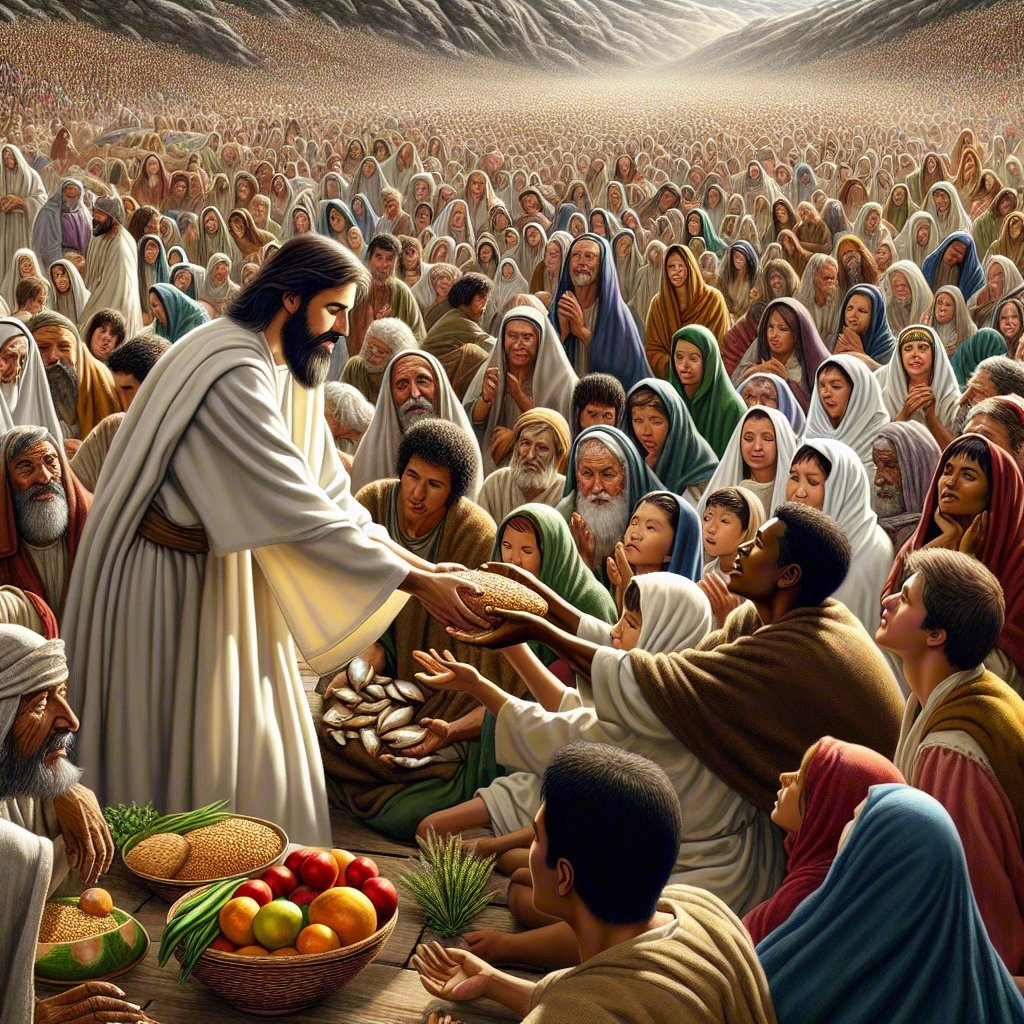
    JESUS FEEDS 5,000
    Imagine the 5,000 in John 6:5-14, a sprawling crowd, weary and wanting, seeking freedom from oppression, clustered around Jesus on a grassy slope. He takes five loaves and two fish, blesses them, and feeds every soul. “And Jesus took the loaves; and when he had given thanks, he distributed to the disciples, and the disciples to them that were set down; and likewise of the fishes as much as they would.” John 6:11

    Twelve baskets overflow with fragments. It’s a marvel, simple yet vast, and the people whisper, “This is of a truth that prophet that should come into the world.” John 6:14

    God steps in, turning a hungry throng into a fed flock, and thereby converting many who witnessed the miracle.
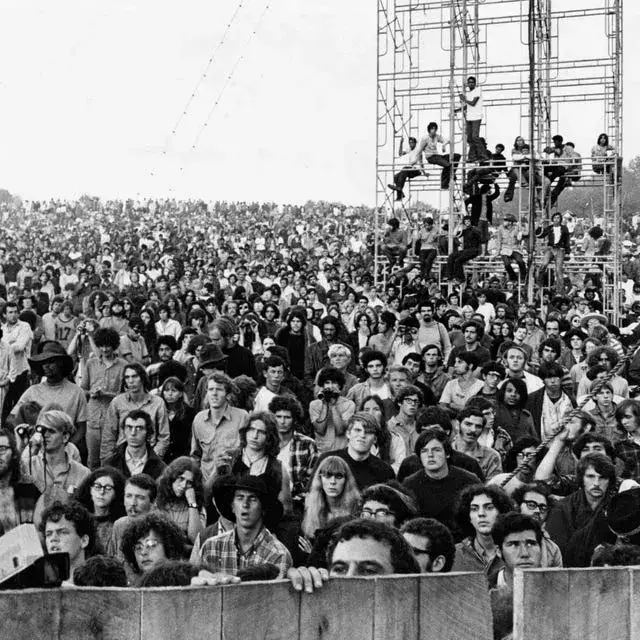
    THE WOODSTOCK FESTIVAL 1969
    Now see Woodstock 1969. Half a million souls gathered together, a tide of long hair and patched jeans, washing over a farm in Bethel, New York. They came for rock and roll, and freedom from oppression, and they got the Jesus Movement.

    “And it shall come to pass in the last days, saith God, I will pour out of my Spirit upon all flesh: and your sons and your daughters shall prophesy.” Acts 2:17

    God stepped in, turning what some called the forsaken, and reaping believers from the chaos, as God does repeatedly throughout history and the Bible.
    TRUMP RALLY
    Then a Trump rally. Thousands upon thousands, many Christian, red hats as banners, packed tight with chants and cheers. Drawn to promises of peace, and freedom from oppression by a government that no longer works for the people. Romans 13:1 speaks to it: “Let every soul be subject unto the higher powers. For there is no power but of God: the powers that be are ordained of God.”

    Like Woodstock’s seekers, this crowd is alive with longing. Is God moving here too, shaping something unseen, just as He has done many times before?
    Heavenly Father, thank you for Your Son, Your Word and Your Spirit. May the world seek You. Amen.

    Recently, there has been a lot of chatter by some Christians on X claiming that other Christians have damned themselves by voting for Trump, so this has been on my heart for a while. I wrote about some of it previously in my blog titled, “RNC 2024,” which you can read here, so I will not repeat what I wrote there. This morning, however, out of the blue, my husband started talking about the Woodstock Festival in 1969, and questioning how so many people, 400,000 +/- souls, all assembled in one place, could have, for the most part, maintained a peaceful gathering? This led to scripture from Holy Spirit, Jacob’s Ladder, and then to this blog.

    When you hear "Bethel," you might think of the ladder to heaven Jacob saw in his dream in Genesis 28:11-19, a ladder to heaven, angels climbing up and down, and God’s voice: “I am with thee, and will keep thee in all places whither thou goest… I will not leave thee.” Jacob awakens, stunned: “Surely the LORD is in this place; and I knew it not… This is none other but the house of God,” and Jacob named it Bethel, meaning “House of God.”

    In August 1969, a different Bethel, Bethel, New York, became its own ladder to heaven. The Woodstock Music Festival turned Max Yasgur’s dairy farm into a cultural and spiritual pivot, shaped by Jewish hands: Michael Lang, Artie Kornfeld, Joel Rosenman, and Yasgur himself. What was by all accounts a debauch three-day party, God turned into a Spiritual Revolution known as “The Jesus Movement,” climbing a modern ladder, from mud to grace.

    ALL ROADS LEAD TO GOD

    Bethel, New York, formerly a part of the larger city of Lumberland, became its own city in 1809, and was named "Bethel" by the Puritans specifically related to the Biblical Jacob's Ladder. Further, The Woodstock Festival was never intended to take place in Bethel, New York. The Festival’s name is derived from Woodstock, a town 40 miles away, where the four organizers first dreamed of a music-and-art fair. But permits in Woodstock fell through, the locals balked at the idea of having half a million people descend on their town, and the clock was ticking for the organizers. They searched diligently for somewhere to hold the festival, and finally, late in planning, received a “yes" from Max Yasgur, a 49-year-old dairy farmer with 600 acres in Bethel, New York. 

    The Woodstock Festival would go down in history as a free-for-all: naked hippies, marijuana smoke clouds, free love preached like the gospel. Christians saw it as a war on Christian values, the nuclear family, and law-and-order America. Some tied it to a “Jewish agenda,” a trope claiming cultural Marxism aimed at toppling Western norms via sex, drugs, and rock and roll. With Lang, Kornfeld, Rosenman, and Yasgur, all being Jewish, conspiracy whispers swirled: Was this a calculated move to break America’s moral spine? Lang, a 24-year-old dropout turned counterculture guru from Brooklyn, pushed “peace” as rebellion. Kornfeld, a Long Island music executive tied to Capitol Records, had the industry clout to amplify it. Rosenman, an Ivy League-polished Manhattan lawyer, bankrolled the chaos with the only Gentile in the group, partner John Roberts. Yasgur, a Russian-Jewish farmer in conservative Bethel, New York, opened the gate, literally, to the flood, leasing his 600 acres for $75,000, despite his neighbors’ fury.

    Their Jewish roots fueled the narrative, echoing Moses smashing the golden calf in Exodus 32:19, a break from tradition, intentional or not. Yasgur told the 400,000-strong crowd, “I’m a farmer… You’ve proven something to the world: half a million kids can get together for fun and music and have nothing but fun and music.” But was that all it was?

    Woodstock was far from a Church. Yet, it thrummed with 400,000 souls hungering for escape from the death of the Vietnam war, chasing transcendence through psychedelics, Eastern mysticism, open sex, and Hendrix riffs. Despite their intent, whatever it was, all of that “seeking” bore fruit. By 1971, the Jesus Movement erupted. Ex-hippies like Lonnie Frisbee, a Woodstock-era drifter turned evangelist, hit California beaches preaching a raw, long-haired, loving Jesus, unbound by pews. “Jesus Freaks” baptized thousands of "born again" John 3:3 Christian converts in the Pacific Ocean and rivers, strumming “Amazing Grace” on guitars, turning Woodstock’s communal, free-spirited vibe into Christian zeal. Time magazine’s 1971 “Jesus Revolution” cover traced it all back to Woodstock’s wake, from muddy ladder to Spiritual revival.

    This was Bethel, New York’s, legacy as a modern Jacob’s ladder: “Verily, verily, I say unto you, Hereafter ye shall see heaven open, and the angels of God ascending and descending upon the Son of man.” John 1:51. At Woodstock, that ladder was chaos: mud, music, open sex, drugs, a generation’s cry. The Jesus Movement climbed the ladder out of the mud, finding Christ where others saw only ruin. Like Jacob, those 400,000 souls did not expect God to be in that place, that weekend. Yet, He was there. Other seeds grew from Woodstock as well: New Age mysticism, back-to-the-land dreams, but the Christian revival stood the tallest and boldest.

    Whether or not the Woodstock Festival was a deep, dark conspiracy to debauch America, or just four free spirits who wanted to flip the middle finger at the establishment, God took what men meant for evil and turned it for His good. Genesis 50:20. In other words, God bends human plans to His Will: “For my thoughts are not your thoughts, neither are your ways my ways, saith the Lord.” Isaiah 55:8. “And we know that all things work together for good to them that love God, to them who are the called according to his purpose” Romans 8:28. What was sinful for those 400,000 souls became salvation for many of them, and more, because of them.

    Max Yasgur didn’t live to see the full Spiritual fallout of Woodstock. He died of a heart attack in 1973, but his farm remains a reminder. Today, the Bethel Woods Center for the Arts sits there, a testament to that summer of 1969. His Jewish identity adds a poetic twist. Like Cyrus, the Persian king who unknowingly served God’s will in the Bible, Yasgur became an accidental vessel. His field, in a place named “House of God” by chance, hosted a generation’s search for meaning. They all found sex and drugs that weekend, and then a vast majority of them subsequently found Jesus. Bethel, New York, named a “House of God” by fluke, became one for real.

    By all accounts, Lang, Kornfeld, Rosenman, and Yasgur did not plot salvation for the masses that summer. Yet, their roles mirror, “Thus saith the Lord to his anointed, to Cyrus… For Jacob my servant’s sake… though thou hast not known me.” Isaiah 45:1-4

    So, conspiracy buffs say Lang and the others meant to fracture America, 400,000 souls as pawns.

    History tries to portray that they just threw a party for three days in August, 1969.

    Bible prophecy hums otherwise: a farm, a festival, and a ladder to the cross for a multitude.

    Let’s take a quick look at King David, God’s greatest king, and probably one of His most flawed.

    King David is one of the Bible’s most celebrated figures, a man after God’s own heart 1 Samuel 13:14, a shepherd turned king, and the author of countless psalms. Yet, his story is far from spotless. One of its darkest chapters begins with a single, fateful glance from a rooftop. David, seeing Bathsheba bathing, succumbed to the lust of the flesh, and committed adultery with her 2 Samuel 11:2-4. What followed was a cascade of sin: deception, betrayal, and murder. When Bathsheba became pregnant from the affair, David orchestrated the death of her husband, Uriah, a loyal soldier, by sending him to the front lines of battle, where he was killed. With Uriah gone, David married Bathsheba, perhaps thinking he had covered his tracks.

    But God sees all. Through the prophet Nathan 2 Samuel 12:9-24, God confronted David, saying, “Why have you despised the word of the LORD, to do what is evil in his sight? You have struck down Uriah the Hittite with the sword and have taken his wife to be your wife." The consequences were severe, as the firstborn child of this union became ill and died, a judgment that broke David’s heart. Yet, in that grief, David turned to God in private, fasting and pleading for mercy, and God heard him. David and Bathsheba later had another son, Solomon, whom the LORD loved, and blessed with great wisdom, and Messianic lineage. As Matthew’s genealogy records at Matthew 1, “David was the father of Solomon by the wife of Uriah, and Solomon the father of Rehoboam," placing him in the direct lineage of Jesus, the promised Christ.
     
    This messy, painful, story reveals a profound truth: God doesn’t require perfect vessels. David was a rough one, flawed, impulsive, and capable of grave sin, but he was also a man who, when faced with his failures, turned to God in private humility. At the height of David’s sin with Bathsheba and Uriah, he stood as an unrepentant king, caught in pride and deceit, hiding his guilt behind his power. Scripture declares, “The thing that David had done displeased the LORD” 2 Samuel 11:2, and God’s judgment came swiftly. When Nathan confronted him, David’s repentance was in front of God and Nathan, and he confessed, “I have sinned against the Lord," and he sought God’s face. Psalm 51 is a personal cry to God, penned by David after Nathan’s rebuke, and lays bare his soul: “Have mercy on me, O God, according to your steadfast love; according to your abundant mercy blot out my transgressions… Create in me a clean heart, O God, and renew a right spirit within me” Psalm 51:1, 10

    Psalm 51 reveals a humbled heart, broken and bent, not for show but for God, proving the LORD weighs what man cannot see:

    “But the LORD said unto Samuel, Look not on his countenance, or on the height of his stature; because I have refused him: for the LORD sees not as man sees; for man looks on the outward appearance, but the Lord looks on the heart.” 1 Samuel 16:7

    God’s choice to use David, and to bring Solomon through this imperfect lineage, to Jesus Christ, shows that His purposes are not thwarted by human weakness. As Paul later wrote, “But we have this treasure in earthen vessels, that the excellency of the power may be of God, and not of us.” 2 Corinthians 4:7. David’s life reminds us that our failures do not disqualify us from God’s plan; rather, they can become the raw material for its very fulfillment. Like clay in the Potter’s hands, it is not the vessel’s perfection that matters; it is the One who shapes it.

    Jump to February 2025, and X is ablaze with Christian chatter. Some say voting for Trump has damned their brethren. They point to his scandals, lawsuits, and words, crying, “Ye shall know them by their fruits,” seeing a wolf in sheep’s clothing, where “Beware of false prophets” seems to fit too well. But God's faithful fire back: “Let every soul be subject unto the higher powers. For there is no power but of God: the powers that be are ordained of God.” They see a flawed tool in Trump, like Woodstock, not a false god. If Woodstock’s chaos could be turned into a ladder to heaven, a vote, or a flawed man, could be redeemed too. So, there are whispers of hope where some would have us believe damnation looms: “For my thoughts are not your thoughts, neither are your ways my ways, saith the Lord.”

    His supporters say, Donald Trump, like David, is a rough vessel, a leader forged in battles, marked by flaws, yet chosen by God for a purpose, like each one of us. Far from the proud and brass caricature his foes portray, his friends and associates say he carries a quiet humility unseen by the world. He surrounds himself at the White House by spiritual advisors, who pray with him daily, and by a cabinet of openly Christian warriors, whose faith burns bright. In private, with his Christian cabinet and advisors, he seeks God’s face, as David did. “If we confess our sins, he is faithful and just to forgive us our sins and to cleanse us from all unrighteousness” 
    1 John 1:9. God alone sees this, and God alone shapes the vessel.

    Trump’s cabinet picks, from Pam Bondi to Kristi Noem to Marco Rubio to Sean Duffy to Karoline Leavitt, and many others, all are bold believers, echoing David’s court of loyal, God-fearing men. These are not polished saints but rough clay vessels, shaped by faith, not perfection.

    His supporters stand as a faithful remnant, like Israel under David’s reign. They see in Trump, and his Christian cabinet, a team after God’s heart, not flawless but fervent for righteousness. They have watched him honor God’s name, proclaim Jesus Christ, fight to end wars, protect the unborn, and fight for the American people, while still maintaining compassion for foreigners, children, and those affected by wars. They trust the scripture, “The king’s heart is a stream of water in the hand of the LORD; he turns it wherever he will” Proverbs 21:1. His supporters believe, like Yasgur’s field at Woodstock, Trump is a rough vessel, a tool, not a saint. God’s plan was for sinful Woodstock to turn to revival. Who is to say that His plan is not to bend the Trump saga to His glory as well? 

    Are Trump's supporters damned for voting for him? No. How could they be? Scripture says, God blesses those who align with His purposes. “Blessed is the nation whose God is the LORD” Psalm 33:12. Their loyalty flows from faith in God, not folly in man, backing a leader and a cabinet who, like David, stumble but seek God’s will. Romans 8:28 stands firm, “All things work together for good to those who love God.” Scoffers mock Trump’s humility, his dignitaries, blind to God’s work through rough clay. His supporters are vessels too, shaped by the Potter’s hand, bearing a nation’s hope, a world's even, before God, despite the scoffers’ scorn. Trump’s presidency, like David’s rule, mirrors a biblical truth: God uses rough clay for His glory, the fulfillment of His Will, and his good pleasure. "Thou art worthy, O Lord, to receive glory and honour and power: for thou hast created all things, and for thy pleasure they are and were created." Revelation 4:11

    So, Bethel’s echo lingers: From Jacob’s Ladder to Woodstock’s muddy fields, God is still flipping chaos to grace, and saving the oppressed. Woodstock waved a peace flag, and proved the world could gather in peace; the Jesus Movement raised a cross, and proved it could kneel there too, all on Bethel’s sodden turf. Trump, his cabinet, and his supporters, stand on this ground, a chaotic world seeking peace, a faithful remnant lifting the cross. Like Woodstock to the Jesus Movement, and David’s humbled turn yielding Solomon, their rough faith may birth a legacy of peace, order and grace, shaped by the Potter’s unwavering hand.

    "And we know that God causes all things to work together for good to those who love God, to those who are called according to His purpose.” Romans 8:28

    Praise God. Thank you, Jesus. Amen.
  • Published on

    WOMEN AND THE BIBLE

    Acts 2


    16 "But this is that which was spoken by the prophet Joel;


    17 And it shall come to pass in the last days, saith God, I will pour out of my Spirit upon all flesh: and your sons and your daughters shall prophesy, and your young men shall see visions, and your old men shall dream dreams:


    18 And on my servants and on my handmaidens I will pour out in those days of my Spirit; and they shall prophesy:"


    See also Joel 2:28-29.


    Holy Spirit put this word on my heart this morning, along with the scripture, Mark 16:9-20. We will take a look at that scripture, and then take a quick look in scripture at some of the most noteworthy women of the Bible. Finally, we will try to understand the controversy over whether or not women should remain silent in church, as written by Apostle Paul.


    This is a difficult word to understand and/or write, and I pray that God guides my words in His Will, and opens the ears of His children to hear. In Jesus' Mighty Name. Amen.


    Admittedly, addressing this topic is something I have avoided over the years, since God awakened me to His Power. Why? Because I am a woman, so immediately anything I say could be considered biased, even by me. Over the years, however, God has proven to me repeatedly with signs and wonders in my life, and through his words in these blogs, that I am no longer my own, but His. See other words about God's Power in My Testimony and My Walk With God. Praise God. Thank you, Jesus. Amen.


    So, let's first look at the scripture Holy Spirit put on my heart with this word:


    Mark 16


    ​9 "Now when Jesus was risen early the first day of the week, he appeared first to Mary Magdalene, out of whom he had cast seven devils.


    10 And she went and told them that had been with him, as they mourned and wept.


    11 And they, when they had heard that he was alive, and had been seen of her, believed not.


    12 After that he appeared in another form unto two of them, as they walked, and went into the country.


    13 And they went and told it unto the residue: neither believed they them.


    14 Afterward he appeared unto the eleven as they sat at meat, and upbraided them with their unbelief and hardness of heart, because they believed not them which had seen him after he was risen.


    15 And he said unto them, Go ye into all the world, and preach the gospel to every creature.


    16 He that believeth and is baptized shall be saved; but he that believeth not shall be damned.


    17 And these signs shall follow them that believe; In my name shall they cast out devils; they shall speak with new tongues;


    18 They shall take up serpents; and if they drink any deadly thing, it shall not hurt them; they shall lay hands on the sick, and they shall recover.


    19 So then after the Lord had spoken unto them, he was received up into heaven, and sat on the right hand of God.


    20 And they went forth, and preached every where, the Lord working with them, and confirming the word with signs following. Amen."


    We will break that down into two discussions, Mark 16:9-16 now, and then Mark 16:17-20 at the end of this blog.


    We can see in Mark 16:9 above that after His resurrection, Jesus appeared first to Mary Magdalene, a woman, from whom he had previously cast out seven devils. This is significant because, as we will see, Jesus had every opportunity to appear first to one of His male disciples.


    John 20:1-10 tells us that Mary Magdalene first saw Jesus' sepulchre open, and she ran to tell Simon Peter and another disciple. Then, they all ran back to the sepulchre, and Simon Peter entered inside, and then the other disciple, and they both saw that the sepulchre was empty. 


    John tells us that the other disciple believed, John 20:8, but "Then the disciples went away again unto their own home." John 20:10


    The disciples just left. They had no idea what the empty sepulchre meant. They did not know what to make of it: "For as yet they knew not the scripture, that he must rise again from the dead." John 20:9


    The disciples, including the eleven, lacked faith, and could not remember Jesus' words spoken to them in Mark 9:31: "For he taught his disciples, and said unto them, The Son of man is delivered into the hands of men, and they shall kill him; and after that he is killed, he shall rise the third day."


    Matthew 16


    22 "Then Peter took him, and began to rebuke him, saying, Be it far from thee, Lord: this shall not be unto thee.


    23 But he turned, and said unto Peter, Get thee behind me, Satan: thou art an offence unto me: for thou savourest not the things that be of God, but those that be of men."


    They could not hear His words. Furthermore, because of their hardness of heart, and unbelief, they also did not believe the women who told them the words God's angels had spoken to them from the empty sepulchre:


    Luke 24


    1 "Now upon the first day of the week, very early in the morning, they came unto the sepulchre, bringing the spices which they had prepared, and certain others with them.


    And they found the stone rolled away from the sepulchre.


    And they entered in, and found not the body of the Lord Jesus.


    And it came to pass, as they were much perplexed thereabout, behold, two men stood by them in shining garments:


    And as they were afraid, and bowed down their faces to the earth, they said unto them, Why seek ye the living among the dead?


    He is not here, but is risen: remember how he spake unto you when he was yet in Galilee,


    Saying, The Son of man must be delivered into the hands of sinful men, and be crucified, and the third day rise again.


    And they remembered his words,


    And returned from the sepulchre, and told all these things unto the eleven, and to all the rest.


    10 It was Mary Magdalene and Joanna, and Mary the mother of James, and other women that were with them, which told these things unto the apostles.


    11 And their words seemed to them as idle tales, and they believed them not."


    But, Mary Magdalene, and the other women, believed. They had great faith, and "they remembered his words" verse 8. Jesus used Mary Magdalene to preach His Resurrection to His disciples, and they did not believe her, and Jesus admonished them for their unbelief and hardness of heart. Mark 16:14 above.


    God always uses sinners, men and women, to fulfill His Will, because we are all sinners. God does not see us as sinners, or as male and female, because to God, we are all One in Christ: "There is neither Jew nor Greek, there is neither bond nor free, there is neither male nor female: for ye are all one in Christ Jesus." Galatians 3:28


    Recently, I heard someone describe it like this: When believers call out to God, he turns toward us to see who is calling him, and instead he sees Jesus, who is standing between us and God. This way, God does not see our sin; he sees Jesus' sacrifice and righteousness. But, for the unbelievers, or those who say they believe but have not been transformed by a renewing of their mind Romans 12:2, when they call out to God, Jesus is not standing in the Way, and God sees them and their sin, and rejects them. This is what Matthew 7:21-23 means:


    Matthew 7


    21 "Not every one that saith unto me, Lord, Lord, shall enter into the kingdom of heaven; but he that doeth the will of my Father which is in heaven.


    22 Many will say to me in that day, Lord, Lord, have we not prophesied in thy name? and in thy name have cast out devils? and in thy name done many wonderful works?


    23 And then will I profess unto them, I never knew you: depart from me, ye that work iniquity."


    Who will God see when you call to him and he turns to see you? He will not turn to us to see if we are male or female, but only to see our righteousness through Christ Jesus, in whom we are all One.


    So, getting back to the scripture Holy Spirit put on my heart this morning, Mark 16:15, one of Jesus' final instructions to his disciples was, "...Go ye into all the world, and preach the gospel to every creature."


    Every creature who believes in Jesus Christ, male and female, receives the same Spirit: "But all these worketh that one and the selfsame Spirit, dividing to every man severally as he will." 1 Corinthians 12:11


    Is Apostle Paul speaking only to men in that verse, when he says, every man? Of course not. He is speaking to every creature at the church of Corinth, men and women, who were all listening to his words, and also every creature who will ever hear.


    We know that the Bible is written in an overall "masculine" form, often referring to "brethren" (brothers and sisters), "man," and "men," when referring to all of mankind, male and female. This is consistent throughout the Bible, in both the Old and New Testaments. We understand to whom each scripture is referring by the context of adjacent scriptures.


    For example, to whom is Jesus referring, when He says, "he" in Mark 16:15-16? "...Go ye into all the world, and preach the gospel to every creature. He that believeth and is baptized shall be saved; but he that believeth not shall be damned."


    "He" in verse 16, when taken in context with "every creature" in verse 15, makes it clear that Jesus is referring to all of mankind, male and female. Every creature, all of mankind, male and female, who believe ...shall be saved. Verse 16


    Salvation does not know if we are male or female. Salvation is for all who believe, and with Salvation comes the endowment of the Holy Spirit:


    John 14


    16 "And I will pray the Father, and he shall give you another Comforter, that he may abide with you for ever;


    17 Even the Spirit of truth; whom the world cannot receive, because it seeth him not, neither knoweth him: but ye know him; for he dwelleth with you, and shall be in you."


    With the endowment of the Holy Spirit comes the gifts of the Spirit, as described by Apostle Paul to the entire congregation at Corinth, male and female, 1 Corinthians 12 below. Was Paul speaking only to the men when he says in 1 Corinthians 12:1 "Now concerning spiritual gifts, brethren, I would not have you ignorant." Of course not. Men and women can be saved, can receive the Holy Spirit, and can and do receive gifts of the Spirit, different gifts, same Spirit:


    1 Corinthians 12


    "Now there are diversities of gifts, but the same Spirit.


    And there are differences of administrations, but the same Lord.


    And there are diversities of operations, but it is the same God which worketh all in all.


    But the manifestation of the Spirit is given to every man to profit withal.


    For to one is given by the Spirit the word of wisdom; to another the word of knowledge by the same Spirit;


    To another faith by the same Spirit; to another the gifts of healing by the same Spirit;


    10 To another the working of miracles; to another prophecy; to another discerning of spirits; to another divers kinds of tongues; to another the interpretation of tongues:


    11 But all these worketh that one and the selfsame Spirit, dividing to every man severally as he will.


    12 For as the body is one, and hath many members, and all the members of that one body, being many, are one body: so also is Christ.


    13 For by one Spirit are we all baptized into one body, whether we be Jews or Gentiles, whether we be bond or free; and have been all made to drink into one Spirit.


    14 For the body is not one member, but many."


    Next, let's look at some of the Noteworthy Women of the Bible, and then, finally, Apostle Paul's controversial words, when he said that women should not teach in the church, but should remain silent.


    NOTEWORTHY WOMEN OF THE BIBLE


    Deborah, a Prophetess, and Judge of Israel


    Judges 4:4 "And Deborah, a prophetess, the wife of Lapidoth, she judged Israel at that time." See also, Judges 4, 5.


    Huldah, a Prophetess


    2 Kings 22


    14 "So Hilkiah the priest, and Ahikam, and Achbor, and Shaphan, and Asahiah, went unto Huldah the prophetess, the wife of Shallum the son of Tikvah, the son of Harhas, keeper of the wardrobe; (now she dwelt in Jerusalem in the college;) and they communed with her.


    15 And she said unto them, Thus saith the Lord God of Israel, Tell the man that sent you to me,


    16 Thus saith the Lord, Behold, I will bring evil upon this place, and upon the inhabitants thereof, even all the words of the book which the king of Judah hath read:


    17 Because they have forsaken me, and have burned incense unto other gods, that they might provoke me to anger with all the works of their hands; therefore my wrath shall be kindled against this place, and shall not be quenched.


    18 But to the king of Judah [Josiah] which sent you to enquire of the Lord, thus shall ye say to him, Thus saith the Lord God of Israel, As touching the words which thou hast heard;


    19 Because thine heart was tender, and thou hast humbled thyself before the Lord, when thou heardest what I spake against this place, and against the inhabitants thereof, that they should become a desolation and a curse, and hast rent thy clothes, and wept before me; I also have heard thee, saith the Lord.


    20 Behold therefore, I will gather thee unto thy fathers, and thou shalt be gathered into thy grave in peace; and thine eyes shall not see all the evil which I will bring upon this place. And they brought the king word again." 


    See also, 2 Chronicles 34:14-33.


    Anna, a Prophetess, who was at the Temple day and night, and preached the Salvation of Christ


    Luke 2


    36 "And there was one Anna, a prophetess, the daughter of Phanuel, of the tribe of Aser: she was of a great age, and had lived with an husband seven years from her virginity;


    37 And she was a widow of about fourscore and four years, which departed not from the temple, but served God with fastings and prayers night and day.


    38 And she coming in that instant gave thanks likewise unto the Lord, and spake of him to all them that looked for redemption in Jerusalem."


    The Woman At The Well: A Samaritan woman [Gentile] was the first person to whom Jesus revealed Himself as the Messiah, and many were saved through her preaching and testimony:


    John 4


    1 "When therefore the Lord knew how the Pharisees had heard that Jesus made and baptized more disciples than John,


    (Though Jesus himself baptized not, but his disciples,)


    He left Judaea, and departed again into Galilee.


    And he must needs go through Samaria.


    Then cometh he to a city of Samaria, which is called Sychar, near to the parcel of ground that Jacob gave to his son Joseph.


    Now Jacob's well was there. Jesus therefore, being wearied with his journey, sat thus on the well: and it was about the sixth hour.


    There cometh a woman of Samaria to draw water: Jesus saith unto her, Give me to drink.


    (For his disciples were gone away unto the city to buy meat.)


    Then saith the woman of Samaria unto him, How is it that thou, being a Jew, askest drink of me, which am a woman of Samaria? for the Jews have no dealings with the Samaritans.


    10 Jesus answered and said unto her, If thou knewest the gift of God, and who it is that saith to thee, Give me to drink; thou wouldest have asked of him, and he would have given thee living water.


    11 The woman saith unto him, Sir, thou hast nothing to draw with, and the well is deep: from whence then hast thou that living water?


    12 Art thou greater than our father Jacob, which gave us the well, and drank thereof himself, and his children, and his cattle?


    13 Jesus answered and said unto her, Whosoever drinketh of this water shall thirst again:


    14 But whosoever drinketh of the water that I shall give him shall never thirst; but the water that I shall give him shall be in him a well of water springing up into everlasting life.


    15 The woman saith unto him, Sir, give me this water, that I thirst not, neither come hither to draw.


    16 Jesus saith unto her, Go, call thy husband, and come hither.


    17 The woman answered and said, I have no husband. Jesus said unto her, Thou hast well said, I have no husband:


    18 For thou hast had five husbands; and he whom thou now hast is not thy husband: in that saidst thou truly.


    19 The woman saith unto him, Sir, I perceive that thou art a prophet.


    20 Our fathers worshipped in this mountain; and ye say, that in Jerusalem is the place where men ought to worship.


    21 Jesus saith unto her, Woman, believe me, the hour cometh, when ye shall neither in this mountain, nor yet at Jerusalem, worship the Father.


    22 Ye worship ye know not what: we know what we worship: for salvation is of the Jews.


    23 But the hour cometh, and now is, when the true worshippers shall worship the Father in spirit and in truth: for the Father seeketh such to worship him.


    24 God is a Spirit: and they that worship him must worship him in spirit and in truth.


    25 The woman saith unto him, I know that Messias cometh, which is called Christ: when he is come, he will tell us all things.


    26 Jesus saith unto her, I that speak unto thee am he.


    27 And upon this came his disciples, and marvelled that he talked with the woman: yet no man said, What seekest thou? or, Why talkest thou with her?


    28 The woman then left her waterpot, and went her way into the city, and saith to the men,


    29 Come, see a man, which told me all things that ever I did: is not this the Christ?


    30 Then they went out of the city, and came unto him.


    31 In the mean while his disciples prayed him, saying, Master, eat.


    32 But he said unto them, I have meat to eat that ye know not of.


    33 Therefore said the disciples one to another, Hath any man brought him ought to eat?


    34 Jesus saith unto them, My meat is to do the will of him that sent me, and to finish his work.


    35 Say not ye, There are yet four months, and then cometh harvest? behold, I say unto you, Lift up your eyes, and look on the fields; for they are white already to harvest.


    36 And he that reapeth receiveth wages, and gathereth fruit unto life eternal: that both he that soweth and he that reapeth may rejoice together.


    37 And herein is that saying true, One soweth, and another reapeth.


    38 I sent you to reap that whereon ye bestowed no labour: other men laboured, and ye are entered into their labours.


    39 And many of the Samaritans of that city believed on him for the saying of the woman, which testified, He told me all that ever I did.


    40 So when the Samaritans were come unto him, they besought him that he would tarry with them: and he abode there two days.


    41 And many more believed because of his own word;


    42 And said unto the woman, Now we believe, not because of thy saying: for we have heard him ourselves, and know that this is indeed the Christ, the Saviour of the world."


    Sister Phebe, Servant of the Church at Cenchrea; and, Priscilla, Helpers in Christ, whom Apostle Paul praised.


    Romans 16


    "I commend unto you Phebe our sister, which is a servant of the church which is at Cenchrea:


    That ye receive her in the Lord, as becometh saints, and that ye assist her in whatsoever business she hath need of you: for she hath been a succourer of many, and of myself also.


    Greet Priscilla and Aquila my helpers in Christ Jesus:


    Who have for my life laid down their own necks: unto whom not only I give thanks, but also all the churches of the Gentiles.


    Likewise greet the church that is in their house. Salute my well-beloved Epaenetus, who is the firstfruits of Achaia unto Christ."


    OTHER NOTEWORTHY WOMEN OF THE BIBLE


    See a more comprehensive list of Noteworthy Women of the Bible at the bottom of this blog.


    In Romans 16:2 above, Apostle Paul refers to Sister Phebe as a "saint," a true believer in Christ.


    In verse 5, we learn that the "church" was in Priscilla and Aquila's house: "Likewise greet the church that is in their house. . ." It was a custom at the time for churches to be in the homes of believers.


    We learn from Acts 18 that this same Priscilla (and Aquila), preached unto a man in the synagogue "the way of God more perfectly":


    Acts 18


    24 "And a certain Jew named Apollos, born at Alexandria, an eloquent man, and mighty in the scriptures, came to Ephesus.


    25 This man was instructed in the way of the Lord; and being fervent in the spirit, he spake and taught diligently the things of the Lord, knowing only the baptism of John.


    26 And he began to speak boldly in the synagogue: whom when Aquila and Priscilla had heard, they took him unto them, and expounded unto him the way of God more perfectly."


    Apostle Paul does not reprove, or correct, Priscilla by telling her she should remain silent. Apostle Paul praises Priscilla's service in Romans 16:3-5 above. 


    Paul also says at 1 Corinthians 11:5 "But every woman that prays or prophesies with her head uncovered dishonors her head. . ."


    Paul is saying that women prophesy, and we know that no one prophesies in silence!


    So, we can see that, scripturally, women have played a fairly significant role in the history of mankind. Why are there so many noteworthy women, even women praised by Apostle Paul, and yet Paul seems to say in 1 Corinthians 14:34-35 below that women should be silent? Is Paul contradicting himself? Of course not.


    1 Corinthians 14


    34 "Let your women keep silence in the churches: for it is not permitted unto them to speak; but they are commanded to be under obedience as also saith the law.


    35 And if they will learn any thing, let them ask their husbands at home: for it is a shame for women to speak in the church."


    First, let's look at how the word "silent" is used here. The Greek word used, sigaō (to be silent), doesn’t necessarily mean absolute muteness. Earlier in the same chapter 14:28, 30, Paul uses it to tell tongue-speakers and prophets to be quiet if their speech would disrupt order.


    To understand why Paul says these things to the people of Corinth, and what it means to us today, it is important to understand the Gentile city of Corinth, to whom Paul was speaking in his letters in Corinthians.


    Excerpts from biblestudytools.com


    "Corinth was a thriving city; it was at the time the chief city of Greece both commercially and politically, and was "one of the dominant commercial centers of the Mediterranean world as early as the eighth century b.c." 


    "Although Corinth was not a university town like Athens, it was characterized nevertheless by typical Greek culture. Its people were interested in Greek philosophy and placed a high premium on wisdom."


    "Corinth contained at least 12 temples. Whether they were all in use during Paul's time is not known for certain. One of the most infamous was the temple dedicated to Aphrodite, the goddess of love, whose worshipers practiced religious prostitution."


    "Like any large commercial city, Corinth was a center for open and unbridled immorality. The worship of Aphrodite fostered prostitution in the name of religion. At one time 1,000 sacred (priestess) prostitutes served her temple. So widely known did the immorality of Corinth become that the Greek verb "to Corinthianize" came to mean "to practice sexual immorality." In a setting like this it is no wonder that the Corinthian church was plagued with numerous problems."


    "The letter [Paul's letter, 1 Corinthians] revolves around the theme of problems in Christian conduct in the church. It thus has to do with progressive sanctification, the continuing development of a holy character. Obviously Paul was personally concerned with the Corinthians' problems, revealing a true pastor's (shepherd's) heart."


    So, the people of Corinth followed the misguided doctrine of men (mankind), still based in the practice of religious prostitution, and all manner of sexual immorality, worshipping pagan gods and goddesses like Aphrodite. Not only did they follow these doctrine, but they believed they were acceptable to God and worthy of Salvation. They were an unruly lot, prone to every manner of abomination, believing themselves to be righteous. 


    In addition, the church of Corinth was divided, in that women sat on one side of the room, and men sat on the other side of the room. While the word was being given, unruly women would often yell out to their husbands on the other side of the room. Thus, Paul's admonition for women to remain silent. Also, because they followed the misguided doctrine of the men of Corinth, they were unable to teach sound doctrine, and, therefore, were instructed by Paul not to teach. 


    ​We know that Apostle Paul wrote 13 letters, or epistles, that were specific instructions to the Gentile congregations (male and female members) throughout Asia at the time. See a timeline of these epistles at the bottom of this blog. He begins the letters to Corinth by pointing out that he had received bad reports on them from "the house of Chloe," another woman. 


    Paul clearly valued the role of women in the church:


    1 Corinthians 1


    10 "Now I beseech you, brethren, by the name of our Lord Jesus Christ, that ye all speak the same thing, and that there be no divisions among you; but that ye be perfectly joined together in the same mind and in the same judgment.


    11 For it hath been declared unto me of you, my brethren, by them which are of the house of Chloe, that there are contentions among you."


    Paul encountered the same division, and unruly, immoral behavior, being practiced in churches from Rome to Philemon. Yet, his admonition for women to remain silent is only written to Corinth and Ephesus. He reiterates his letter to Corinth at 1 Timothy 2: Women should learn in silence, and should not be allowed to teach in the church.


    Let's look at 1 Timothy 2:12 "But I suffer not a woman to teach, nor to usurp authority over the man, but to be in silence." When we read this scripture in context with verses 9-10, Paul is saying that, just as clothing should reflect a controlled demeanor, so too should behavior in a church service reflect godliness, and women should not be loud and unruly in church. 


    "Let all things be done decently and in order." 1 Corinthians 14: 40 


    When taken in context with Paul's praise of women in the church, shown herein, we understand that Paul is saying in these two instances that women should remain silent until they can speak in Truth, like Priscilla, Phebe, and other noteworthy women of the Bible. The confusion from Apostle Paul's words about women is not unlike other instances of doctrinal debate. We must study the Bible as a whole, rightly dividing the word of God. 2 Timothy 2:15. Paul's words about women remaining silent must be tempered with his other words that praise women who preach, teach and prophesy, and also tempered with Jesus' works through women, as well as the remainder of God's Word, which says, among many other things:


    There is only One God.


    We are all One in Him.


    There are varying gifts, but one Spirit that works in us all.


    In the remainder of the scripture from Holy Spirit this morning, Mark 16:17-20, God is saying, Who are you to judge your brothers (sisters) in Christ, when you do not have the faith to bring forth God's Will for believers through Christ Jesus? 


    Mark 16


    17 "And these signs shall follow them that believe; In my name shall they cast out devils; they shall speak with new tongues;


    18 They shall take up serpents; and if they drink any deadly thing, it shall not hurt them; they shall lay hands on the sick, and they shall recover.


    19 So then after the Lord had spoken unto them, he was received up into heaven, and sat on the right hand of God.


    20 And they went forth, and preached every where, the Lord working with them, and confirming the word with signs following. Amen."


    How many Christians lay hands on the sick, or speak with new tongues? Many Christians mock and/or crucify their brothers and sisters in Christ for performing these signs that Jesus said would follow true believers.


    “Thou hypocrite, first cast out the beam out of thine own eye; and then shalt thou see clearly to cast out the mote out of thy brother's eye.” Matthew 7:5


    Remember what Apostle Paul said in Romans 15:20 "Yea, so have I strived to preach the gospel, not where Christ was named, lest I should build upon another man's foundation:"


    Preach the gospel.


    "Quench not the Spirit. Despise not prophesyings. Prove all things; hold fast that which is good." 1 Thessalonians 5:20-21


    ​Paul's 13 Epistles: Cities, Sexual Immorality, and Women’s Silence


    Paul’s letters were written to Christian communities or individuals leading them, not to Jewish synagogues as institutions. He encountered sexual immorality across the 13 cities (epistles), but writes that women should remain silent in only 2: Corinth and Ephesus.

    1. Romans (Rome)
    • Sexual Immorality: Romans 1:26-27, “vile affections… men with men,” a general condemnation. Paul hadn’t visited (Romans 1:10-13) but arrived later (Acts 28:16). Rome’s decadence (prostitution, orgies) means he encountered it. 
    • Women’s Silence: No command—Romans 16:1-3 praises Phoebe and Priscilla, active women.
    1. 1 Corinthians (Corinth)
    • Sexual Immorality: 1 Corinthians 5:1, “fornication… one should have his father’s wife”; 6:18, “flee fornication.” Corinth’s pagan temples (Acts 18:1-8) confirm it. 
    • Women’s Silence: 1 Corinthians 14:34-35, “Let your women keep silence in the churches… it is a shame for women to speak in the church.”
    1. 2 Corinthians (Corinth)
    • Sexual Immorality: No specific mention (focus on ministry, 2 Cor. 11:13), but Corinth’s ongoing culture (Acts 18) suggests he still faced it. 
    • Women’s Silence: No repeat of the command from 1 Corinthians.
    1. Galatians (Galatia—e.g., Antioch of Pisidia, Iconium, Lystra, Derbe)
    • Sexual Immorality: No direct reference (Gal. 1:6, Judaizing issue), but Gentile idolatry (Gal. 4:8) and Acts 14:8-18 (paganism) imply temple immorality. 
    • Women’s Silence: No instruction—Galatians 3:28, “neither male nor female,” suggests equality.
    1. Ephesians (Ephesus)
    • Sexual Immorality: Ephesians 5:3, “fornication… let it not be once named among you.” Acts 19:19-27 (Artemis temple, prostitution) shows he encountered it. 
    • Women’s Silence: No direct command—Ephesians 5:22 urges wives’ submission, not silence.
    1. Philippians (Philippi)
    • Sexual Immorality: No mention (Phil. 4:1-2, unity focus). Acts 16:16 (divination) and Gentile roots (Acts 16:14) suggest it.
    • Women’s Silence: No command—Philippians 4:2-3 names vocal women (Euodias, Syntyche).
    1. Colossians (Colosse)
    • Sexual Immorality: Colossians 3:5, “fornication, uncleanness,” general advice. Paul didn’t visit (Col. 2:1), but Phrygian paganism via Epaphras (Col. 1:7) implies it.
    • Women’s Silence: No command—Colossians 3:18 calls for submission, not silence.
    1. 1 Thessalonians (Thessalonica)
    • Sexual Immorality: 1 Thessalonians 4:3-5, “abstain from fornication… not in the lust of concupiscence.” Acts 17:4 (Gentile converts) and temples confirm it. 
    • Women’s Silence: No instruction—focus is moral living.
    1. 2 Thessalonians (Thessalonica)
    • Sexual Immorality: No specific mention (eschatology focus), but Thessalonica’s culture (Acts 17) suggests it persisted.
    • Women’s Silence: No command.
    1. 1 Timothy (Ephesus)
    • Sexual Immorality: 1 Timothy 1:10, “whoremongers,” hints at local issues. Acts 19:19-27 (Ephesus’ vice) supports it. 
    • Women’s Silence: 1 Timothy 2:11-12, “Let the woman learn in silence… I suffer not a woman to teach… but to be in silence.”
    1. 2 Timothy (Ephesus)
    • Sexual Immorality: No direct mention (pastoral focus, 2 Tim. 2:2), but Ephesus’ context (Acts 19) implies it. 
    • Women’s Silence: No repeat of 1 Timothy’s command.
    1. Titus (Crete)
    • Sexual Immorality: Titus 1:12, “Cretans are… evil beasts”; Titus 2:3-5 urges chastity, hinting at issues. Crete’s reputation (Acts 27:7-13) backs it. 
    • Women’s Silence: No silence command—Titus 2:3-5 calls women “chaste.”
    1. Philemon (Colosse-area)
    • Sexual Immorality: No mention (personal letter). Colosse’s regional paganism (Col. 1:7) suggests it. 
    • Women’s Silence: No church rules or silence instruction.


    Noteworthy Women of the Bible: Role, Scripture, Significance.


    1. Deborah (Judges 4:4-5, 14)
    • Role: A prophetess and judge of Israel who led the nation to victory.
    • Scripture: Judges 4:4, “And Deborah, a prophetess… judged Israel”; 4:14, “Up; for this is the day in which the Lord hath delivered Sisera into thine hand.”
    • Significance: Guided Barak in battle, showing leadership and divine inspiration.
    1. Huldah (2 Kings 22:14-20)
    • Role: A prophetess consulted by King Josiah’s men about the Book of the Law.
    • Scripture: 2 Kings 22:14, “Huldah the prophetess”; 22:16-17, she prophesies judgment and mercy.
    • Significance: Her word confirmed God’s will during a national revival.
    1. Anna (Luke 2:36-38)
    • Role: A prophetess who served in the Temple, proclaiming Christ’s salvation.
    • Scripture: Luke 2:36-37, “Anna, a prophetess… served God with fastings and prayers night and day”; 2:38, “spake of him to all them that looked for redemption.”
    • Significance: Recognized the infant Jesus as Messiah, preaching His purpose.
    1. The Woman at the Well (John 4:7-42)
    • Role: A Samaritan (Gentile) woman, first to whom Jesus revealed Himself as Messiah.
    • Scripture: John 4:25-26, “I that speak unto thee am he”; 4:39, “Many of the Samaritans… believed on him for the saying of the woman.”
    • Significance: Evangelized her town, bridging Jew and Gentile.
    1. Phoebe (Romans 16:1-2)
    • Role: A servant (deacon) of the church at Cenchrea, commended by Paul.
    • Scripture: Romans 16:1-2, “Phebe our sister, which is a servant of the church… a succourer of many, and of myself also.”
    • Significance: Likely delivered Romans, showing trusted ministry.
    1. Priscilla (Acts 18:24-26; Romans 16:3-4)
    • Role: Paul’s helper in Christ, taught Apollos with her husband Aquila.
    • Scripture: Acts 18:26, “Expounded unto him the way of God more perfectly”; Romans 16:3, “My helpers in Christ Jesus.”
    • Significance: Risked her life for Paul, a key teacher in the early church.
    1. Sarah (Sarai) (Genesis 21:1-3; Hebrews 11:11)
    • Role: Abraham’s wife, mother of Israel through Isaac.
    • Scripture: Genesis 21:1-2, “The Lord visited Sarah… and Sarah bare Abraham a son”; Hebrews 11:11, “Through faith also Sara… received strength to conceive seed.”
    • Significance: Matriarch whose faith birthed a nation.
    1. Miriam (Exodus 15:20-21)
    • Role: Moses’ sister, a prophetess who led worship after the Red Sea.
    • Scripture: Exodus 15:20, “Miriam the prophetess… took a timbrel”; 15:21, “Sing ye to the Lord, for he hath triumphed gloriously.”
    • Significance: Celebrated God’s deliverance, though later humbled (Numbers 12).
    1. Noadiah (Nehemiah 6:14)
    • Role: A prophetess who opposed Nehemiah (likely false).
    • Scripture: Nehemiah 6:14, “My God, think thou upon… Noadiah the prophetess, and the rest of the prophets, that would have put me in fear.”
    • Significance: Shows prophetesses’ influence, even if misused.
    1. Mary, Mother of Jesus (Luke 1:26-38, 41-49)
    • Role: Mother of the Messiah, praised God’s plan.
    • Scripture: Luke 1:46-48, “My soul doth magnify the Lord… all generations shall call me blessed.”
    • Significance: Obedient vessel for Christ’s birth.
    1. Elizabeth (Luke 1:41-45)
    • Role: Mother of John the Baptist, filled with the Holy Ghost.
    • Scripture: Luke 1:41-42, “The babe leaped in her womb; and Elizabeth… spake out with a loud voice, Blessed art thou among women.”
    • Significance: Affirmed Mary’s role through prophecy.
    1. Philip’s Four Daughters (Acts 21:8-9)
    • Role: Prophetesses, daughters of Philip the evangelist.
    • Scripture: Acts 21:9, “The same man had four daughters, virgins, which did prophesy.”
    • Significance: Fulfilled Acts 2:17, “Your daughters shall prophesy.”
    1. Rahab (Joshua 2:1-21, 6:22-25; Hebrews 11:31)
    • Role: Canaanite harlot who hid spies, saved by faith.
    • Scripture: Joshua 2:11, “The Lord your God, he is God”; Hebrews 11:31, “By faith the harlot Rahab perished not.”
    • Significance: In Christ’s lineage (Matthew 1:5).
    1. Ruth (Ruth 1-4)
    • Role: Moabite widow, loyal to Naomi and God.
    • Scripture: Ruth 1:16, “Thy people shall be my people”; Ruth 4:17, David’s grandmother.
    • Significance: Faith led to Christ’s ancestry (Matthew 1:5).
    1. Esther (Esther 2-9)
    • Role: Queen who saved Jews from genocide.
    • Scripture: Esther 4:16, “If I perish, I perish”; Esther 8:3-7, deliverance secured.
    • Significance: Courage preserved Israel.
    1. Abigail (1 Samuel 25:3-42)
    • Role: Wise wife who pacified David.
    • Scripture: 1 Samuel 25:32-33, “Blessed be thy advice, and blessed be thou.”
    • Significance: Peacemaker, later David’s wife.
    1. Jael (Judges 4:17-22)
    • Role: Killed Sisera, aiding Israel’s victory.
    • Scripture: Judges 4:21, “Jael… smote Sisera.”
    • Significance: Fulfilled Deborah’s prophecy.
    1. Hannah (1 Samuel 1:1-2:11)
    • Role: Prayed for Samuel, dedicated him to God.
    • Scripture: 1 Samuel 1:27-28, “For this child I prayed”; 2:1, “My heart rejoiceth.”
    • Significance: Mother of a prophet-judge.
    1. The Shunammite Woman (2 Kings 4:8-37)
    • Role: Housed Elisha; faith revived her son.
    • Scripture: 2 Kings 4:30, “I will not leave thee”; 4:37, son restored.
    • Significance: Persistent faith rewarded.
    1. Junia (Romans 16:7)
    • Role: Noted among the apostles with Andronicus.
    • Scripture: Romans 16:7, “Of note among the apostles.”
    • Significance: Esteemed early church figure.
    1. Lydia (Acts 16:14-15, 40)
    • Role: First European convert, hosted church.
    • Scripture: Acts 16:14, “Whose heart the Lord opened”; 16:15, “Come into my house.”
    • Significance: Supported Paul’s mission.
    1. Tamar (Genesis 38:6-30)
    • Role: Ensured Judah’s lineage.
    • Scripture: Genesis 38:26, “She hath been more righteous than I”; Matthew 1:3, in genealogy.
    • Significance: Boldness shaped Israel.
    1. Rebekah (Genesis 24:15-67, 25:21-26)
    • Role: Isaac’s wife, mother of Jacob.
    • Scripture: Genesis 24:58, “I will go”; 25:23, “The elder shall serve the younger.”
    • Significance: Matriarch guided by God.
    1. The Widow of Zarephath (1 Kings 17:9-24)
    • Role: Fed Elijah; son raised.
    • Scripture: 1 Kings 17:15, “Did according to… Elijah”; 17:24, “Thou art a man of God.”
    • Significance: Faith in famine.
    1. Mary Magdalene (John 20:1-18)
    • Role: First to see risen Christ, told disciples.
    • Scripture: John 20:18, “Told the disciples that she had seen the Lord.”
    • Significance: “Apostle to the Apostles.”
    1. Joanna (Luke 8:3, 24:10)
    • Role: Funded Jesus, saw resurrection.
    • Scripture: Luke 8:3, “Ministered unto him”; 24:10, at tomb.
    • Significance: Faithful witness.
    1. Chloe (1 Corinthians 1:11)
    • Role: Her household reported to Paul.
    • Scripture: 1 Corinthians 1:11, “Declared unto me… by them which are of the house of Chloe.”
    • Significance: Key informant.

  • Published on

    A NEW HEART


    Heavenly Father, let all men turn from evil, seek God's righteousness, and believe in His Son, Jesus Christ. Amen.


    Recently, I had a discussion with someone on X.com (Twitter), who said that God must "regenerate" us, or give us a new heart, before we can believe in Jesus Christ as our Savior. He used 1 Corinthians 2:14 below to support his claim:


    "But the natural man receiveth not the things of the Spirit of God: for they are foolishness unto him: neither can he know them, because they are spiritually discerned."


    His supposition was that all men are "natural" men, born into sin, which is true: we are all sinners. Therefore, he said that we cannot see past our darkened hearts, to believe in and accept Jesus Christ as our Savior, unless God first regenerates our heart, or gives us a "new heart."


    When asked to quote scripture that says God first regenerates our heart before we can accept Jesus, he could not, but kept quoting the same scripture, 1 Corinthians 2:14, and debating his understanding of it. 


    First, is his understanding of 1 Corinthians 2:14 flawed?


    We should read 1 Corinthians 2, in its entirety, to understand the context of what Apostle Paul is talking about. Here, Paul is preaching to the sinners at Corinth, of which many confessed belief in Christ, but practiced all manner of immorality. They blindly followed the misguided men of Corinth, and believed that their behavior was normal and acceptable to the Lord.


    In verse 5, Paul tells them that their faith should not stand in the wisdom of men, but in the power of God. So, he is telling these sinners at Corinth that until they put their faith in God, instead of the world, they will remain "natural" men, unable to discern God's Word.


    The Bible further tells us that God wants ALL men to be saved, not just the ones He picks and chooses to give a "new heart": 


    "Who will have all men to be saved, and to come unto the knowledge of the truth.” 1 Timothy 2:4


    "For God so loved the world, that he gave his only begotten Son, that whosoever believeth in him should not perish, but have everlasting life." John 3:16


    All men. Whosoever believes.


    Now, the "knowledge of the truth" mentioned in 1 Timothy 2:4 above was promised by Jesus, after His death and resurrection, just before He ascended to the right hand of the Father in heaven. Jesus told His disciples that He would pray the Father to send the Comforter to guide believers  John 14:16-17. "The knowledge of the truth" comes from the Spirit of God (the Comforter, the Holy Spirit, the Holy Ghost, the Spirit of Truth, all one in the same Spirit of God):


    "Howbeit when he, the Spirit of truth, is come, he will guide you into all truth: for he shall not speak of himself; but whatsoever he shall hear, that shall he speak: and he will shew you things to come." John 16:13


    Although the twitter poster's understanding of 1 Corinthians 2:14 may be flawed, is it entirely inaccurate? The short answer is, Yes, it is entirely inaccurate. We can only receive the "knowledge of the truth," or God's Spirit, spoken of in 1 Timothy 2:4 above after accepting and believing in Jesus Christ, not before.


    Let's look at the specific scripture that tells us about man's new heart, Ezekiel 36:25-26:


    25 "Then will I sprinkle clean water upon you, and ye shall be clean: from all your filthiness, and from all your idols, will I cleanse you.


    26 A new heart also will I give you, and a new spirit will I put within you: and I will take away the stony heart out of your flesh, and I will give you an heart of flesh."


    We can see, when taking verses 25 and 26, in context, that God will indeed "regenerate," or give us a new heart, but not before sprinkling us with clean water. Jesus is the water of life referred to in Ezekiel 36:25:


    John 4


    13 "Jesus answered and said unto her, Whosoever drinketh of this water shall thirst again:


    14 But whosoever drinketh of the water that I shall give him shall never thirst; but the water that I shall give him shall be in him a well of water springing up into everlasting life."


    The key, however, to understanding 1 Corinthians 2:14 is knowing that we must first seek God's righteousness: “But seek ye first the kingdom of God, and his righteousness; and all these things shall be added unto you.” Matthew 6:33


    ​Seek God's righteousness. Be not conformed to the world, but be transformed by the renewing of your mind:


    Romans 12


    2 "And be not conformed to this world: but be ye transformed by the renewing of your mind, that ye may prove what is that good, and acceptable, and perfect, will of God.


    For I say, through the grace given unto me, to every man that is among you, not to think of himself more highly than he ought to think; but to think soberly, according as God hath dealt to every man the measure of faith."


    Draw close to God (seek God's goodness), and He will draw close to you:


    "Draw nigh to God, and he will draw nigh to you. Cleanse your hands, ye sinners; and purify your hearts, ye double minded." James 4:7


    Some men will never repent of the sin in their lives. Their hearts are dark and evil, and full of every abomination. The Light of Jesus, and the Word of God, hurts their eyes and ears. It offends them. It is foolishness to them. 1 Corinthians 2:14. These "natural" men are drawn to evil because they have submitted themselves to it:


    Romans 6 


    16 "Know ye not, that to whom ye yield yourselves servants to obey, his servants ye are to whom ye obey; whether of sin unto death, or of obedience unto righteousness?


    17 But God be thanked, that ye were the servants of sin, but ye have obeyed from the heart that form of doctrine which was delivered you."


    "Submit yourselves therefore to God. Resist the devil, and he will flee from you." James 4:7


    The children of God. And, children of the devil: 


    1 John 3


    10 "In this the children of God are manifest, and the children of the devil: whosoever doeth not righteousness is not of God, neither he that loveth not his brother.


    11 For this is the message that ye heard from the beginning, that we should love one another."


    God sent Jesus to save all men who believe, and all men have a choice to seek God's goodness, and be called the "children of God," or live in darkness, and be called the "children of the devil."


    God searches the heart and tries the reins (He allows us to be tested [by Satan]), and gives us the faith of which we are worthy (Romans 12:3 above):


    Jeremiah 17


    9 "The heart is deceitful above all things, and desperately wicked: who can know it?


    10 I the Lord search the heart, I try the reins, even to give every man according to his ways, and according to the fruit of his doings.


    11 As the partridge sitteth on eggs, and hatcheth them not; so he that getteth riches, and not by right, shall leave them in the midst of his days, and at his end shall be a fool."


    Again, God wants All Men, Whosoever Believe, to be saved. To prove this, His Word tells us that, "This gospel of the kingdom shall be preached in all the world for a witness unto all nations; and then shall the end come." Matthew 24:14


    Some men may never repent of the sin in their lives, but we will all have a chance to be saved. We can all hear the gospel preached, if we seek the goodness of God.


    Let's look at the example of Cain and Abel, the intrinsically evil man versus the intrinsically good man (read more about Cain and Abel here):


    "The [intrinsically] good man produces what is good and honorable and moral out of the good treasure [stored] in his heart; and the [intrinsically] evil man produces what is wicked and depraved out of the evil [in his heart]; for his mouth speaks from the overflow of his heart." Luke 6:45 AMP


    Cain was an intrinsically evil man, a child of the devil: "Not as Cain, who was of that wicked one, and slew his brother. And wherefore slew he him? Because his own works were evil, and his brother's righteous." 1 John 3:12 


    Even though Cain was wicked, he also had God's Word stored in his heart, or at least knew right from wrong, as shown in Genesis 4:7, when God says to Cain, "If you do well, shall you not be accepted? and if you do not do well, sin lies at the door. . ." So, he knew to do well, and what the consequences were. He was, however, of that "wicked one," or a child of the devil. 


    God wants all men to be saved, even Cain. And, what does God tell him to do to be accepted? Do well (or seek goodness)!


    Now, the day after this conversation on twitter about 1 Corinthians 2:14, God was not yet finished with this lesson, and I saw a "random" post on twitter that said basically the same thing as the previous poster, that no one can come to Jesus except God draw him near, and he posted John 6:44 "No man can come to me, except the Father which hath sent me draw him: and I will raise him up at the last day."


    Now, when I first read John 6:44, I thought to myself, Was I wrong? Was I listening to myself and not God? 


    Then, I read John 6, the entire chapter, especially verses 44 and 45:


    John 6


    44 "No man can come to me, except the Father which hath sent me draw him: and I will raise him up at the last day. 


    45 It is written in the prophets, And they shall be all taught of God. Every man therefore that hath heard, and hath learned of the Father, cometh unto me."


    "Every man therefore that has heard and has learned of the Father, comes unto me." Therefore, any regeneration of man's heart before believing in Jesus comes from seeking God's goodness, hearing God's Word preached, or reading it, which things "prepare" man to believe in His Son, Jesus Christ, and to receive God's Spirit.


    Following, see Ellicott's Commentary for English Readers on John 6:44:


    Quote: (44) No man can come to me.—The subject is still the mystery of the varying effects of His revelation on the minds of men. These depend upon their present mental state, which is itself the result of acceptance of, or rejection of, divine influence. The Father which sent Him had, by law, and prophets, and worship, been preparing them. The history of each individual life had been a succession, in every conscious hour, of influences for good or for evil. The mind stood between these, and willed for one or other. He who day by day, with all his light and strength, however little that all might have been, had sought the pure, and true, and good—had sought really to know God—was drawn of God, and he only it was who could now come to Him whom God sent. Others were drawn of evil, because they had submitted themselves to its power. They had chosen darkness, and could not now see the light; they had bound themselves in the silken cords of sin, which had hardened into fetters of iron; they had lost themselves in the labyrinths of what they thought wisdom, and did not recognise the true and living way which was opened for them." End Quote.


    https://biblehub.com/commentaries/john/6-44.htm


    As explained in Ellicott's commentary, "The Father which sent Him [Jesus] had, by law, and prophets, and worship, been preparing them" [to believe in His Son]. John 6:45 "It is written in the prophets, And they shall be all taught of God. Every man therefore that hath heard, and hath learned of the Father, cometh unto me."


    Seeking the righteousness of God, and hearing His Word, "prepares" us to believe in Jesus Christ, who was sent by God, the Father, to save us from our sins, even with eternal life. This is why Jesus' last instruction to His followers after His death and resurrection, before ascending into heaven, was: "Go ye into all the world, and preach the gospel to every creature." Mark 16:15


    The hardened heart of the "natural" man referred to in 1 Corinthians 2:14 cannot be softened unto salvation, which is Jesus Christ, unless he first seeks the goodness of God and the gospel.


    In one of my first testimonies about "My Walk With God (part 1)," I tell the story of my daughter, and how all odds were against her becoming a Christian, and, yet, she came to Christ before I ever returned to Him. We were chatting the other day, my daughter and I, and I mentioned how she found God without any guidance, at least from me or her dad, and she told me something I never knew. She said she was introduced to the love of Jesus when she went to a youth group with one of her friends from school. Plant the seed, and God will do the rest.


    Finally, let's look at the Bible story of an Ethiopian man (Egyptian), who sought God, and sought to understand His Word, and found salvation, through the preaching of the Word by a stranger, an Evangelist. Acts 8:1-40


    Philip, the Evangelist, and the Ethiopian Stranger (biblehub.com) Acts 8


    Quote: "In obedience to a Divine summons, Philip had betaken himself to the way that goeth down from Jerusalem to Gaza. And if at first he may have wondered why he should have been called upon to leave his rapidly progressing work in Samaria for a desert road, he was not for long left in doubt as to what was required of him. For as he walked along he was overtaken by an Ethiopian stranger returning in his chariot from Jerusalem. This man, who was the chamberlain or treasurer of Candace, Queen of the Ethiopians, had heard somehow in his distant home, of the Jewish religion, and had undertaken this long journey to make further inquiries regarding it. We are not told how he had been impressed; very possibly the actual fruits that he witnessed were very different from what he had expected. But one treasure at least he had found, a Greek copy of the prophecies of Isaiah, and this he was eagerly searching on his return journey, to see if he could find further light there. One passage specially arrested his attention, the touching passage in which the prophet draws out his great portraiture of the Man of Sorrows. But, then, how reconcile the thought of this Messiah, suffering, wounded, dying, with the great King and Conqueror whom the Jews at Jerusalem had been expecting! Could it be that he had anything to do with our Jesus of Nazareth, of whom he had also heard, and whom, because of the Messianic claims He had put forward, the Jewish leaders had crucified on a cross? Oh, for some one to help him! Help was nearer than he thought. Prompted by the Spirit, Philip ran forward to the chariot; and no sooner had he learned the royal chamberlain's difficulties than he "opened his mouth, and beginning from this scripture, preached unto him Jesus" (Acts viii.35).


    We are not told on what particulars Philip dwelt; but, doubtless, starting from the prophetic description of the Man of Sorrows, "despised and rejected of men," he would show how that description held true of the earthly life of Jesus. And then he would go on to show the meaning and bearing of these sufferings. They arose from no fault on the part of Jesus; but, "He was wounded for our transgressions, He was bruised for our iniquities." And yet that was not the end. The life which had thus ended in shame had begun again in glory: the cross had led on to the crown. And as thus he unfolded the first great principles of the Christian faith, Philip would press home on the eunuch's awakened conscience that they had a vital meaning for him. "Repent," can we not imagine him pleading as Peter had pleaded before, "and be baptised . . . in the name of Jesus Christ unto the remission of your sins; and ye shall receive the gift of the Holy Ghost" (Acts ii.38). The eunuch's heart was touched, and he asked that he might be baptized. Satisfied that he was in earnest, Philip agreed to his request. And when they came to a certain water, "they both went down into the water, both Philip and the eunuch; and he baptized him." Thus "the Ethiopian changed his skin," and "went on his way rejoicing" to his distant home, to declare in his turn to his countrymen the tidings of great joy." End Quote.


    Seek God's Goodness: The Eunuch sought God: ". . . had heard somehow in his distant home, of the Jewish religion, and had undertaken this long journey to make further inquiries regarding it."


    Hear the Gospel Preached: "...and no sooner had he learned the royal chamberlain's difficulties than he "opened his mouth, and beginning from this scripture, preached unto him Jesus."


    Then, "The eunuch's heart was touched, and he asked that he might be baptized."


    ​"Go ye into all the world, and preach the gospel to every creature." Mark 16:15


    ​Seek God and you will find Him. Seek God and His righteousness, and all these things will be added unto you.


    ​Praise God. Amen.

  • Published on

    HOLY SPIRIT TRANSFORMS

    Jesus said, "Go ye therefore, and teach all nations, baptizing them in the name of the Father, and of the Son, and of the Holy Ghost:" Matthew 28:19


    Thank you, Heavenly Father, for Your Son and Your Spirit. Amen.


    Apologies from the start if this blog includes a lot of "I's," as it is challenging to write a testimony without using "I." 


    With that being said, I was a disobedient and unruly child, teenager and adult. When I was around 12 years old, I tried to "kill" myself by taking baby aspirin, which was just a feign attempt at garnering attention, and distracting my mother from my misdeeds, which were really the issue.


    After that, I heard my sisters tell my mom that she should take me to church, so we began attending the First Baptist Church. "Train up a child in the way he should go: and when he is old, he will not depart from it." Proverbs 22:6. Amen.


    The church had Sunday school for children my age, so I began attending. Sadly, even at Sunday school, I seemed to fall in with the kids that were going behind the church to smoke cigarettes. Little did I know that God had other plans for my life. I accepted Jesus Christ as my Lord and Savior shortly after starting to attend the church. I do not remember if I even really knew what that meant at the time. Then, around the same time, I was baptized in water, in front of the church congregation.


    A short time later, the Sunday school class hosted a church camp for two weeks, and I attended that as well. At the camp, they were baptizing people in the lake, so I lined up with my friends to be baptized again. From the moment I put on the white garment and walked into the lake, the whole experience was surreal. When I was raised up out of the water, I can only describe it one way, I was in love with everyone and everything.


    I did not understand then, but I can now understand how Jesus felt when He was baptized by John the Baptist, and a voice came from heaven and said, This is my beloved Son, in whom I am well-pleased. Matthew 3:16-17. Praise God. Thank you, Jesus.


    I could not understand why everyone was not lining up to be baptized, so they could feel like I felt.


    After church camp was over, within a couple of weeks of returning home, hanging out with my same old friends, doing the same old things, not nurturing the Holy Spirit inside me, the warm, fuzzy, feelings faded. I spent the next 45 years being disobedient and unruly, running from God and, worse, denying Him. 


    In my 20s, my mom would tell me to "get back to God, Melanie," and I would reply with something like, I don't believe in that stuff, Mom. Bless her heart. In my 30's, I began to believe in something, a Higher Power, and I subjected my young daughter to six years at a metaphysical church. Bless her heart, also, because she came to God before I came back to Him, and she has raised her children with Jesus Christ. That has nothing to do with how I raised her obviously, or with her father, whose family is Jewish. Only God could save someone in the face of that adversity! Praise God. Thank you, Jesus.


    From my 40's to 50's, I wandered in my sin and lusts, still believing something, but no knowledge or understanding of it, and not having a spiritual home.


    Most of my adult life, I have watched all manner of violence and horror on TV, as this was my preferred genre. Then, Ancient Aliens, which led to Biblical archaeology. I was searching for something. It was at my fingertips but I couldn't reach it.


    Then, one day, five years ago, at 58 years old, over 45 years after accepting Jesus Christ as my savior, being baptized twice, and receiving Holy Spirit, during a wicked storm in our area that was rattling the walls, the light bulb went off, the light shined into my heart through the darkness surrounding it, and I understood that God, the Father in heaven, IS the Higher Power.


    After that, I could not get enough of His Word. Still being blinded by the ruler of this world 2 Corinthians 4:4, I could not understand the King James Bible, so I began reading the easy-to-read Bible, which is written at like a 9th grade level, and it was awesome. Then, I heard of the Amplified Bible, and I loved how descriptive it was, with the footnotes. I now read the King James Bible (almost exclusively), with ease. Thank you, Lord.


    At that time, I also heard that if you read the Bible from start to finish, God will give you revelations. Who would not want to hear revelations from God? And, I was still soaking up His Word like crazy, every day, all day, writing blogs, listening to Him, obeying. So, I started to read the Amplified Bible from Genesis to Revelation. I read the entire Amplified Bible in four months, August to December 2021. In the first 10 days, I was already in the book of Joshua, and God was not disappointing with showing me great and mighty things. Jeremiah 33:3


    Within the first month of beginning to read, I prayed for and received from Holy Spirit the gift of [praying in] tongues Acts 2:4. It was then that I became aware of the evil and immorality abounding around us. I now understood clearly the scripture, "Love not the world, nor the things in it. For if anyone loves the world, the love of the Father is not in Him." 1 John 2:15-17. I could no longer watch the movies I had loved for 50 years. I could no longer listen to the same music. I understood inherently that it was all against God's Will and purpose for our lives, and designed by Satan to pull us away from God, to worship idols even. It saddened me to know that I had wasted my whole life running from God, denying Him, and living my life in all manner of vileness.


    Praying in tongues also immediately brought my Spiritual journey into a greater reverence for Jesus Christ and His mission to love and serve. I now understood His love for the lost, weary and forgotten, and more importantly, I had a yearning to serve them. I now understood 1 Corinthians 13:13: "And now abides faith, hope, charity [love], these three; but the greatest of these is charity [love]." And, the greatest commandments to love God and love our neighbor as ourself Matthew 22:36-40, because we are all one in Christ Jesus. 1 Corinthians 12:12-27


    So, my husband and I began serving the homeless. First, by making Blessing Bags and handing them out to the homeless at street corners. Then, we learned of people who live in tents in our area, year-round, even in the snow, so we started taking food to them and sharing God's Word with them by putting scripture in the bags, or just sharing a kind word and a hot meal, and telling them that Jesus loves them.


    I noticed later that I wrote very few blogs during the August 2021 to December 2021 time period, when I was entrenched in God's Word, reading it from Genesis to Revelation in four months.


    In December 2021, however, at the end of the reading, God had much to say in my writings/blogs and testimonies about His systems on earth: Seed plant harvest, tithing, giving, His Son, Jesus Christ, His plan for man before time began, and, also, that He is our Source, and we are all one in Him.


    He is available to all who seek Him, and He will never forsake us, even unto the day our bodies return to the dust and our Spirit returns to God who gave it. Ecclesiastes 12:7


    The "free cost of grace" is that without God's grace, all men would have perished, but with God's grace, or favor to man, given freely to all who believe in His Son, and keep His commandments, all men might be saved.


    There is a meme that says, You know the kingdom of God is within you Luke 17:20-21 when you want to obey Him. In my experience as written here, this is 100% the truth. 


    Accept Jesus Christ and keep His commandments. Believe and be saved:


    John 3


    16 "For God so loved the world, that he gave his only begotten Son, that whosoever believeth in him should not perish, but have everlasting life.


    17 For God sent not his Son into the world to condemn the world; but that the world through him might be saved."


    Pray for Holy Spirit to transform your heart from glory to glory in God's image:


    "But we all, with open face beholding as in a glass the glory of the Lord, are changed into the same image from glory to glory, even as by the Spirit of the Lord." 2 Corinthians 3:18


    Maybe other people have different experiences. God does work in mysterious ways, and He will keep trying to reach us any way He can, until we turn to Him and away from the sin in our lives. I would love to hear those testimonies.


    I pray this word reaches and helps those who need it on their journey to find, accept, believe, obey, and have faith in, God and His only begotten son, Jesus Christ. Hallelujah! Praise God. Thank you, Jesus. Amen.


    For an in-depth look at the heart of Jesus, watch the "Jesus Film" (1979) below:
  • Published on

    GOD'S LETTERS

    God's Letters Through Jesus Christ to the Angels of the Seven Churches of Asia


    God has been putting this on my heart for a few days now, but just this morning, I realized what He was showing me. Thank you, Lord Jesus, for your sacrifice. Amen.


    Revelation 2 and 3 are letters from God, as given to Jesus Christ, and shown to John by Jesus' angel in a revelation. Rev. 1:1. These seven letters from God through Jesus are directed to the angels of the seven churches of Asia: Ephesus, Smyrna, Pergamos, Thyatira, Sardis, Philadelphia, and Laodicea (see map above). 


    We know from scripture that the "church" is the spirit over the people (Eph. 5:23,25,27,29; Heb. 12:23, or how the people are being ministered unto by the seven Spirits of God [seven angels]. Isa. 11:1-2.


    “Are they not all ministering spirits, sent forth to minister for them who shall be heirs of salvation?” Hebrews 1:14


    The Holy Bible, as a whole, is written specifically for man, as an example and admonition (warning), upon whom the ends of the world have come. 1 Cor. 10:11. It is our instruction manual for life. Also, with prayer, it is our direct line of communication to and from God. It is written because God wants us all to come to repentance and be saved 2 Pet. 3:9. He promised man eternal life before the world began Titus 1:2.


    So, although the letters are directed to the angels of the seven churches, they clearly describe what God expects from His people. When reading the letters, it is likely we will, and we should at some point, see our relationship with God, and His only begotten son, Jesus Christ, in one of these letters.


    The Good News is that the letters tell us exactly how to overcome and endure our trials, so that we may receive of the tree of life Rev. 22:14, which is eternal life Gen. 3:22.


    In these letters, only two of the angels of the seven churches were seen worthy, or rich in spirit, and were not instructed to repent: the angel of the church of Smyrna Rev. 2:8-11, and the angel of the church of Philadelphia Rev. 3:7-13.


    The other five angels of the churches were praised for their right-doings, and rebuked and told to repent for various disobediences. I will cover in this blog only the first two angels told to repent, the angel of the church of Ephesus Rev. 2:1-7, and the angel of the church of Pergamos Rev. 2:12:17:


    God praised the angel of the church of Ephesus for the following good deeds:


    • Good works and labor Rev. 2:2
    • Patience
    • Could not bear those who are evil
    • Tried, and found false apostles, as liars
    • Hated the deeds of the Nicolaitans, which God also hates (Sexual immorality, idolatry. See description below.)
    • Labored for God's Name, and did not faint Rev. 2:3


    Nevertheless, God had somewhat against them, because they left their "first love," Jesus Christ Rev. 2:4, and the letter tells them to:


    • Remember from where they fell (remember their creator) Rev. 2:5
    • Do the first works of Jesus Christ (love God and love your neighbor as yourself Matt. 22:36-40, which means doing and being like Christ, serving)
    • Repent (confess sorrow for their actions, turn from sin to God)


    If not, He will come quickly and remove the candlestick from their church, except they repent. Rev. 2:5.


    Now, scripture tells us that the seven [candlesticks] are the seven churches. Rev. 1:20 


    If God removed the candlestick, or the church (the spirit of the people), because of disobedience and lack of repentance, that would separate the people from God, and would lead to blotting out their names from the book of life:


    Rev. 3


    5 "He that overcomes, the same shall be clothed in white raiment; and I will not blot out his name out of the book of life, but I will confess his name before my Father, and before his angels.


    6 He that hath an ear, let him hear what the Spirit saith unto the churches."


    It should be noted that the church of Ephesus did not practice sexual immorality and idolatry, and God still found them imperfect before Him, because they turned from Jesus.


    Let's look at the letter to the angel of the church of Pergamos. God praised them for the following:


    • Holding fast His name
    • Not denying His faith (Jesus Christ)


    But, He also had the following against them:


    • Idolatry
    • Fornication, sexual immorality, immorality


    And, He told them to repent.


    These are just two examples:

    • The church of Ephesus, which had good deeds, but had turned from Christ; and,
    • The church of Pergamos, which had not turned from Christ, but had bad deeds: sexual immorality, immorality, fornication, idolatry


    Both are found imperfect before God. We must consider our lives and how we live them. Are we living for God and His Son, Jesus Christ? If not, "Produce fruit that is consistent with repentance [demonstrating new behavior that proves a change of heart, and a conscious decision to turn away from sin]. Matt. 3:8 AMP


    Just a few of the things we learn from these letters:


    • Do the first works of Jesus Christ (love God and love your neighbor as yourself Matt. 22:36-40, which means doing and being like Christ, serving)
    • Remember our creator, who we are, and from where we fell. In other words, turn from sin to God.
    • Turn from evil, idolatry, fornication, adultery, sexual immorality, immorality (lying, cheating, stealing, murder), etc., for all are against God 
    • Repent (confess sorrow for our actions, turn from sin to God)


    God hates the acts of the Nicolaitans Rev. 2:6. What are those acts?


    Excerpt from biblegateway.com Encyclopedia: Nicolaitans: "Followers of Nicolaus of Antioch, a proselyte who was among the seven men chosen to serve the Jerusalem congregation (Acts 6:5), who had forsaken true Christian doctrine; he said they lived in unrestrained indulgence. Hippolytus confirmed this by noting that Nicolaus left correct doctrine and had the habit of indifference as to what a man ate and as to how he lived. The Apostolic Constitutions (6:8) described them as “shameless in uncleanness.” Although Clement of Alexandria defended Nicolaus by insisting that his followers had misunderstood him, he observed that the Nicolaitans abandoned themselves to pleasures like goats in a life of shameless self-indulgence." End excerpt.


    And, the acts of Balaam, which are also called out in the letters to the angels of the churches, are similar to the acts of the Nicolaitans, eating meat sacrificed to idols (idolatry) and fornication (sexual immorality).


    Conclusion: God says, Neither believing in Christ without living like Christ, nor living like Christ without believing in Christ, will save us. We must believe in, and live like, Christ (God's Letters, Rev. 2,3)


    We must remember our Creator, who we are, and from where we fell:


    Ecc. 12 AMP


    6 "Earnestly remember your Creator before the silver cord [of life] is broken, or the golden bowl is crushed, or the pitcher at the fountain is shattered and the wheel at the cistern is crushed;


    7 then the dust [out of which God made man’s body] will return to the earth as it was, and the spirit will return to God who gave it. 


    8 'Vanity of vanities,' says the Preacher. 'All [that is done without God’s guidance] is vanity (futility).'"


    The book of Revelation, the final chapter of the Bible, describes the final chapter of man in his sinful body, and the heavens and the earth to come. Please spend some time studying the book of Revelation, especially God's letters to the angels of the seven churches, detailing what he expects from His church (His people).


    God will not overlook evil in man's heart. He's looking for a church that is spotless and blameless. "Wherefore, beloved, seeing that ye look for such things, be diligent that ye may be found of him in peace, without spot, and blameless." 2 Peter 3:14


    "Therefore to him that knows to do good, and does it not, to him it is sin." James 4:17


    Pray that all of God's children earnestly remember Him, their Creator, before the silver cord of life is cut. In Jesus' Mighty Name. Amen and God Bless.


    For an in-depth look at the heart of Jesus, watch the "Jesus" movie from 1979 below.