• Published on

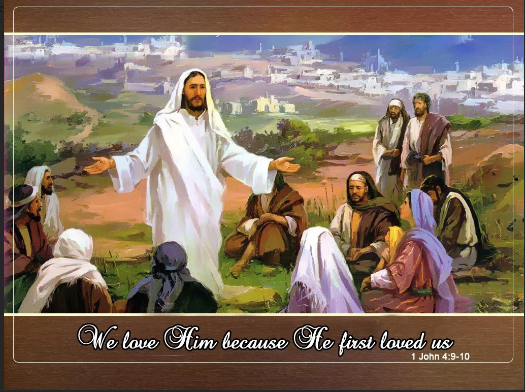
    THE WORD MADE FLESH

    Image description

    "That was the true light which lighteth every man that cometh into the world." John 1:9

    Originally posted October 11, 2025. Reposted November 24, 2025, with no changes made.

    In the beginning God created the heaven and the earth. And the earth was without form, and void; and darkness was upon the face of the deep. And the Spirit of God moved upon the waters. (Genesis 1:1-2, KJV)


    These words launch the sacred narrative, revealing God's eternal act in perfect harmony—one God eternally existing as Father, Son, and Holy Spirit: the Father decreeing, the Spirit hovering in life-giving power, and the Word (the Son) executing light into being. "And God said, Let there be light: and there was light" (Genesis 1:3). This divine utterance pierces chaos, symbolizing order, holiness, and life. The Word is no created being but God Himself, co-eternal and co-equal with the Father and Spirit, sharing one divine essence in perfect unity—distinct Persons, inseparable in nature, will, and work. As we shall see, Jesus—the Word made flesh—cannot be created, for He is the One by whom all things were made. "All things were made by him; and without him was not anything made that was made" (John 1:3). This truth echoes through the apostles' writings, culminating in Revelation's eternal light, where God and the Lamb illuminate forever.


    In this blog, we will trace Scripture's golden thread: from primordial light to apostolic affirmations in John and Colossians, bolstered by the three who bear witness to Christ's deity. We will affirm His eternal nature—self-existent and divine—countering any notion of origination. For only the eternal can precede and sustain creation, as "He is before all things, and by him all things consist" (reside in) (Colossians 1:17). May this journey stir in you a glorious worship to the one true God: "O Lord, how manifold are thy works! in wisdom hast thou made them all" (Psalm 104:24).


    In the opening verses of Genesis, we behold a formless void shrouded in darkness, yet the Spirit of God moves upon the waters with gentle, omnipotent purpose—preparing the canvas for divine artistry and infusing it with the breath of life. This "moving" or hovering of the Spirit is a beautiful picture of God's caring presence. Then God said, "Let there be light," and light burst forth through the Word (Jesus Christ), not merely physical illumination but a profound symbol of God's holiness dispelling shadows, deception, and chaos. This light foreshadows the ultimate redemption, where "the people that walked in darkness have seen a great light" (Isaiah 9:2), pointing directly to Christ.


    The psalmist bridges this creation moment to the New Testament revelation: "By the word of the Lord were the heavens made; and all the host of them by the breath of his mouth" (Psalm 33:6), harmonizing the Father's decree, the Word's execution, and the Spirit's breath as one God in action. John's Gospel unveils the mystery further: "In the beginning was the Word, and the Word was with God, and the Word was God. The same was in the beginning with God" (John 1:1-2). Here, the Logos—God's divine reason and expression—is not a later creation but eternally existent, distinct in person yet one in essence with the Father. Amid debates over exact phrasing, the core truth shines: This Word is Jesus incarnate (John 1:14), declaring His timeless deity when He says, "Before Abraham was, I am" (John 8:58), echoing God's eternal name in Exodus 3:14. The prophet Micah affirms the Messiah's origins: "whose goings forth have been from of old, from everlasting" (Micah 5:2). In this Word dwells life itself, and that life is the light of men, radiating undimmed into the darkness (John 1:4-5)—Jesus, the eternal Word of God, through whom the Father created all things and brought everything into existence: "All things were made by him; and without him was not any thing made that was made" (John 1:3). He did not create Himself; He is God's Word, the uncreated Creator who holds all in being.


    Yet, so much debate and argument have swirled around the precise wording of John 1:1—"the Word was God" versus alternative renderings like "was a god"—often missing the forest for the trees in theological battles that have divided believers for centuries. God does not command us to win debates but to believe in His Son for eternal life (John 3:16: "Whosoever believeth in him should not perish"), and to spread this gospel to every creature. These ongoing debates deflect from the verse's heart and the verses that follow:


    John 1


    3 "All things were made by him; and without him was not any thing made that was made.


    In him was life; and the life was the light of men."


    Jesus is God's Word; God speaks, and the Word executes. "Let there be light."


    Central to this revelation is the irrefutable truth that Jesus cannot be created precisely because He is the Creator—a logical and scriptural absolute that places Him outside the realm of contingent beings. If He originated everything, He cannot originate from anything Himself, for creators inherently precede and transcend their works; self-creation is an impossibility, as "every house is builded by some man; but he that built all things is God" (Hebrews 3:4). John's proclamation drives this home: "All things were made by him; and without him was not any thing made that was made" (John 1:3). The emphatic double negative leaves no loophole—every star, soul, speck and atom owes its existence to Him, echoing the creative command in Genesis and excluding any possibility of His own making.


    This eternal status unfolds richly across Scripture. His pre-existence shines in John 1:1-2, where the Word simply "was" in the beginning, not "became" at a point in time, and in John 17:5, where He shares glory with the Father "before the world was," including His role as redeeming Lamb foreordained before the foundation (1 Peter 1:20: "Who verily was foreordained before the foundation of the world, but was manifest in these last times for you"). The child born in Bethlehem is called "The everlasting Father, The mighty God" (Isaiah 9:6), titles reserved for the eternal Yahweh. He forms all things directly, as in Colossians 1:16-17 ("by him were all things created... he is before all things"), Hebrews 1:2-3 (God made the worlds "by whom," upholding them by His power), and 1 Corinthians 8:6 ("by whom are all things"). His divine attributes include self-existent life, shared eternally with the Father: "the Father hath life in himself; so hath he given to the Son to have life in himself" (John 5-26)—not borrowed or started, but inherent like the Father's own endless existence. He is equal with God, "being in the form of God" without claiming something extra (Philippians 2:6), and holds "all the fulness of the Godhead bodily" (Colossians 2:9).


    He stands distinguished from all creatures: Angels worship Him rather than rival Him (Hebrews 1:5-6), and His Melchizedek-like priesthood knows "neither beginning of days, nor end of life" (Hebrews 7:3). Even Revelation 3:14's "beginning of the creation" means source or ruler (arche), as in Proverbs 8:22-23 where Wisdom (Christ) is "from everlasting." Explicit denials abound: "Before me there was no God formed" (Isaiah 43:10), and as the "only begotten Son" He declares the unseen God (John 1:18). Potential misreadings, like "firstborn" in Colossians 1:15, denote preeminence—not origination—as with David made "firstborn" as highest king (Psalm 89:27). Only the eternal can precede creation because contingent things (everything that depends on something else to exist, like all created matter and beings) require a cause and a starting point; God alone is independent, giving life without needing any (Acts 17:24-25). Jesus embodies this: "I am Alpha and Omega... the Almighty" (Revelation 1:8, 17-18), the eternal One who sustains all without beginning or end.


    The Apostle Paul's praises to God in Colossians harmonize perfectly with John 1:1-2, exalting the eternal Son amid false teachings that would diminish Him to a mere emissary or angel. "Who is the image of the invisible God, the firstborn of every creature: For by him were all things created, that are in heaven, and that are in earth, visible and invisible, whether they be thrones, or dominions, or principalities, or powers: all things were created by him, and for him: And he is before all things, and by him all things consist" (Colossians 1:15-18). Here, "firstborn" (prototokos) signifies preeminence and heirship, not creation—as God promised David, "I will make him my firstborn, higher than the kings of the earth" (Psalm 89:27)—for the verses immediately affirm He creates those very realms, standing before and sustaining them.


    The parallels with John reveal profound oneness: John's comprehensive "all things" expands in Colossians to include heavenly hierarchies and invisible powers (like angels and spiritual authorities), refuting any intermediary creators and asserting Christ's absolute dominion, as everything in the universe—seen or unseen—is made through Him alone. The agency is identical—"by him" as the instrumental cause, mirroring the Word through which God spoke in Genesis and Psalm 33:6. Yet Colossians adds depth: Creation is not only "by" Him but "for" Him, orienting all existence toward His glory, as He shared pre-world splendor with the Father (John 17:5). This sustenance—"by him all things consist"—portrays Him as the divine glue holding atoms and angels together, echoing Hebrews 1:3's "upholding all things by the word of his power." The fullness of deity dwells in Him (Colossians 1:19; 2:9), making separation impossible: If God creates alone yet through the Son (Isaiah 44:24), they are one essence, mutually indwelling (John 14:10: "I am in the Father, and the Father in me"). This unity counters heresies, affirming the Son's eternal role in planning (Father), executing (Son), and quickening (Spirit implied, as "the Spirit quickeneth" in John 6:63).


    The passage in 1 John 5:7-8 (KJV) beautifully complements the themes of divine unity and historical testimony, emphasizing how God's eternal truth is confirmed in time through Jesus's life and work. Even focusing on the earthly witnesses that appear in all manuscripts—the Spirit, the water, and the blood, these three agree in one—these elements provide strong evidence against early false teachings that tried to separate Jesus's divine and human natures (such as ideas that the spiritual "Christ" only temporarily descended on the man Jesus at baptism and left before the cross). Instead, they affirm the eternal Creator's full incarnation from start to finish: Jesus came "by water and blood" (1 John 5:6), not by water only. The Spirit, who testifies because "the Spirit is truth," is the Holy Spirit who hovered in creation and continues to bear witness in believers' hearts (Romans 8:16) and through events like the baptism. The water recalls that baptism where the Father's voice declared "This is my beloved Son" (Matthew 3:17), marking the beginning of His public ministry. The blood points to the crucifixion, where water and blood flowed from His side (John 19:34), symbolizing complete atonement and proving His real, physical death for sins (Hebrews 9:12). These historical markers unite to show Jesus as the eternal "way, the truth, and the life" (John 14:6), with direct affirmations like Thomas's cry, "My Lord and my God" (John 20:28), and the Father's address about Jesus: "Thy throne, O God, is for ever" (Hebrews 1:8).


    The declaration "God is light, and in him is no darkness at all" (1 John 1:5) finds perfect resonance in the Word as "the true Light, which lighteth every man that cometh into the world" (John 1:9)—a oneness of essence where the Father's purity radiates through the Son. Jesus affirms, "He that hath seen me hath seen the Father" (John 14:9), making His light the visible expression of the invisible God. This shared radiance first ordered creation's dawn by separating light from darkness (Genesis 1:3-4), establishing moral and spiritual order from the void. In redemption, it exposes sin by revealing truth and convicting hearts, as Jesus declares, "I am the light of the world: he that followeth me shall not walk in darkness, but shall have the light of life" (John 8:12), drawing sinners to repentance and freedom (John 3:19-21). Eternally, it overcomes all darkness without fail or fluctuation, for God is the "Father of lights, with whom is no variableness, neither shadow of turning" (James 1:17)—unchanging in His gifts of wisdom and salvation, ensuring victory over evil and the promise of a shadowless future (Revelation 21:25).


    What dawns in Genesis's spoken light reaches eternal fulfillment in Revelation, where the holy city needs no sun or moon, "for the glory of God did lighten it, and the Lamb is the light thereof" (Revelation 21:23; see also 22:5). Here, the eternal Word—once active in creation's beginning—tabernacles forever as the Lamb slain yet victorious, sharing the throne with the Father (Revelation 22:1). As Alpha and Omega, the Almighty who was dead and lives (Revelation 1:8, 17-18), He receives worship alongside the Ancient of Days, their oneness sealing history's arc. In this radiant kingdom, night vanishes, and the redeemed walk in His light, heirs of the eternal Creator who holds all together from everlasting to everlasting.


    As many as receive Him become children of God (John 1:12), transformed by the One who made and sustains us. In a world where good is seen as evil, and evil as good, let the light of Jesus illuminate your path and guide you to His living water. Worship the Lamb who is worthy to receive power, riches, wisdom, strength, honor, glory, and blessing (Revelation 5:12)—for in the beginning, through the middle of time, and to the endless ages, He is the great I AM, the unchanging God who became flesh and was crucified to pay for our sins. May your life reflect His Glory, walking as children of light until we see Him face to face. Amen.


  • Published on

    THE ROAD TO JESUS

    Originally posted September 30, 2025. Reposted November 24, 2025, with no changes made.

    Image description

    In the sacred pages of the Bible, the Book of Ruth shines as a beacon of hope and faithfulness amidst the dark and tumultuous days of the Judges. Set during a time when “every man did that which was right in his own eyes” (Judges 17:6, 21:25), Ruth’s story stands in stark contrast to the moral and spiritual chaos of its era. This brief yet profound narrative, nestled between the apostasy of Judges and the rise of Israel’s monarchy in 1 Samuel, is far more than an historical account. It is a divine tapestry woven with threads of loyalty, redemption, and God’s sovereign grace, pointing us toward the ultimate Redeemer, Jesus Christ. Ruth’s unwavering commitment to Naomi and her embrace of the God of Israel (Ruth 1:16-17) serve as a beautiful analogy for the believer’s call to follow Christ, reflecting the heart of discipleship in the gospel.


    The Book of Ruth opens with a somber note: “Now it came to pass in the days when the judges ruled, that there was a famine in the land” (Ruth 1:1). The Book of Judges paints a grim picture of Israel’s spiritual decline. The people repeatedly turned to idolatry, worshiping Baal and Ashtaroth (Judges 2:11-13), provoking God’s judgment through oppression by foreign nations. Yet, in His mercy, God raised up judges—deliverers like Deborah, Gideon, and Samson—to rescue His people when they cried out in repentance (Judges 2:16-18). This cycle of sin, oppression, repentance, and deliverance underscores Israel’s unfaithfulness and God’s enduring faithfulness.


    Against this backdrop of rebellion and chaos, the Book of Ruth emerges as a story of hope. While Judges depicts a nation adrift, Ruth’s narrative reveals God’s grace at work through the faithfulness of individuals. It is a reminder that even in the darkest times, God is preparing the way for His redemptive purposes, ultimately fulfilled in Jesus Christ.


    At the heart of Ruth’s story is her remarkable declaration to Naomi, her mother-in-law, after the tragic loss of their husbands: “And Ruth said, Intreat me not to leave thee, or to return from following after thee: for whither thou goest, I will go; and where thou lodgest, I will lodge: thy people shall be my people, and thy God my God: Where thou diest, will I die, and there will I be buried: the Lord do so to me, and more also, if ought but death part thee and me” (Ruth 1:16-17). These words, steeped in loyalty and love, echo far beyond their immediate context, resonating with the call to follow Jesus Christ.


    Ruth, a Moabite widow and a foreigner to Israel, chooses to leave her homeland, her people, and her pagan gods to follow Naomi and embrace the God of Israel. Her decision mirrors the cost of discipleship described by Jesus: “If any man come to me, and hate not his father, and mother, and wife, and children, and brethren, and sisters, yea, and his own life also, he cannot be my disciple” (Luke 14:26). Ruth’s commitment to Naomi, and by extension to Naomi’s God, reflects the heart of a disciple who forsakes all to follow the Lord. Her words, “thy God my God,” signify a profound spiritual transformation, akin to the believer’s turning from sin to worship the one true God. ". . . and how ye turned to God from idols to serve the living and true God;" 1 Thessalonians 1:9


    Ruth’s journey leads her to Boaz, a “mighty man of wealth” (Ruth 2:1) who becomes her kinsman-redeemer. Under God’s providential guidance, Ruth gleans in Boaz’s field (Ruth 2:3) and finds favor in his eyes. Boaz, in his kindness and righteousness, redeems Naomi’s inheritance and marries Ruth, securing their family’s future (Ruth 4:9-10). This act of redemption foreshadows the greater work of Jesus Christ, our ultimate Kinsman-Redeemer, who “gave himself for us, that he might redeem us from all iniquity, and purify unto himself a peculiar people, zealous of good works” (Titus 2:14).


    Just as Boaz, a near kinsman, redeems Ruth and Naomi from destitution, Christ, through His death and resurrection, redeems His people from the bondage of sin and death. "Forasmuch as ye know that ye were not redeemed with corruptible things, as silver and gold, from your vain conversation received by tradition from your fathers; But with the precious blood of Christ, as of a lamb without blemish and without spot:" (1 Peter 1:18-19). Ruth’s humble acceptance of Boaz’s provision mirrors the believer’s trust in Christ’s atoning work, receiving salvation by grace through faith. "For by grace are ye saved through faith; and that not of yourselves: it is the gift of God: Not of works, lest any man should boast." Ephesians 2:8-9


    One of the most remarkable aspects of Ruth’s story is her inclusion in the genealogy of King David and, ultimately, Jesus Christ. The Book of Ruth concludes with a genealogy tracing from Pharez (son of Judah and Tamar) to Boaz, Obed, Jesse, and David (Ruth 4:18-22). This lineage is reiterated in the New Testament, confirming Ruth’s place in the ancestry of Christ (Matthew 1:5-6, 16). The blessing given to Boaz and Ruth at their marriage, “And let thy house be like the house of Pharez, whom Tamar bare unto Judah, of the seed which the Lord shall give thee of this young woman” (Ruth 4:12), draws a deliberate connection to the story of Tamar, Judah, and Pharez in Genesis 38, highlighting profound parallels that enrich the Messianic narrative.


    In Genesis 38, Tamar, likely a Canaanite, finds herself widowed and childless, facing a precarious future. When Judah, the patriarch of the tribe bearing his name, fails to fulfill the Levirate custom through his surviving son, Tamar takes bold action. Disguising herself as a harlot, she conceives by Judah, giving birth to twins, Pharez and Zarah (Genesis 38:27-30). Despite the morally complex circumstances, Tamar’s determination to secure her place in Judah’s family ensures the continuation of his lineage, through which the Messiah would come. Pharez, her son, becomes a key ancestor in the tribe of Judah, leading to David and ultimately to Christ (Matthew 1:3).


    The connection to Ruth is striking. Like Tamar, Ruth is a Gentile widow, an outsider to Israel (a Moabite, a people often despised by Israel, Deuteronomy 23:3). Both women face vulnerability and uncertainty yet act with faith and resolve to align themselves with God’s covenant people. Tamar’s unconventional union with Judah and Ruth’s marriage to Boaz, her kinsman-redeemer, result in their inclusion in the Messianic line. The blessing in Ruth 4:12 invokes Pharez’s name to signify fruitfulness and prominence, as Pharez’s descendants became a numerous and significant clan within Judah (1 Chronicles 2:4-5). Similarly, Ruth’s son, Obed, becomes the grandfather of David, cementing her role in God’s redemptive plan.


    The stories of Tamar and Ruth share key themes: God’s providence in using unlikely individuals, the inclusion of Gentiles in His covenant, and the preservation of the Messianic lineage through unexpected means. Both women, though outsiders, demonstrate faith and initiative, becoming vessels of God’s grace. Their inclusion foreshadows the gospel’s universal call, where “there is neither Jew nor Greek… for ye are all one in Christ Jesus” (Galatians 3:28). Just as Tamar’s bold action and Ruth’s loyal devotion secure their places in the lineage of David, they point to the greater reality of Christ, who welcomes all who come to Him in faith, regardless of their background (Revelation 7:9). The comparison in Ruth 4:12 underscores God’s sovereignty in weaving these women’s stories into the tapestry of salvation history, preparing the way for the Messiah.


    The contrast between Ruth and the Book of Judges is striking. While Judges recounts Israel’s repeated idolatry and moral chaos—culminating in the horrific accounts of idolatry in Dan (Judges 17-18) and civil war involving Benjamin (Judges 19-21)—Ruth’s story radiates faithfulness, humility, and divine providence. Her loyalty to Naomi, her diligence in gleaning (Ruth 2:2), and her submission to God’s will stand as a testament to the power of individual obedience in a rebellious age. Ruth’s story assures us that God’s grace is at work, even when His people falter, preparing the way for the coming of the Messiah.


    Ruth’s declaration, “whither thou goest, I will go,” resonates as a timeless call to discipleship. Just as Ruth bound herself to Naomi and her God, believers are called to follow Jesus, saying, in effect, “Where You go, I will go; Your people will be my people; Your Father will be my God.” This requires leaving behind the old life—whether it be sin, self-reliance, or worldly attachments—and trusting in Christ’s redemptive work. As Ruth found provision and a future through Boaz, we find eternal life and purpose through Jesus, who declares, “I am the way, the truth, and the life: no man cometh unto the Father, but by me” (John 14:6).


    The Book of Ruth, though brief, is a pivotal link in the chain of God’s redemptive history. From the chaos of Judges to the establishment of David’s throne in 1 Samuel, Ruth’s story bridges the gap, showing how God uses the faithfulness of a Moabite widow to advance His Messianic plan. Her journey from outsider to ancestor of Christ reflects the gospel’s power to transform and include all who come to God in faith. As we read Ruth’s words and trace her legacy, may we be inspired to echo her commitment, following Jesus with unwavering devotion, trusting Him as our Redeemer, and rejoicing in His grace that welcomes us into His eternal family.


    The books of Judges, Ruth, and 1 Samuel, in their vivid portrayal of Israel’s spiritual cycles, resonate deeply with the times we are now living in, as they echo humanity’s struggle with faithlessness and the hope of redemption through Christ’s return. In Judges, we see a world marked by moral chaos and idolatry, where “every man did that which was right in his own eyes” (Judges 17:6), mirroring today’s relativistic culture that often rejects God’s truth for personal desires. Yet, amidst this darkness, Ruth’s story shines as a testament to God’s grace, as her faithfulness and inclusion in the Messianic line foreshadow the gospel’s call to all nations, reminding us that even in a rebellious age, God is gathering His people through faith in Christ (Romans 10:12-13). The transition to 1 Samuel, with the rise of David’s kingdom, points to the establishment of God’s anointed king, prefiguring Jesus, the ultimate King, whose imminent return will bring final deliverance from sin and death, fulfilling the promise that “the Lord himself shall descend from heaven” (1 Thessalonians 4:16). Just as these books trace God’s redemptive plan through a turbulent era, they encourage us today to remain steadfast in faith, trusting in Christ’s return to restore all things.


    Prayer: Heavenly Father, we thank Thee for the testimony of Ruth, whose faith and loyalty shine as a light in a dark world. May her example inspire us to follow Thy Son, Jesus Christ, with all our heart, trusting in His redemption and walking in His truth. Guide us, as Thou didst guide Ruth, to be vessels of Thy grace in our generation. In Jesus’ name, Amen.


  • Published on

    ENTITLED

    "ENTITLED" AUDIO BLOG


    Why does it seem like everyone is offended by everything? I mean, they cancelled Mr. Potato Head! What's up with that?

    The feeling or emotion of being offended comes from self-pride, or, in this instance, a sense of entitlement, and fear, lack, doubt, unbelief, all things Satan instills in us. "For God hath not given us the spirit of fear; but of power, and of love, and of a sound mind." 2 Timothy 1:7

    Entitlement . If you think about it, man is really only "entitled" to one thing, and that is the breath of life breathed into his nostrils: "And the Lord God formed man of the dust of the ground, and breathed into his nostrils the breath of life; and man became a living soul." 
    Genesis 2:7

    And that, only as long as God allows: "And the seventh angel poured out his vial into the air; and there came a great voice out of the temple of heaven, from the throne, saying, It is done." Revelation 16:17

    No one understands the Bible completely. That is why there are many commentaries and opinions on many passages. But God ... But everything He created is very good. "And God saw everything that He had made, and, behold, it was very good." Genesis 1:31

    I read this morning that they are removing Jefferson statues (somewhere in the United States) because he owned slaves. Do you see what they are doing there? Will they remove the Bible next because they owned slaves? 

    God takes the evil imaginations of men (and demons, spiritual wickedness in high places Ephesians 6:12) trying to harm us, and turns them to our good. Satan always loses. As Joseph told his brothers, after they threw him into a pit to die, and then he was sold into slavery in Egypt, and became second in command to the Pharaoh: "But as for you, ye thought evil against me; but God meant it unto good, to bring to pass, as it is this day, to save much people alive." Genesis 50:20. Because, of course, as we know, decades later, Joseph saved his brothers and their families, and many people, from a grievous famine in the land.

    God has nothing but thoughts of peace toward us. "For I know the thoughts that I think toward you, saith the Lord, thoughts of peace, and not of evil, to give you an expected end." Jeremiah 29:11

    And God's final act mercy for man was sending His only begotten son, Jesus Christ, to die for our sins.

    "But God commends his love toward us, in that, while we were yet sinners, Christ died for us." Romans 5:8

    He gives us good and perfect gifts from heaven above:

    "Every good gift and every perfect gift is from above, and cometh down from the Father of lights, with whom is no variableness, neither shadow of turning." James 1:17

    And, "We love him, because he first loved us." 1 John 4:19

    Hallelujah to the Lamb of God. Praise God. Thank you, Jesus. Amen.


  • Published on

    IT NEVER HURTS

    "IT NEVER HURTS" AUDIO BLOG

    "Study to shew thyself approved unto God, a workman that needs not to be ashamed, rightly dividing the word of truth." 2 Timothy 2:15
    A workman that needs not to be ashamed. Are we workmen that need to be ashamed? Or, that need not to be ashamed? If we think about it, Jesus gave us only two commandments: Love God with all of your heart, soul and mind, and love your neighbor as yourself. Matthew 22:37-39.

    1 John 4


    20 "If a man say, I love God, and hateth his brother, he is a liar: for he that loveth not his brother whom he hath seen, how can he love God whom he hath not seen?

    21 And this commandment have we from him, That he who loveth God love his brother also."

    Everyone will stand before the judgment seat of Christ 2 Cor. 5:10 and every tongue will confess to God. Romans 14:11Will we be ashamed of our love for, and service to, our fellow man, especially our brothers and sisters in Christ?

    Galatians 6:10 "As we have therefore opportunity, let us do good unto all men, especially unto them who are of the household of faith."

    Rightly dividing the word of truth 2 Timothy 2:15 above. The "word of truth" is God's Holy Word, the Bible, written for us, as instruction on how to live obedient lives full of blessings.

    Rightly dividing the word of truth is ministering the appropriate scripture at the appropriate time and moment, as needed. We cannot do that if we do not know the word of truth. We can only minister it if we Study it, to show ourselves approved unto God, 2 Timothy 2:15 above.

    Read the Bible, study it, memorize scripture, so you will be able to rightly divide​ it at the perfect moment. As Apostle Paul says, our joy will be in seeing our brothers and sisters standing with us beside our Lord, Jesus Christ, when He comes.

    Recently, I was told that I would go broke if I kept giving. After thinking and praying about it, Holy Spirit showed me that no one ever went broke from giving. Mother Teresa is quoted as saying, Give until it hurts. But scripture tells us that God is able to make all grace abound toward us so that we always having all sufficiency in all things may abound to every good work 2 Cor. 9:8-11​so that it never hurts.

    So I say, Give until you think it will hurt, but it never hurts, because God is able to make all grace or favor abound toward us. Amen.

    Love your neighbor as yourself.

    The Rich Man

    Mark 10:17-27


    17 "And when he was gone forth into the way, there came one running, and kneeled to him, and asked him, Good Master, what shall I do that I may inherit eternal life?

    18 And Jesus said unto him, Why do you call me good? there is none good but one, that is, God.

    19 Thou know the commandments, Do not commit adultery, Do not kill, Do not steal, Do not bear false witness, Defraud not, Honour thy father and mother.

    20 And he answered and said unto him, Master, all these have I observed from my youth.

    21 Then Jesus beholding him loved him, and said unto him, One thing thou lack: go thy way, sell whatsoever thou hast, and give to the poor, and thou shalt have treasure in heaven: and come, take up the cross, and follow me.

    22 And he was sad at that saying, and went away grieved: for he had great possessions.

    23 And Jesus looked round about, and saith unto his disciples, How hardly shall they that have riches enter into the kingdom of God!

    24 And the disciples were astonished at his words. But Jesus answered again, and saith unto them, Children, how hard is it for them that trust in riches to enter into the kingdom of God!

    25 It is easier for a camel to go through the eye of a needle, than for a rich man to enter into the kingdom of God.

    26 And they were astonished out of measure, saying among themselves, Who then can be saved?

    27 And Jesus looking upon them saith, With men it is impossible, but not with God: for with God all things are possible."

    There are differing opinions on this scripture and what the "eye of a needle" meant. Some suggest that a "needle" was a small gate; others believe it actually referred to sewing needles, which were similar then to ours today. Either way, we can gather that it is an extremely difficult task. 
    Who then can be saved? And Jesus said, "With men it is impossible, but not with God: for with God all things are possible"! Amen. God is able.

    The rich man had done all that Jesus requires his whole life, save one thing. How many things are we lacking to be perfect, like Jesus?

    Give until it hurts, because it never hurts, give your time, your money, your love, always rightly dividing the word of truth, a workman that need not be ashamed.

    ​God is able to make all grace or favor abound toward you, so that you always having all sufficiency in all things may abound to every good work.

    In love and light, and in Jesus' Mighty name. Amen.


  • Published on

    BE A DOER

    "BE A DOER" AUDIO BLOG

    "And be not conformed to this world: but be ye transformed by the renewing of your mind, that ye may prove what is that good, and acceptable, and perfect, will of God." Romans 12:2

    ​The Perfect Will of God. All glory, honor, praise and thanksgiving to God, the Father of Lights. Thank you, Jesus. Amen. 

    A little background on this blog: In speaking to our Pastor, I told him that I need to bridle my tongue. He said, Oh ... well, James talks about that: Pastor David always has the right answer from God. God bless him.

    So, reading the Bible today, I started reading James 1 ​again, and found many enlightening passages. Let's look at verses 17 through 25:

    James 1


    17 "Every good gift and every perfect gift is from above, and cometh down from the Father of lights, with whom is no variableness, neither shadow of turning.

    18 Of his own will begat he us with the word of truth, that we should be a kind of firstfruits of his creatures.

    19 Wherefore, my beloved brethren, let every man be swift to hear, slow to speak, slow to wrath:

    20 For the wrath of man worketh not the righteousness of God.

    21 Wherefore lay apart all filthiness and superfluity of naughtiness, and receive with meekness the engrafted word, which is able to save your souls.

    22 But be ye doers of the word, and not hearers only, deceiving your own selves.

    23 For if any be a hearer of the word, and not a doer, he is like unto a man beholding his natural face in a glass:

    24 For he beholdeth himself, and goeth his way, and straightway forgetteth what manner of man he was.

    25 But whoso looketh into the perfect law of liberty, and continueth therein, he being not a forgetful hearer, but a doer of the work, this man shall be blessed in his deed."


    There is a lot of good stuff packed in those eight verses. Let's break them down.

    Verse 17: God is good, and everything He created is perfect.

    Verse 18: "
    Of his own will begat he us with the word of truth, His own will, His grace, because He wanted to, as a favor, because He loves us. He begat us with the word of truth: The word of truth is Jesus Christ: the word made flesh; the way, the truth, and the life.  

    Verses 19 and 20: He is telling us to bridle our tongues, because as we know "the tongue can no man tame; it is an unruly evil, full of deadly poison." James 3:8. And, used in anger, "
    works not the righteousness of God." Let God's Will be done, not our own. Let God's words be spoken, not our own. Bring into captivity every thought to the obedience of Christ. Amen.

    Verse 21: "and receive with meekness the engrafted word, which is able to save your souls." Meekness, humbleness, not proudness or arrogance. Receive with meekness the engrafted word, which is able to save our souls.

    "Engrafted." Now, there's a priceless word. It has only two possible definitions, from dictionary.com:


    1. Horticulture. to insert, as a scion of one tree or plant into another, for propagation: to engraft a peach on a plum. Or,
    2. Surgery. (of living tissue) to become grafted.

    Jesus Christ, the word made flesh, the Word, God's Word, is engrafted into us, by surgery only God could perform, and is able to save our souls. Read His Word; it is alive!

    Verses 22 through 25: "Be doers"! Get out and do! Stand up. Speak out for God. Testify. Give. Help. Save. Serve. Be doers, not just hearers of His Word.

    ​"being not a forgetful hearer, but a doer of the work, this man shall be blessed in his deed."  Again, God tells us exactly how to receive His blessings: Be an active doer, not a forgetful hearer.

    Heavenly Father, thank you for your many blessings in our lives. Thank you for Your Word and the word made flesh, Jesus Christ. Fill us with Your Will, Your light and Your love, replace our stony hearts with hearts of flesh, and bless Your Children for being doers of Your work. In Jesus' Mighty Name. Amen.


  • Published on

    GOD'S RAINBOW

    "GOD'S RAINBOW" AUDIO BLOG


    Heavenly Father, Father of Lights, in whom there is no shadow of turning, thank you for Your Word, and thank you for Your words through me. Let Your children with ears to hear, hear. In Jesus' Mighty Name. Amen.

    What does a rainbow represent to you? Do you have a rainbow flag, or any other rainbow fodder lying around the house, or in your yard/garden? Or, have you been intimidated, for lack of a better word, into not recognizing rainbows, except in the sky?

    What does the rainbow represent to God? Unlike Jesus' comment that the Sabbath was made for man, man was not made for the Sabbath, the rainbow was made for man; man was not made for the rainbow!

    The rainbow was God's covenant with mankind that He would never again flood the Earth. God said, When He sees the rainbow, it will remind him of this covenant.

    I was listening to Robin Bullock this morning, and it reminded me how sad it is that many Christians, me included, have let the LGBT community hijack God's rainbow, God's promise to mankind. God did not create the rainbow to glorify the LGBT community.

    I love rainbows! I think it is time we take back the rainbow, in Jesus' Mighty Name!

    We are in the 21st Century Exodus, and it is time to plunder our enemies, and take back what is ours. To be clear, our enemies are not the LGBT community. Our enemies are in the spiritual realm; this is a spiritual war: "For we wrestle not against flesh and blood, but against principalities, against powers, against the rulers of the darkness of this world, against spiritual wickedness in high places." Ephesians 6:12

    How do we plunder the spiritual realm? Apostle Paul gives us an idea:

    2 Cor. 10

    4 "(For the weapons of our warfare are not carnal, but mighty through God to the pulling down of strong holds;)

    Casting down imaginations, and every high thing that exalteth itself against the knowledge of God, and bringing into captivity every thought to the obedience of Christ;"

    For the weapons of our  [Christians] warfare are not carnal [manmade, fleshly].

    Our weapons are reading God's Word, the Bible, which is how He talks to us; and, praying without ceasing, which is how we talk to Him.

    I started writing about "God's Rainbow" on July 23, 2022, because honestly I was irked that the demons in the LGBT community have hijacked the rainbow, and I wanted to take it back (and still do). I never posted the July 23 "God's Rainbow" blog because I never finished it. Of course, now I know why I never finished it, because God was not yet finished with His word on the subject.

    So, I never posted the rainbow blog, but on July 24, 2022, I posted a blog titled "Delight God Today," which you can read by clicking here. This blog is about an online chat I had with someone I do not know on rumble.com about abortion and God.

    It was not until today, July 26, 2022, that I realized the crux of what God was trying to get through to me, which is that the world is ungodly. Yes, right, I know. Everyone knows that, but does everyone really understand it?

    What do Christians get from God? We get many things: love, light, peace, hope, mercy, grace, compassion, understanding, wisdom, abundance, the promise of eternal life, blessings, and more.

    But, what God has shown me in this scenario is that what we get, the one thing that sets us apart from the animals really, is morals: knowing the difference between right and wrong; a moral compass, without which . . . well, without which men have nothing but evil thoughts in their hearts continually, as God said, and as can be seen in my July 24 chat on rumble.com (link above), where crazysquirrelusa admits they use aborted baby parts (components) in many industries; and, says that morals, right and wrong, good and evil, are matters of perspective, and asks what right is it of mine to question the murder of unborn babies?

    Remember, God was removed from our schools in the 60s; not long after, abortion became legal. Since then, it has been a rapid spiral downward into satanism in our movies, video games, music, schools, news, social media, even commercials. Everything flooding us with the ungodly.

    I read somewhere that only 13% of children today know who God is, compared to 58% in the 60s, when they removed Him from our schools.

    It is no surprise that many Christians feel like the odd ball out, because it seems as though everyone around us is cheering for evil: cheating, lying, murdering, stealing; cheering and celebrating, and we are on the outside looking in, wondering how on earth we could be the only sane people on earth? This is what Satan wants us to see and believe; this is Satan's reality, not God's, and Satan's reality is collapsing. Praise God. Amen.

    Something else I want to point out is that this journey with God's Rainbow began on July 23 and ended on July 26, three days later. Was I in some kind of hell for three days, trying to understand what God was telling me? I do not believe that the three days is a coincidence, as this is not the first time He has given me a word over a three-day period. Click here and here to see additional words from God to me over three days.

    So, the world is in darkness, blinded by the ruler of this world, Satan.

    The world needs us, God's Children, God's Light. God has chosen us for this very day, to shine, shine, shine, and to make the world shine!

    As I have written previously, Christians are the 2.5 billion batteries in God's (flash)light. 

    God is coming back!

    Back to our schools!

    Back to our hearts!

    Back to our homes!

    Back to the world!


    Teach God's moral compass to the world! Jesus said, What I tell you in the darkness, shout it from the housetops.

    Praise God. Thank you, Jesus. Amen.