• Published on

    MILK TO MEAT IN THE CHURCH


    ​"Now unto him that is able to do exceeding abundantly above all that we ask or think, according to the power that worketh in us," Ephesians 3:20


    From Milk to Meat: Growing in Christ’s Deeper Truths


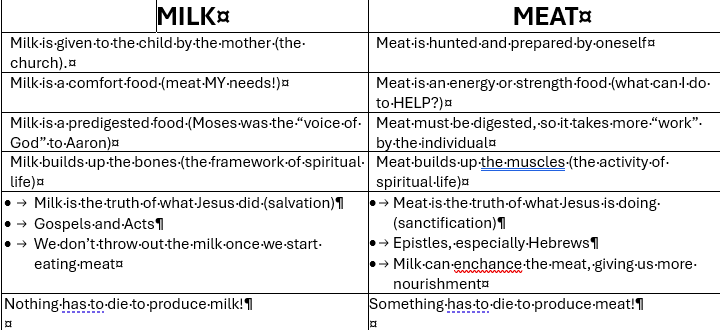
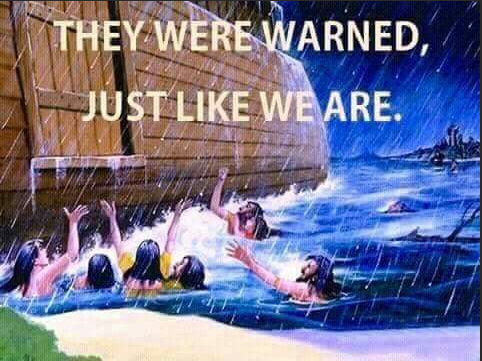
    Picture humanity’s journey with God as a vast tapestry, stretching across time, each thread woven with faith. The Bible tells us we are transformed from glory to glory, shaped into His image as our faith in Him grows. 2 Corinthians 3:18. In Old Testament days, a world of famine, drought, and enemies on every side, Israel's faith was shaky. They lacked the faith to produce even their most basic necessities. Deuteronomy 8:7-10; 1 Corinthians 3:2. Moses and Aaron, however, had meat-level faith in God, to liberate the Jews from Egyptian bondage. Faith that could actually provide the food, water and protection Israel needed in the wilderness. Noah had meat-level faith, and trusted God to save him through the Great Flood. Genesis 6:22. Abraham had meat-level faith when he raised his knife over his only son, Isaac, to sacrifice him as commanded when his faith was tested. That’s real “meat," a deeper faith. How many Christians can honestly understand that level of faith?


    "For when for the time ye ought to be teachers, ye have need that one teach you again which be the first principles of the oracles of God; and are become such as have need of milk, and not of strong meat. For every one that useth milk is unskilful in the word of righteousness: for he is a babe. But strong meat belongeth to them that are of full age, even those who by reason of use have their senses exercised to discern both good and evil." Hebrews 5:12-14


    “Milk” is the basic faith that leans on God for survival, like food, water and safety. The Israelites cried, "... for ye have brought us forth into this wilderness, to kill this whole assembly with hunger." Exodus 16:2-3. Their faith was stuck asking for basic necessities because they lacked basic necessities, and because they had no room for the greater faith available to them, as their hearts were full of need instead of faith in God. Abraham, Noah, Moses and others in the Old Testament had faith that moved mountains Matthew 17:20. In the New Testament, we see milk and meat in 1 Peter 2:2: “As newborn babes, desire the sincere milk of the word, that ye may grow thereby.” That you may grow thereby into meat-level faith and the power promised by Jesus. As Paul describes in Hebrews 5:14: “But strong meat belongeth to them that are of full age, even those who by reason of use have their senses exercised to discern both good and evil.”


    When Jesus came, He taught that obeying His commandments keeps us close to His love: John 15:10 “If ye keep my commandments, ye shall abide in my love." He opened up deeper truths about God’s kingdom, like the nearness of His rule: Matthew 4:17, “Repent: for the kingdom of heaven is at hand,” the power available to believers Mark 16:17-18, and the promise of eternal life John 3:16. Some receive milk for survival because their hearts cry out for it, like Israel in the desert pleading for bread: Exodus 16:3, “Would to God we had died… when we did eat bread to the full”. They had no room for more faith, because despair has crippled them. They failed to realize that God provides for His children who believe He does (faith). Matthew 6:31-32


    Others, like the apostles, received both milk and meat. Jesus told them not to worry about food or clothes but to trust God’s provision and power. Luke 22:35 “When I sent you without purse, and scrip, and shoes, lacked ye any thing? And they said, Nothing.” Still others live in abundance through faith, receiving also meat for power, because their hearts desire it: Philippians 4:19 “My God shall supply all your need according to his riches in glory by Christ Jesus." What we get depends on our faith, our needs, and God's Will, and we get what we deserve based on our faith. God knows our heart. Jeremiah 17:10 says, “I the Lord search the heart, I try the reins, even to give every man according to his ways, and according to the fruit of his doings.” The "fruit of his doings" are not voluntary actions; they are involuntary actions inspired in our heart by Holy Spirit, who guides us into all truth. John 16:13


    Jesus does not just save us and leave us at the starting line. He invites us into a life of authority and power. In Mark 16:17-18, He says, “In my name shall they cast out devils; they shall speak with new tongues; they shall lay hands on the sick, and they shall recover.” This kind of life takes faith, even just a tiny bit, like a mustard seed, that can move mountains. Stepping into Christ’s promised power is a process of seeking, desiring, meditating on God's Word and bringing into captivity even your thoughts to the obedience of Christ. For me, personally, it was, as I said, an involuntary and immediate knowledge, feeling, or understanding (hard to describe) of Christ's heart, and a yearning to be like Him. Not all see the same signs, because the Holy Spirit hands out gifts as God chooses. 1 Corinthians 12:11. But God does say, draw near to me and I will draw near to you. James 4:8. And, call on me and I will show you great and mighty things. Jeremiah 33:3. Have you called on God lately, to ask for greater faith, to ask for His Holy Spirit? Luke 11:13


    Think of milk as God keeping His people alive. Psalm 37:25 says, “Yet have I not seen the righteous forsaken, nor his seed begging bread.” That’s survival faith. Meat is different; it is about power. John 14:12 promises, “He that believeth on me, the works that I do shall he do also.. and EVEN GREATER.” Paul calls this meat, meant for those who have grown to discern right from wrong, good from evil. Hebrews 5:14.


    For over a hundred years, Pentecostals and Assemblies of God have held tight to this, living and breathing the power of Mark 16:17-18, and the gifts of Scripture, as the last denomination fully following the Bible’s call to this vast power promised by our Lord and Savior to all who believe!


    The Holy Spirit changes how we see God. Jesus promised He would send the Spirit to live inside of us forever. John 14:16-17. We see this at Pentecost where people spoke in tongues and preached with courage. Acts 2:4. Back in tough times, like Israel wandering in the desert for 40 years, people just wanted relief from the oppression of the wilderness, and lack of food and water. They cried out for bread and water. Numbers 11:13. The deeper faith Moses had in God's promises actually fed them with the manna in the morning and the quail at night. Moses' faith in God brought food from heaven and water from a rock. Exodus 16:4, 17:6


    Faith leads to abundance as promised:


    "But my God shall supply all your need according to his riches in glory by Christ Jesus." Philippians 4:19


    "But this I say, He which soweth sparingly shall reap also sparingly; and he which soweth bountifully shall reap also bountifully." 2 Corinthians 9:6


    "And God is able to make all grace abound toward you; that ye, always having all sufficiency in all things, may abound to every good work." 2 Corinthians 9:8


    "Now unto him that is able to do exceeding abundantly above all that we ask or think, according to the power that worketh in us." Ephesians 3:20


    "But seek ye first the kingdom of God, and his righteousness; and all these things shall be added unto you." Matthew 6:33


    These promises allow faith to grow beyond asking for basic necessities. As Jesus said, the Father knows what we need. When we realize this, we remove the boundary for faith to grow from milk at first, and then meat, or Spiritual Power, as promised by Jesus. Acts 1:8 says, “Ye shall receive power, after that the Holy Ghost is come upon you.” This meat faith knows God is close, guiding us like sons. Romans 8:14


    This journey is about lining up with God’s Will. Milk faith focuses on getting by, surviving. Israel begged, “What shall we eat?” Exodus 16:3. Moses trusted God to provide, saying, “Is the Lord’s hand waxed short?” Numbers 11:23. Meat faith knows God sees our needs before we ask. Matthew 6:8 says, “Your Father knoweth what things ye have need of, before ye ask him.” Obedience puts us in step with His purpose. Matthew 6:10. The Spirit molds us to please God. Philippians 2:13. Milk faith gets survival, as Matthew 6:31-33 promises, “Seek ye first the kingdom of God… and all these things shall be added unto you.” Meat faith steps into God's Power of discernment, as Scripture defines: "But strong meat belongeth to them that are of full age, even those who by reason of use have their senses exercised to discern both good and evil." Hebrews 5:14


    So how do we grow from milk to meat? It depends on our faith in God and what we need and want from Him. Milk faith is for beginners. Paul fed it to the Corinthians because they were stuck arguing and fighting. 1 Corinthians 3:1-3. It’s like Israel begging for bread Exodus 16:3, the simple trust that God will keep us alive. Peter puts it this way: “Desire the sincere milk of the word, that ye may grow thereby. 1 Peter 2:2. That is the starting point. Meat faith goes deeper, trusting God’s Will and power. Hebrews 6:1-6 says, “Let us go on unto perfection,” beyond the basics. In hard times, faith feeds the hungry: Psalm 37:19 says, “In the days of famine they shall be satisfied.” In good times, meat faith grabs hold of power and plenty: Acts 1:8 promises power, and 2 Corinthians 9:8 adds, “God is able to make all grace abound toward you.” Growth means trusting more, having more faith in God to do what He said He will do. If you think you are stuck, you stay stuck. If you believe God is bigger, you rise: Proverbs 23:7 “As he thinketh in his heart, so is he”.


    Some people say faith isn’t about moving from milk to meat. They might argue it is just trusting God, not chasing signs like Mark 16:17-18. Or they could say what we get from God depends more on our situation than our faith. They have a piece of the picture. The Spirit does give gifts differently. 1 Corinthians 12:4. God does meet our specific needs. Matthew 6:33. Israel’s lack of faith depended on Moses's meat faith. His meat faith worked miracles and fed them because he trusted God’s words. But Jesus connects trust in God to personal power. He says, “All power is given unto me." Matthew 28:18. He gives that power to us. Luke 10:19. He promises signs to those who believe. Mark 16:17-18. He even says we will do greater works than him. John 14:12. Paul pushes us to grow beyond milk. Hebrews 6:1. The Bible shows us that faith can reach higher, into meat, when we are ready. All we have to do is believe!


    Israel’s poor in spirit leaned on milk. Matthew 5:3. Noah and Abraham trusted God for meat. Since Jesus rose in 33 AD, God’s grace has poured out abundance over two millennia—think electricity, roads, tools, plenty and abundance—that have lifted our eyes from survival to power. The early church grabbed the power Jesus promised: Peter healed a lame man. Acts 3:6: “In the name of Jesus Christ… rise up and walk." Today, in 2025, some mock Mark 16:17-18, but God’s feast has always been available to all who believe. John 11:26. Milk keeps us alive in tough spots and lackadaisical times. Meat empowers us in plenty and zeal. Faith grows as we trust God's Plan and His Word. 


    Start with the word 1 Peter 2:2, have faith in God Hebrews 11:6, obedience to His Word John 15:10, and strive (pray) for His gifts Acts 1:8. Wherever we are, scarce or full, God gives us what our faith can hold.


    May He bless you and keep you always. Amen.


    ​(See also my other blogs on this subject: "The Sign of Jonah" and "Glory to Glory in Religion"

  • Published on

    THE SIGN OF JONAH

    "The Son of Man [Jesus Christ] will be delivered into the hands of men. They will kill Him, and after three days He will rise." Mark 9:31

    This is a word God put on my heart recently about repentance, faith, and salvation. Heavenly Father, thank you for your Word, Your Son, and Your Spirit. Let Your children with ears hear. Amen.

    The story of Jonah is more than a tale of a man and a fish. Jonah 1,2,3. It is a powerful study of God’s grace, human stubbornness, and the cost of not responding to God's call. When God first called Jonah to warn Nineveh, a wicked city ripe for judgment, Jonah did not just hesitate to answer, he ran from God's command, and boarded a ship to Tarshish. What followed was not immediate damnation, but a wake-up call: God sent out a great wind into the sea, and there was a mighty tempest that rocked the ship. The men were afraid, and they threw Jonah into the ocean, and the waters became calm. Then, God caused a mighty fish to swallow up Jonah, leading to three days and three nights in the belly of the great fish. It was God's warning for Jonah, a taste of the consequences of rejecting God’s call, swift and severe.

    From the ocean’s depths, and the belly of the fish, Jonah prayed:

    Jonah 2


    "Then Jonah prayed unto the Lord his God out of the fish's belly,

    And said, I cried by reason of mine affliction unto the Lord, and he heard me; out of the belly of hell cried I, and thou heard my voice.

    For thou had cast me into the deep, in the midst of the seas; and the floods compassed me about: all thy billows and thy waves passed over me.

    Then I said, I am cast out of thy sight; yet I will look again toward thy holy temple."

    "I will look again toward thy Holy temple," signaling his return to faith in God (repentance). God then tells the fish to spit out Jonah, and it spits him out onto dry land. Then, God called to Jonah again: "And the word of the Lord came unto Jonah the second time, saying, Arise, go unto Nineveh, that great city, and preach unto it the preaching that I bid thee." Jonah 3:1-2. This time, Jonah obeyed God, and God's warning through Jonah to Nineveh sparked repentance across the city, saving it from destruction. Flawed and defiant, Jonah became a vessel of salvation, not because he was perfect, but because he turned back to God and His ways.

    Jesus points to Jonah as a sign, when He says, "As Jonas was three days and three nights in the whale’s belly; so shall the Son of man be three days and three nights in the heart of the earth." Matthew 12:40. Jonah’s deliverance foreshadowed Christ’s resurrection, a triumph over death that stands as the ultimate proof of God’s power. God saved Jonah from the whale's belly, and Nineveh from destruction. He also saved His only Son, Jesus Christ, from the whale's belly ("three days and three nights in the heart of the earth"). God saved the city of Nineveh through Jonah. He saved all of mankind through Jesus Christ, the Messiah.

    But, there is a sharper edge here. Jesus spoke in Matthew 12:40 above, to an evil and adulterous generation, who demanded more signs, a crowd unwilling to accept him despite seeing with their own eyes his many miracles. He was not speaking to the faithful, but skeptics and foes like the Pharisees who sought to catch him in his words and accuse him, as Luke 11:54 and Mark 12:13 reveal. After His resurrection, Jesus appeared and said, "All power is given unto me in heaven and in earth. Go ye therefore, and teach all nations, baptizing them in the name of the Father, and of the Son, and of the Holy Ghost: Teaching them to observe all things whatsoever I have commanded you, and, lo, I am with you always, even unto the end of the world. Amen." Matthew 28:18-20. Jesus did not leave us. He has all power in heaven and in earth, and He gave us that power as well. Mark 16:17-18; Luke 10:19; 2 Timothy 1:7; Acts 1:8; John 14:2

    Just as God called Jonah and Nineveh to repentance, the resurrection is His call for man's repentance, to believe in His Son, and to have faith unto obedience, not just awe at His sacrifice. Love requires love. As Jesus said: "If ye love me, keep my commandments." John 14:15

    Faith means following Him, and obeying Him.


    Some might say Jonah’s story is different because it happened before Jesus’ sacrifice removed sin’s eternal sting. Back then, rejecting God’s Will brought immediate reckoning, like the storm that rocked the ship, and being in the belly of the fish, since Jesus had not yet ushered in grace. Today, because of the sacrifice of Jesus for our sins, we are justified by faith, "Therefore being justified by faith, we have peace with God through our Lord Jesus Christ." Romans 5:1. We are forgiven when we confess. 1 John 1:9. But does that mean accountability vanishes? Not at all. Take Ananias and Sapphira in Acts 5:1-11. In the early church, after Jesus' ascension into heaven, Ananias and Sapphira sold property but lied about giving all the proceeds to the apostles. Peter said, "Thou hast not lied unto men, but unto the Holy Spirit," and they fell dead instantly, struck down for deceiving God.

    Or, consider the Corinthians who fell sick or died for dishonoring the Lord’s Supper: "For this cause many are weak and sickly among you, and many sleep." 1 Corinthians 11:28-30

    God’s grace does not erase consequences; it calls us to obey. For Jonah, it was correction to obedience:
    ​"For whom the Lord loves he chastens, and scourges every son whom he receives." Hebrews 12:6. For us, it is no different: "And we are his witnesses of these things; and so is also the Holy Ghost, whom God hath given to them that obey him." Acts 5:32

    What do we make of this? Jonah’s second chance shows God’s grace is vast, and He pursues even the stubborn, but rejection has a cost, then and now. Had Jonah not repented, the outcome could have been grim, surely the same as God promised an unrepentant Nineveh. Scripture drives this home: "Not every one that saith unto me, Lord, Lord, shall enter into the kingdom of heaven; but he that doeth the will of my Father which is in heaven." Matthew 7:21. Faith is not just a one-time claim of "I Believe"; it is a life of obedience led by faith and the Holy Spirit that guides. Even the demons "believe," and know Jesus is the Holy One of God: "Let us alone; what have we to do with thee, thou Jesus of Nazareth? art thou come to destroy us? I know thee who thou art, the Holy One of God." Mark 1:24. "Thou believest that there is one God; thou doest well: the devils also believe, and tremble." James 2:19. "Knowing" and "believing" with a wicked heart leads to destruction, but believing with a righteous heart, set on God's ways, that leads to life.

    Jesus rose from the dead, proving His authority, and He calls all to follow Him. He obeyed God’s will perfectly, even unto death, because he had God's Holy Spirit. And, He calls us to do the same: "Be ye therefore perfect, even as your Father which is in heaven is perfect." Matthew 5:48. His sacrifice forgives sins: "If we confess our sins, he is faithful and just to forgive us our sins, and to cleanse us from all unrighteousness." 1 John 1:9. Does that forgive every sin forever? If we repent and ask for forgiveness every day, it does. Scripture calls us to "pray without ceasing" 1 Thessalonians 5:17, and also to repent when we pray. When asked by His disciples how to pray, Jesus taught them a daily prayer, the Lord's Prayer, Matthew 6:9-13, "...forgive us as we forgive... and lead us not into temptation but deliver us from evil..." (repentance). The Ninevites got it, repenting at God's warning through Jonah, and were saved. But for those who do not get it, or do not care Romans 6:16? Jesus warns of a resurrection to death: "And shall come forth; they that have done good, unto the resurrection of life; They that have done evil, unto the resurrection of damnation." John 5:29

    Hebrews adds, "If we sin wilfully after that we have received the knowledge of the truth, there remaineth no more sacrifice for sins, but a certain fearful looking for of judgment." Hebrews 10:26-27. That knowledge of the truth comes from the Holy Spirit, given to those who believe in Jesus, who is the truth, and have faith in God: "When he, the Spirit of truth, is come, he will guide you into all truth..." John 16:13. It is not mere head knowledge, but a living revelation, rejected at our own peril.

    B
    ut, does Scripture back this up? Let’s see.

    What is the "knowledge of the truth"? The Truth is Jesus Christ: He is the way, the truth and the life. John 14:6. The Holy Spirit teaches believers, who obey God Acts 5:32, all things about Jesus (the knowledge of the truth) John 16:13. It is not a textbook lesson but a revelation that takes root in our hearts, showing us who Jesus was, is, and will be, what He has done, is doing, and will do, and what God expects from us now. Holy Spirit ties it together in our heart.

    John 15:26: "But when the Comforter is come, whom I will send unto you from the Father, even the Spirit of truth, which proceedeth from the Father, he shall testify of me." 

    The Spirit reveals Jesus, making the truth personal and real.

    1 John 2:20, 27: "But ye have an unction from the Holy One, and ye know all things... But the anointing which ye have received of him abideth in you, and ye need not that any man teach you: but as the same anointing teacheth you of all things, and is truth, and is no lie, and even as it hath taught you, ye shall abide in him."

    Luke 12:47-48: "And that servant, which knew his lord’s will, and prepared not himself, neither did according to his will, shall be beaten with many stripes. But he that knew not, and did commit things worthy of stripes, shall be beaten with few stripes. For unto whomsoever much is given, of him shall be much required..."

    The Holy Spirit is inside us when we have faith in God, and believe in Jesus. We must prepare ourselves according to His Will.

    1 Timothy 2:4: "Who will have all men to be saved, and to come unto the knowledge of the truth." 1 Timothy 2:5-6 

    2 Timothy 2:25: "In meekness instructing those that oppose themselves; if God peradventure will give them repentance to the acknowledging of the truth."​ 

    It is linked to repentance, a heart-change towards God’s reality.

    2 Timothy 3:7: "Ever learning, and never able to come to the knowledge of the truth." 

    Some resist this truth, missing its depth.

    Titus 1:1 (KJV): "Paul, a servant of God, and an Apostle of Jesus Christ, according to the faith of God's elect, and the acknowledging of the truth which is after godliness."

    Again, the truth (Jesus) is connected to faith and a life of godliness, which is obedience.

    Hebrews 10:26-27 above is not just a warning; it is a call to hold fast to the truth we have been given, because there is no Plan B. Jesus is the sacrifice, and the Spirit teaches us about Him. Scripture confirms it: The "knowledge of the truth" is a living revelation from the Holy Spirit, given to those who believe in Jesus and obey God. The scripture shows it is not just information. It is life. There is no other way to be saved. The Bible is clear, and the stakes are eternal.

    So, Jonah’s second chance, and Jesus’ resurrection, shout the same truth: God offers deliverance, but He requires a perfect heart and a willing mind:

    "And thou, Solomon my son, know thou the God of thy father, and serve him with a perfect heart and with a willing mind: for the Lord searches all hearts, and understands all the imaginations of the thoughts: if thou seek him, he will be found of thee; but if thou forsake him, he will cast thee off for ever." 1 Chronicles 28:9


    A perfect heart comes from repentance: Jonah and Nineveh repented (they both turned back... to God), and were saved from destruction. Jesus rose from the dead, proving His authority, and He calls all to follow in faith, seeking forgiveness as we stumble. The sign is there, vivid, undeniable: Before or after the resurrection, faith is not passive. In other words, it leads to action. Compare your life to Jonah's. Are you running from God's call? Has God given you rocky storms, or three days and nights in living hell? Read my blog titled, "The Veil here," about God calling my husband and I to repentance one weekend during a hurricane in 2021. We answered His call to repent that day. Praise God. Have you?

    Faith is active, obedient, alive, beyond mere humanly knowledge, guided by Holy Spirit into a life aligned with God’s Will through Jesus Christ in us, sustained by prayer and repentance.

    Because in the end, God’s Will prevails, and we are either with Him, or against Him. There is the belly of the whale, or there is salvation in Christ, the truth. 
    There is no middle. 

    Philippians 2

    10 "That at the name of Jesus every knee should bow, of things in heaven, and things in earth, and things under the earth;

    11 And that every tongue should confess that Jesus Christ is Lord, to the glory of God the Father."

    See some of my other blogs related to this topic:

    "A New Heart" here" 

     "The Holy Spirit Transforms"

    "By Faith"

    "The Triumphs of Faith"

    Seek God and you will find Him. All glory to God in the highest.

    Praise God. Thank you, Jesus. Amen.


  • Published on

    WOMEN AND THE BIBLE

    Acts 2


    16 "But this is that which was spoken by the prophet Joel;


    17 And it shall come to pass in the last days, saith God, I will pour out of my Spirit upon all flesh: and your sons and your daughters shall prophesy, and your young men shall see visions, and your old men shall dream dreams:


    18 And on my servants and on my handmaidens I will pour out in those days of my Spirit; and they shall prophesy:"


    See also Joel 2:28-29.


    Holy Spirit put this word on my heart this morning, along with the scripture, Mark 16:9-20. We will take a look at that scripture, and then take a quick look in scripture at some of the most noteworthy women of the Bible. Finally, we will try to understand the controversy over whether or not women should remain silent in church, as written by Apostle Paul.


    This is a difficult word to understand and/or write, and I pray that God guides my words in His Will, and opens the ears of His children to hear. In Jesus' Mighty Name. Amen.


    Admittedly, addressing this topic is something I have avoided over the years, since God awakened me to His Power. Why? Because I am a woman, so immediately anything I say could be considered biased, even by me. Over the years, however, God has proven to me repeatedly with signs and wonders in my life, and through his words in these blogs, that I am no longer my own, but His. See other words about God's Power in My Testimony and My Walk With God. Praise God. Thank you, Jesus. Amen.


    So, let's first look at the scripture Holy Spirit put on my heart with this word:


    Mark 16


    ​9 "Now when Jesus was risen early the first day of the week, he appeared first to Mary Magdalene, out of whom he had cast seven devils.


    10 And she went and told them that had been with him, as they mourned and wept.


    11 And they, when they had heard that he was alive, and had been seen of her, believed not.


    12 After that he appeared in another form unto two of them, as they walked, and went into the country.


    13 And they went and told it unto the residue: neither believed they them.


    14 Afterward he appeared unto the eleven as they sat at meat, and upbraided them with their unbelief and hardness of heart, because they believed not them which had seen him after he was risen.


    15 And he said unto them, Go ye into all the world, and preach the gospel to every creature.


    16 He that believeth and is baptized shall be saved; but he that believeth not shall be damned.


    17 And these signs shall follow them that believe; In my name shall they cast out devils; they shall speak with new tongues;


    18 They shall take up serpents; and if they drink any deadly thing, it shall not hurt them; they shall lay hands on the sick, and they shall recover.


    19 So then after the Lord had spoken unto them, he was received up into heaven, and sat on the right hand of God.


    20 And they went forth, and preached every where, the Lord working with them, and confirming the word with signs following. Amen."


    We will break that down into two discussions, Mark 16:9-16 now, and then Mark 16:17-20 at the end of this blog.


    We can see in Mark 16:9 above that after His resurrection, Jesus appeared first to Mary Magdalene, a woman, from whom he had previously cast out seven devils. This is significant because, as we will see, Jesus had every opportunity to appear first to one of His male disciples.


    John 20:1-10 tells us that Mary Magdalene first saw Jesus' sepulchre open, and she ran to tell Simon Peter and another disciple. Then, they all ran back to the sepulchre, and Simon Peter entered inside, and then the other disciple, and they both saw that the sepulchre was empty. 


    John tells us that the other disciple believed, John 20:8, but "Then the disciples went away again unto their own home." John 20:10


    The disciples just left. They had no idea what the empty sepulchre meant. They did not know what to make of it: "For as yet they knew not the scripture, that he must rise again from the dead." John 20:9


    The disciples, including the eleven, lacked faith, and could not remember Jesus' words spoken to them in Mark 9:31: "For he taught his disciples, and said unto them, The Son of man is delivered into the hands of men, and they shall kill him; and after that he is killed, he shall rise the third day."


    Matthew 16


    22 "Then Peter took him, and began to rebuke him, saying, Be it far from thee, Lord: this shall not be unto thee.


    23 But he turned, and said unto Peter, Get thee behind me, Satan: thou art an offence unto me: for thou savourest not the things that be of God, but those that be of men."


    They could not hear His words. Furthermore, because of their hardness of heart, and unbelief, they also did not believe the women who told them the words God's angels had spoken to them from the empty sepulchre:


    Luke 24


    1 "Now upon the first day of the week, very early in the morning, they came unto the sepulchre, bringing the spices which they had prepared, and certain others with them.


    And they found the stone rolled away from the sepulchre.


    And they entered in, and found not the body of the Lord Jesus.


    And it came to pass, as they were much perplexed thereabout, behold, two men stood by them in shining garments:


    And as they were afraid, and bowed down their faces to the earth, they said unto them, Why seek ye the living among the dead?


    He is not here, but is risen: remember how he spake unto you when he was yet in Galilee,


    Saying, The Son of man must be delivered into the hands of sinful men, and be crucified, and the third day rise again.


    And they remembered his words,


    And returned from the sepulchre, and told all these things unto the eleven, and to all the rest.


    10 It was Mary Magdalene and Joanna, and Mary the mother of James, and other women that were with them, which told these things unto the apostles.


    11 And their words seemed to them as idle tales, and they believed them not."


    But, Mary Magdalene, and the other women, believed. They had great faith, and "they remembered his words" verse 8. Jesus used Mary Magdalene to preach His Resurrection to His disciples, and they did not believe her, and Jesus admonished them for their unbelief and hardness of heart. Mark 16:14 above.


    God always uses sinners, men and women, to fulfill His Will, because we are all sinners. God does not see us as sinners, or as male and female, because to God, we are all One in Christ: "There is neither Jew nor Greek, there is neither bond nor free, there is neither male nor female: for ye are all one in Christ Jesus." Galatians 3:28


    Recently, I heard someone describe it like this: When believers call out to God, he turns toward us to see who is calling him, and instead he sees Jesus, who is standing between us and God. This way, God does not see our sin; he sees Jesus' sacrifice and righteousness. But, for the unbelievers, or those who say they believe but have not been transformed by a renewing of their mind Romans 12:2, when they call out to God, Jesus is not standing in the Way, and God sees them and their sin, and rejects them. This is what Matthew 7:21-23 means:


    Matthew 7


    21 "Not every one that saith unto me, Lord, Lord, shall enter into the kingdom of heaven; but he that doeth the will of my Father which is in heaven.


    22 Many will say to me in that day, Lord, Lord, have we not prophesied in thy name? and in thy name have cast out devils? and in thy name done many wonderful works?


    23 And then will I profess unto them, I never knew you: depart from me, ye that work iniquity."


    Who will God see when you call to him and he turns to see you? He will not turn to us to see if we are male or female, but only to see our righteousness through Christ Jesus, in whom we are all One.


    So, getting back to the scripture Holy Spirit put on my heart this morning, Mark 16:15, one of Jesus' final instructions to his disciples was, "...Go ye into all the world, and preach the gospel to every creature."


    Every creature who believes in Jesus Christ, male and female, receives the same Spirit: "But all these worketh that one and the selfsame Spirit, dividing to every man severally as he will." 1 Corinthians 12:11


    Is Apostle Paul speaking only to men in that verse, when he says, every man? Of course not. He is speaking to every creature at the church of Corinth, men and women, who were all listening to his words, and also every creature who will ever hear.


    We know that the Bible is written in an overall "masculine" form, often referring to "brethren" (brothers and sisters), "man," and "men," when referring to all of mankind, male and female. This is consistent throughout the Bible, in both the Old and New Testaments. We understand to whom each scripture is referring by the context of adjacent scriptures.


    For example, to whom is Jesus referring, when He says, "he" in Mark 16:15-16? "...Go ye into all the world, and preach the gospel to every creature. He that believeth and is baptized shall be saved; but he that believeth not shall be damned."


    "He" in verse 16, when taken in context with "every creature" in verse 15, makes it clear that Jesus is referring to all of mankind, male and female. Every creature, all of mankind, male and female, who believe ...shall be saved. Verse 16


    Salvation does not know if we are male or female. Salvation is for all who believe, and with Salvation comes the endowment of the Holy Spirit:


    John 14


    16 "And I will pray the Father, and he shall give you another Comforter, that he may abide with you for ever;


    17 Even the Spirit of truth; whom the world cannot receive, because it seeth him not, neither knoweth him: but ye know him; for he dwelleth with you, and shall be in you."


    With the endowment of the Holy Spirit comes the gifts of the Spirit, as described by Apostle Paul to the entire congregation at Corinth, male and female, 1 Corinthians 12 below. Was Paul speaking only to the men when he says in 1 Corinthians 12:1 "Now concerning spiritual gifts, brethren, I would not have you ignorant." Of course not. Men and women can be saved, can receive the Holy Spirit, and can and do receive gifts of the Spirit, different gifts, same Spirit:


    1 Corinthians 12


    "Now there are diversities of gifts, but the same Spirit.


    And there are differences of administrations, but the same Lord.


    And there are diversities of operations, but it is the same God which worketh all in all.


    But the manifestation of the Spirit is given to every man to profit withal.


    For to one is given by the Spirit the word of wisdom; to another the word of knowledge by the same Spirit;


    To another faith by the same Spirit; to another the gifts of healing by the same Spirit;


    10 To another the working of miracles; to another prophecy; to another discerning of spirits; to another divers kinds of tongues; to another the interpretation of tongues:


    11 But all these worketh that one and the selfsame Spirit, dividing to every man severally as he will.


    12 For as the body is one, and hath many members, and all the members of that one body, being many, are one body: so also is Christ.


    13 For by one Spirit are we all baptized into one body, whether we be Jews or Gentiles, whether we be bond or free; and have been all made to drink into one Spirit.


    14 For the body is not one member, but many."


    Next, let's look at some of the Noteworthy Women of the Bible, and then, finally, Apostle Paul's controversial words, when he said that women should not teach in the church, but should remain silent.


    NOTEWORTHY WOMEN OF THE BIBLE


    Deborah, a Prophetess, and Judge of Israel


    Judges 4:4 "And Deborah, a prophetess, the wife of Lapidoth, she judged Israel at that time." See also, Judges 4, 5.


    Huldah, a Prophetess


    2 Kings 22


    14 "So Hilkiah the priest, and Ahikam, and Achbor, and Shaphan, and Asahiah, went unto Huldah the prophetess, the wife of Shallum the son of Tikvah, the son of Harhas, keeper of the wardrobe; (now she dwelt in Jerusalem in the college;) and they communed with her.


    15 And she said unto them, Thus saith the Lord God of Israel, Tell the man that sent you to me,


    16 Thus saith the Lord, Behold, I will bring evil upon this place, and upon the inhabitants thereof, even all the words of the book which the king of Judah hath read:


    17 Because they have forsaken me, and have burned incense unto other gods, that they might provoke me to anger with all the works of their hands; therefore my wrath shall be kindled against this place, and shall not be quenched.


    18 But to the king of Judah [Josiah] which sent you to enquire of the Lord, thus shall ye say to him, Thus saith the Lord God of Israel, As touching the words which thou hast heard;


    19 Because thine heart was tender, and thou hast humbled thyself before the Lord, when thou heardest what I spake against this place, and against the inhabitants thereof, that they should become a desolation and a curse, and hast rent thy clothes, and wept before me; I also have heard thee, saith the Lord.


    20 Behold therefore, I will gather thee unto thy fathers, and thou shalt be gathered into thy grave in peace; and thine eyes shall not see all the evil which I will bring upon this place. And they brought the king word again." 


    See also, 2 Chronicles 34:14-33.


    Anna, a Prophetess, who was at the Temple day and night, and preached the Salvation of Christ


    Luke 2


    36 "And there was one Anna, a prophetess, the daughter of Phanuel, of the tribe of Aser: she was of a great age, and had lived with an husband seven years from her virginity;


    37 And she was a widow of about fourscore and four years, which departed not from the temple, but served God with fastings and prayers night and day.


    38 And she coming in that instant gave thanks likewise unto the Lord, and spake of him to all them that looked for redemption in Jerusalem."


    The Woman At The Well: A Samaritan woman [Gentile] was the first person to whom Jesus revealed Himself as the Messiah, and many were saved through her preaching and testimony:


    John 4


    1 "When therefore the Lord knew how the Pharisees had heard that Jesus made and baptized more disciples than John,


    (Though Jesus himself baptized not, but his disciples,)


    He left Judaea, and departed again into Galilee.


    And he must needs go through Samaria.


    Then cometh he to a city of Samaria, which is called Sychar, near to the parcel of ground that Jacob gave to his son Joseph.


    Now Jacob's well was there. Jesus therefore, being wearied with his journey, sat thus on the well: and it was about the sixth hour.


    There cometh a woman of Samaria to draw water: Jesus saith unto her, Give me to drink.


    (For his disciples were gone away unto the city to buy meat.)


    Then saith the woman of Samaria unto him, How is it that thou, being a Jew, askest drink of me, which am a woman of Samaria? for the Jews have no dealings with the Samaritans.


    10 Jesus answered and said unto her, If thou knewest the gift of God, and who it is that saith to thee, Give me to drink; thou wouldest have asked of him, and he would have given thee living water.


    11 The woman saith unto him, Sir, thou hast nothing to draw with, and the well is deep: from whence then hast thou that living water?


    12 Art thou greater than our father Jacob, which gave us the well, and drank thereof himself, and his children, and his cattle?


    13 Jesus answered and said unto her, Whosoever drinketh of this water shall thirst again:


    14 But whosoever drinketh of the water that I shall give him shall never thirst; but the water that I shall give him shall be in him a well of water springing up into everlasting life.


    15 The woman saith unto him, Sir, give me this water, that I thirst not, neither come hither to draw.


    16 Jesus saith unto her, Go, call thy husband, and come hither.


    17 The woman answered and said, I have no husband. Jesus said unto her, Thou hast well said, I have no husband:


    18 For thou hast had five husbands; and he whom thou now hast is not thy husband: in that saidst thou truly.


    19 The woman saith unto him, Sir, I perceive that thou art a prophet.


    20 Our fathers worshipped in this mountain; and ye say, that in Jerusalem is the place where men ought to worship.


    21 Jesus saith unto her, Woman, believe me, the hour cometh, when ye shall neither in this mountain, nor yet at Jerusalem, worship the Father.


    22 Ye worship ye know not what: we know what we worship: for salvation is of the Jews.


    23 But the hour cometh, and now is, when the true worshippers shall worship the Father in spirit and in truth: for the Father seeketh such to worship him.


    24 God is a Spirit: and they that worship him must worship him in spirit and in truth.


    25 The woman saith unto him, I know that Messias cometh, which is called Christ: when he is come, he will tell us all things.


    26 Jesus saith unto her, I that speak unto thee am he.


    27 And upon this came his disciples, and marvelled that he talked with the woman: yet no man said, What seekest thou? or, Why talkest thou with her?


    28 The woman then left her waterpot, and went her way into the city, and saith to the men,


    29 Come, see a man, which told me all things that ever I did: is not this the Christ?


    30 Then they went out of the city, and came unto him.


    31 In the mean while his disciples prayed him, saying, Master, eat.


    32 But he said unto them, I have meat to eat that ye know not of.


    33 Therefore said the disciples one to another, Hath any man brought him ought to eat?


    34 Jesus saith unto them, My meat is to do the will of him that sent me, and to finish his work.


    35 Say not ye, There are yet four months, and then cometh harvest? behold, I say unto you, Lift up your eyes, and look on the fields; for they are white already to harvest.


    36 And he that reapeth receiveth wages, and gathereth fruit unto life eternal: that both he that soweth and he that reapeth may rejoice together.


    37 And herein is that saying true, One soweth, and another reapeth.


    38 I sent you to reap that whereon ye bestowed no labour: other men laboured, and ye are entered into their labours.


    39 And many of the Samaritans of that city believed on him for the saying of the woman, which testified, He told me all that ever I did.


    40 So when the Samaritans were come unto him, they besought him that he would tarry with them: and he abode there two days.


    41 And many more believed because of his own word;


    42 And said unto the woman, Now we believe, not because of thy saying: for we have heard him ourselves, and know that this is indeed the Christ, the Saviour of the world."


    Sister Phebe, Servant of the Church at Cenchrea; and, Priscilla, Helpers in Christ, whom Apostle Paul praised.


    Romans 16


    "I commend unto you Phebe our sister, which is a servant of the church which is at Cenchrea:


    That ye receive her in the Lord, as becometh saints, and that ye assist her in whatsoever business she hath need of you: for she hath been a succourer of many, and of myself also.


    Greet Priscilla and Aquila my helpers in Christ Jesus:


    Who have for my life laid down their own necks: unto whom not only I give thanks, but also all the churches of the Gentiles.


    Likewise greet the church that is in their house. Salute my well-beloved Epaenetus, who is the firstfruits of Achaia unto Christ."


    OTHER NOTEWORTHY WOMEN OF THE BIBLE


    See a more comprehensive list of Noteworthy Women of the Bible at the bottom of this blog.


    In Romans 16:2 above, Apostle Paul refers to Sister Phebe as a "saint," a true believer in Christ.


    In verse 5, we learn that the "church" was in Priscilla and Aquila's house: "Likewise greet the church that is in their house. . ." It was a custom at the time for churches to be in the homes of believers.


    We learn from Acts 18 that this same Priscilla (and Aquila), preached unto a man in the synagogue "the way of God more perfectly":


    Acts 18


    24 "And a certain Jew named Apollos, born at Alexandria, an eloquent man, and mighty in the scriptures, came to Ephesus.


    25 This man was instructed in the way of the Lord; and being fervent in the spirit, he spake and taught diligently the things of the Lord, knowing only the baptism of John.


    26 And he began to speak boldly in the synagogue: whom when Aquila and Priscilla had heard, they took him unto them, and expounded unto him the way of God more perfectly."


    Apostle Paul does not reprove, or correct, Priscilla by telling her she should remain silent. Apostle Paul praises Priscilla's service in Romans 16:3-5 above. 


    Paul also says at 1 Corinthians 11:5 "But every woman that prays or prophesies with her head uncovered dishonors her head. . ."


    Paul is saying that women prophesy, and we know that no one prophesies in silence!


    So, we can see that, scripturally, women have played a fairly significant role in the history of mankind. Why are there so many noteworthy women, even women praised by Apostle Paul, and yet Paul seems to say in 1 Corinthians 14:34-35 below that women should be silent? Is Paul contradicting himself? Of course not.


    1 Corinthians 14


    34 "Let your women keep silence in the churches: for it is not permitted unto them to speak; but they are commanded to be under obedience as also saith the law.


    35 And if they will learn any thing, let them ask their husbands at home: for it is a shame for women to speak in the church."


    First, let's look at how the word "silent" is used here. The Greek word used, sigaō (to be silent), doesn’t necessarily mean absolute muteness. Earlier in the same chapter 14:28, 30, Paul uses it to tell tongue-speakers and prophets to be quiet if their speech would disrupt order.


    To understand why Paul says these things to the people of Corinth, and what it means to us today, it is important to understand the Gentile city of Corinth, to whom Paul was speaking in his letters in Corinthians.


    Excerpts from biblestudytools.com


    "Corinth was a thriving city; it was at the time the chief city of Greece both commercially and politically, and was "one of the dominant commercial centers of the Mediterranean world as early as the eighth century b.c." 


    "Although Corinth was not a university town like Athens, it was characterized nevertheless by typical Greek culture. Its people were interested in Greek philosophy and placed a high premium on wisdom."


    "Corinth contained at least 12 temples. Whether they were all in use during Paul's time is not known for certain. One of the most infamous was the temple dedicated to Aphrodite, the goddess of love, whose worshipers practiced religious prostitution."


    "Like any large commercial city, Corinth was a center for open and unbridled immorality. The worship of Aphrodite fostered prostitution in the name of religion. At one time 1,000 sacred (priestess) prostitutes served her temple. So widely known did the immorality of Corinth become that the Greek verb "to Corinthianize" came to mean "to practice sexual immorality." In a setting like this it is no wonder that the Corinthian church was plagued with numerous problems."


    "The letter [Paul's letter, 1 Corinthians] revolves around the theme of problems in Christian conduct in the church. It thus has to do with progressive sanctification, the continuing development of a holy character. Obviously Paul was personally concerned with the Corinthians' problems, revealing a true pastor's (shepherd's) heart."


    So, the people of Corinth followed the misguided doctrine of men (mankind), still based in the practice of religious prostitution, and all manner of sexual immorality, worshipping pagan gods and goddesses like Aphrodite. Not only did they follow these doctrine, but they believed they were acceptable to God and worthy of Salvation. They were an unruly lot, prone to every manner of abomination, believing themselves to be righteous. 


    In addition, the church of Corinth was divided, in that women sat on one side of the room, and men sat on the other side of the room. While the word was being given, unruly women would often yell out to their husbands on the other side of the room. Thus, Paul's admonition for women to remain silent. Also, because they followed the misguided doctrine of the men of Corinth, they were unable to teach sound doctrine, and, therefore, were instructed by Paul not to teach. 


    ​We know that Apostle Paul wrote 13 letters, or epistles, that were specific instructions to the Gentile congregations (male and female members) throughout Asia at the time. See a timeline of these epistles at the bottom of this blog. He begins the letters to Corinth by pointing out that he had received bad reports on them from "the house of Chloe," another woman. 


    Paul clearly valued the role of women in the church:


    1 Corinthians 1


    10 "Now I beseech you, brethren, by the name of our Lord Jesus Christ, that ye all speak the same thing, and that there be no divisions among you; but that ye be perfectly joined together in the same mind and in the same judgment.


    11 For it hath been declared unto me of you, my brethren, by them which are of the house of Chloe, that there are contentions among you."


    Paul encountered the same division, and unruly, immoral behavior, being practiced in churches from Rome to Philemon. Yet, his admonition for women to remain silent is only written to Corinth and Ephesus. He reiterates his letter to Corinth at 1 Timothy 2: Women should learn in silence, and should not be allowed to teach in the church.


    Let's look at 1 Timothy 2:12 "But I suffer not a woman to teach, nor to usurp authority over the man, but to be in silence." When we read this scripture in context with verses 9-10, Paul is saying that, just as clothing should reflect a controlled demeanor, so too should behavior in a church service reflect godliness, and women should not be loud and unruly in church. 


    "Let all things be done decently and in order." 1 Corinthians 14: 40 


    When taken in context with Paul's praise of women in the church, shown herein, we understand that Paul is saying in these two instances that women should remain silent until they can speak in Truth, like Priscilla, Phebe, and other noteworthy women of the Bible. The confusion from Apostle Paul's words about women is not unlike other instances of doctrinal debate. We must study the Bible as a whole, rightly dividing the word of God. 2 Timothy 2:15. Paul's words about women remaining silent must be tempered with his other words that praise women who preach, teach and prophesy, and also tempered with Jesus' works through women, as well as the remainder of God's Word, which says, among many other things:


    There is only One God.


    We are all One in Him.


    There are varying gifts, but one Spirit that works in us all.


    In the remainder of the scripture from Holy Spirit this morning, Mark 16:17-20, God is saying, Who are you to judge your brothers (sisters) in Christ, when you do not have the faith to bring forth God's Will for believers through Christ Jesus? 


    Mark 16


    17 "And these signs shall follow them that believe; In my name shall they cast out devils; they shall speak with new tongues;


    18 They shall take up serpents; and if they drink any deadly thing, it shall not hurt them; they shall lay hands on the sick, and they shall recover.


    19 So then after the Lord had spoken unto them, he was received up into heaven, and sat on the right hand of God.


    20 And they went forth, and preached every where, the Lord working with them, and confirming the word with signs following. Amen."


    How many Christians lay hands on the sick, or speak with new tongues? Many Christians mock and/or crucify their brothers and sisters in Christ for performing these signs that Jesus said would follow true believers.


    “Thou hypocrite, first cast out the beam out of thine own eye; and then shalt thou see clearly to cast out the mote out of thy brother's eye.” Matthew 7:5


    Remember what Apostle Paul said in Romans 15:20 "Yea, so have I strived to preach the gospel, not where Christ was named, lest I should build upon another man's foundation:"


    Preach the gospel.


    "Quench not the Spirit. Despise not prophesyings. Prove all things; hold fast that which is good." 1 Thessalonians 5:20-21


    ​Paul's 13 Epistles: Cities, Sexual Immorality, and Women’s Silence


    Paul’s letters were written to Christian communities or individuals leading them, not to Jewish synagogues as institutions. He encountered sexual immorality across the 13 cities (epistles), but writes that women should remain silent in only 2: Corinth and Ephesus.

    1. Romans (Rome)
    • Sexual Immorality: Romans 1:26-27, “vile affections… men with men,” a general condemnation. Paul hadn’t visited (Romans 1:10-13) but arrived later (Acts 28:16). Rome’s decadence (prostitution, orgies) means he encountered it. 
    • Women’s Silence: No command—Romans 16:1-3 praises Phoebe and Priscilla, active women.
    1. 1 Corinthians (Corinth)
    • Sexual Immorality: 1 Corinthians 5:1, “fornication… one should have his father’s wife”; 6:18, “flee fornication.” Corinth’s pagan temples (Acts 18:1-8) confirm it. 
    • Women’s Silence: 1 Corinthians 14:34-35, “Let your women keep silence in the churches… it is a shame for women to speak in the church.”
    1. 2 Corinthians (Corinth)
    • Sexual Immorality: No specific mention (focus on ministry, 2 Cor. 11:13), but Corinth’s ongoing culture (Acts 18) suggests he still faced it. 
    • Women’s Silence: No repeat of the command from 1 Corinthians.
    1. Galatians (Galatia—e.g., Antioch of Pisidia, Iconium, Lystra, Derbe)
    • Sexual Immorality: No direct reference (Gal. 1:6, Judaizing issue), but Gentile idolatry (Gal. 4:8) and Acts 14:8-18 (paganism) imply temple immorality. 
    • Women’s Silence: No instruction—Galatians 3:28, “neither male nor female,” suggests equality.
    1. Ephesians (Ephesus)
    • Sexual Immorality: Ephesians 5:3, “fornication… let it not be once named among you.” Acts 19:19-27 (Artemis temple, prostitution) shows he encountered it. 
    • Women’s Silence: No direct command—Ephesians 5:22 urges wives’ submission, not silence.
    1. Philippians (Philippi)
    • Sexual Immorality: No mention (Phil. 4:1-2, unity focus). Acts 16:16 (divination) and Gentile roots (Acts 16:14) suggest it.
    • Women’s Silence: No command—Philippians 4:2-3 names vocal women (Euodias, Syntyche).
    1. Colossians (Colosse)
    • Sexual Immorality: Colossians 3:5, “fornication, uncleanness,” general advice. Paul didn’t visit (Col. 2:1), but Phrygian paganism via Epaphras (Col. 1:7) implies it.
    • Women’s Silence: No command—Colossians 3:18 calls for submission, not silence.
    1. 1 Thessalonians (Thessalonica)
    • Sexual Immorality: 1 Thessalonians 4:3-5, “abstain from fornication… not in the lust of concupiscence.” Acts 17:4 (Gentile converts) and temples confirm it. 
    • Women’s Silence: No instruction—focus is moral living.
    1. 2 Thessalonians (Thessalonica)
    • Sexual Immorality: No specific mention (eschatology focus), but Thessalonica’s culture (Acts 17) suggests it persisted.
    • Women’s Silence: No command.
    1. 1 Timothy (Ephesus)
    • Sexual Immorality: 1 Timothy 1:10, “whoremongers,” hints at local issues. Acts 19:19-27 (Ephesus’ vice) supports it. 
    • Women’s Silence: 1 Timothy 2:11-12, “Let the woman learn in silence… I suffer not a woman to teach… but to be in silence.”
    1. 2 Timothy (Ephesus)
    • Sexual Immorality: No direct mention (pastoral focus, 2 Tim. 2:2), but Ephesus’ context (Acts 19) implies it. 
    • Women’s Silence: No repeat of 1 Timothy’s command.
    1. Titus (Crete)
    • Sexual Immorality: Titus 1:12, “Cretans are… evil beasts”; Titus 2:3-5 urges chastity, hinting at issues. Crete’s reputation (Acts 27:7-13) backs it. 
    • Women’s Silence: No silence command—Titus 2:3-5 calls women “chaste.”
    1. Philemon (Colosse-area)
    • Sexual Immorality: No mention (personal letter). Colosse’s regional paganism (Col. 1:7) suggests it. 
    • Women’s Silence: No church rules or silence instruction.


    Noteworthy Women of the Bible: Role, Scripture, Significance.


    1. Deborah (Judges 4:4-5, 14)
    • Role: A prophetess and judge of Israel who led the nation to victory.
    • Scripture: Judges 4:4, “And Deborah, a prophetess… judged Israel”; 4:14, “Up; for this is the day in which the Lord hath delivered Sisera into thine hand.”
    • Significance: Guided Barak in battle, showing leadership and divine inspiration.
    1. Huldah (2 Kings 22:14-20)
    • Role: A prophetess consulted by King Josiah’s men about the Book of the Law.
    • Scripture: 2 Kings 22:14, “Huldah the prophetess”; 22:16-17, she prophesies judgment and mercy.
    • Significance: Her word confirmed God’s will during a national revival.
    1. Anna (Luke 2:36-38)
    • Role: A prophetess who served in the Temple, proclaiming Christ’s salvation.
    • Scripture: Luke 2:36-37, “Anna, a prophetess… served God with fastings and prayers night and day”; 2:38, “spake of him to all them that looked for redemption.”
    • Significance: Recognized the infant Jesus as Messiah, preaching His purpose.
    1. The Woman at the Well (John 4:7-42)
    • Role: A Samaritan (Gentile) woman, first to whom Jesus revealed Himself as Messiah.
    • Scripture: John 4:25-26, “I that speak unto thee am he”; 4:39, “Many of the Samaritans… believed on him for the saying of the woman.”
    • Significance: Evangelized her town, bridging Jew and Gentile.
    1. Phoebe (Romans 16:1-2)
    • Role: A servant (deacon) of the church at Cenchrea, commended by Paul.
    • Scripture: Romans 16:1-2, “Phebe our sister, which is a servant of the church… a succourer of many, and of myself also.”
    • Significance: Likely delivered Romans, showing trusted ministry.
    1. Priscilla (Acts 18:24-26; Romans 16:3-4)
    • Role: Paul’s helper in Christ, taught Apollos with her husband Aquila.
    • Scripture: Acts 18:26, “Expounded unto him the way of God more perfectly”; Romans 16:3, “My helpers in Christ Jesus.”
    • Significance: Risked her life for Paul, a key teacher in the early church.
    1. Sarah (Sarai) (Genesis 21:1-3; Hebrews 11:11)
    • Role: Abraham’s wife, mother of Israel through Isaac.
    • Scripture: Genesis 21:1-2, “The Lord visited Sarah… and Sarah bare Abraham a son”; Hebrews 11:11, “Through faith also Sara… received strength to conceive seed.”
    • Significance: Matriarch whose faith birthed a nation.
    1. Miriam (Exodus 15:20-21)
    • Role: Moses’ sister, a prophetess who led worship after the Red Sea.
    • Scripture: Exodus 15:20, “Miriam the prophetess… took a timbrel”; 15:21, “Sing ye to the Lord, for he hath triumphed gloriously.”
    • Significance: Celebrated God’s deliverance, though later humbled (Numbers 12).
    1. Noadiah (Nehemiah 6:14)
    • Role: A prophetess who opposed Nehemiah (likely false).
    • Scripture: Nehemiah 6:14, “My God, think thou upon… Noadiah the prophetess, and the rest of the prophets, that would have put me in fear.”
    • Significance: Shows prophetesses’ influence, even if misused.
    1. Mary, Mother of Jesus (Luke 1:26-38, 41-49)
    • Role: Mother of the Messiah, praised God’s plan.
    • Scripture: Luke 1:46-48, “My soul doth magnify the Lord… all generations shall call me blessed.”
    • Significance: Obedient vessel for Christ’s birth.
    1. Elizabeth (Luke 1:41-45)
    • Role: Mother of John the Baptist, filled with the Holy Ghost.
    • Scripture: Luke 1:41-42, “The babe leaped in her womb; and Elizabeth… spake out with a loud voice, Blessed art thou among women.”
    • Significance: Affirmed Mary’s role through prophecy.
    1. Philip’s Four Daughters (Acts 21:8-9)
    • Role: Prophetesses, daughters of Philip the evangelist.
    • Scripture: Acts 21:9, “The same man had four daughters, virgins, which did prophesy.”
    • Significance: Fulfilled Acts 2:17, “Your daughters shall prophesy.”
    1. Rahab (Joshua 2:1-21, 6:22-25; Hebrews 11:31)
    • Role: Canaanite harlot who hid spies, saved by faith.
    • Scripture: Joshua 2:11, “The Lord your God, he is God”; Hebrews 11:31, “By faith the harlot Rahab perished not.”
    • Significance: In Christ’s lineage (Matthew 1:5).
    1. Ruth (Ruth 1-4)
    • Role: Moabite widow, loyal to Naomi and God.
    • Scripture: Ruth 1:16, “Thy people shall be my people”; Ruth 4:17, David’s grandmother.
    • Significance: Faith led to Christ’s ancestry (Matthew 1:5).
    1. Esther (Esther 2-9)
    • Role: Queen who saved Jews from genocide.
    • Scripture: Esther 4:16, “If I perish, I perish”; Esther 8:3-7, deliverance secured.
    • Significance: Courage preserved Israel.
    1. Abigail (1 Samuel 25:3-42)
    • Role: Wise wife who pacified David.
    • Scripture: 1 Samuel 25:32-33, “Blessed be thy advice, and blessed be thou.”
    • Significance: Peacemaker, later David’s wife.
    1. Jael (Judges 4:17-22)
    • Role: Killed Sisera, aiding Israel’s victory.
    • Scripture: Judges 4:21, “Jael… smote Sisera.”
    • Significance: Fulfilled Deborah’s prophecy.
    1. Hannah (1 Samuel 1:1-2:11)
    • Role: Prayed for Samuel, dedicated him to God.
    • Scripture: 1 Samuel 1:27-28, “For this child I prayed”; 2:1, “My heart rejoiceth.”
    • Significance: Mother of a prophet-judge.
    1. The Shunammite Woman (2 Kings 4:8-37)
    • Role: Housed Elisha; faith revived her son.
    • Scripture: 2 Kings 4:30, “I will not leave thee”; 4:37, son restored.
    • Significance: Persistent faith rewarded.
    1. Junia (Romans 16:7)
    • Role: Noted among the apostles with Andronicus.
    • Scripture: Romans 16:7, “Of note among the apostles.”
    • Significance: Esteemed early church figure.
    1. Lydia (Acts 16:14-15, 40)
    • Role: First European convert, hosted church.
    • Scripture: Acts 16:14, “Whose heart the Lord opened”; 16:15, “Come into my house.”
    • Significance: Supported Paul’s mission.
    1. Tamar (Genesis 38:6-30)
    • Role: Ensured Judah’s lineage.
    • Scripture: Genesis 38:26, “She hath been more righteous than I”; Matthew 1:3, in genealogy.
    • Significance: Boldness shaped Israel.
    1. Rebekah (Genesis 24:15-67, 25:21-26)
    • Role: Isaac’s wife, mother of Jacob.
    • Scripture: Genesis 24:58, “I will go”; 25:23, “The elder shall serve the younger.”
    • Significance: Matriarch guided by God.
    1. The Widow of Zarephath (1 Kings 17:9-24)
    • Role: Fed Elijah; son raised.
    • Scripture: 1 Kings 17:15, “Did according to… Elijah”; 17:24, “Thou art a man of God.”
    • Significance: Faith in famine.
    1. Mary Magdalene (John 20:1-18)
    • Role: First to see risen Christ, told disciples.
    • Scripture: John 20:18, “Told the disciples that she had seen the Lord.”
    • Significance: “Apostle to the Apostles.”
    1. Joanna (Luke 8:3, 24:10)
    • Role: Funded Jesus, saw resurrection.
    • Scripture: Luke 8:3, “Ministered unto him”; 24:10, at tomb.
    • Significance: Faithful witness.
    1. Chloe (1 Corinthians 1:11)
    • Role: Her household reported to Paul.
    • Scripture: 1 Corinthians 1:11, “Declared unto me… by them which are of the house of Chloe.”
    • Significance: Key informant.

  • Published on

    A NEW HEART


    Heavenly Father, let all men turn from evil, seek God's righteousness, and believe in His Son, Jesus Christ. Amen.


    Recently, I had a discussion with someone on X.com (Twitter), who said that God must "regenerate" us, or give us a new heart, before we can believe in Jesus Christ as our Savior. He used 1 Corinthians 2:14 below to support his claim:


    "But the natural man receiveth not the things of the Spirit of God: for they are foolishness unto him: neither can he know them, because they are spiritually discerned."


    His supposition was that all men are "natural" men, born into sin, which is true: we are all sinners. Therefore, he said that we cannot see past our darkened hearts, to believe in and accept Jesus Christ as our Savior, unless God first regenerates our heart, or gives us a "new heart."


    When asked to quote scripture that says God first regenerates our heart before we can accept Jesus, he could not, but kept quoting the same scripture, 1 Corinthians 2:14, and debating his understanding of it. 


    First, is his understanding of 1 Corinthians 2:14 flawed?


    We should read 1 Corinthians 2, in its entirety, to understand the context of what Apostle Paul is talking about. Here, Paul is preaching to the sinners at Corinth, of which many confessed belief in Christ, but practiced all manner of immorality. They blindly followed the misguided men of Corinth, and believed that their behavior was normal and acceptable to the Lord.


    In verse 5, Paul tells them that their faith should not stand in the wisdom of men, but in the power of God. So, he is telling these sinners at Corinth that until they put their faith in God, instead of the world, they will remain "natural" men, unable to discern God's Word.


    The Bible further tells us that God wants ALL men to be saved, not just the ones He picks and chooses to give a "new heart": 


    "Who will have all men to be saved, and to come unto the knowledge of the truth.” 1 Timothy 2:4


    "For God so loved the world, that he gave his only begotten Son, that whosoever believeth in him should not perish, but have everlasting life." John 3:16


    All men. Whosoever believes.


    Now, the "knowledge of the truth" mentioned in 1 Timothy 2:4 above was promised by Jesus, after His death and resurrection, just before He ascended to the right hand of the Father in heaven. Jesus told His disciples that He would pray the Father to send the Comforter to guide believers  John 14:16-17. "The knowledge of the truth" comes from the Spirit of God (the Comforter, the Holy Spirit, the Holy Ghost, the Spirit of Truth, all one in the same Spirit of God):


    "Howbeit when he, the Spirit of truth, is come, he will guide you into all truth: for he shall not speak of himself; but whatsoever he shall hear, that shall he speak: and he will shew you things to come." John 16:13


    Although the twitter poster's understanding of 1 Corinthians 2:14 may be flawed, is it entirely inaccurate? The short answer is, Yes, it is entirely inaccurate. We can only receive the "knowledge of the truth," or God's Spirit, spoken of in 1 Timothy 2:4 above after accepting and believing in Jesus Christ, not before.


    Let's look at the specific scripture that tells us about man's new heart, Ezekiel 36:25-26:


    25 "Then will I sprinkle clean water upon you, and ye shall be clean: from all your filthiness, and from all your idols, will I cleanse you.


    26 A new heart also will I give you, and a new spirit will I put within you: and I will take away the stony heart out of your flesh, and I will give you an heart of flesh."


    We can see, when taking verses 25 and 26, in context, that God will indeed "regenerate," or give us a new heart, but not before sprinkling us with clean water. Jesus is the water of life referred to in Ezekiel 36:25:


    John 4


    13 "Jesus answered and said unto her, Whosoever drinketh of this water shall thirst again:


    14 But whosoever drinketh of the water that I shall give him shall never thirst; but the water that I shall give him shall be in him a well of water springing up into everlasting life."


    The key, however, to understanding 1 Corinthians 2:14 is knowing that we must first seek God's righteousness: “But seek ye first the kingdom of God, and his righteousness; and all these things shall be added unto you.” Matthew 6:33


    ​Seek God's righteousness. Be not conformed to the world, but be transformed by the renewing of your mind:


    Romans 12


    2 "And be not conformed to this world: but be ye transformed by the renewing of your mind, that ye may prove what is that good, and acceptable, and perfect, will of God.


    For I say, through the grace given unto me, to every man that is among you, not to think of himself more highly than he ought to think; but to think soberly, according as God hath dealt to every man the measure of faith."


    Draw close to God (seek God's goodness), and He will draw close to you:


    "Draw nigh to God, and he will draw nigh to you. Cleanse your hands, ye sinners; and purify your hearts, ye double minded." James 4:7


    Some men will never repent of the sin in their lives. Their hearts are dark and evil, and full of every abomination. The Light of Jesus, and the Word of God, hurts their eyes and ears. It offends them. It is foolishness to them. 1 Corinthians 2:14. These "natural" men are drawn to evil because they have submitted themselves to it:


    Romans 6 


    16 "Know ye not, that to whom ye yield yourselves servants to obey, his servants ye are to whom ye obey; whether of sin unto death, or of obedience unto righteousness?


    17 But God be thanked, that ye were the servants of sin, but ye have obeyed from the heart that form of doctrine which was delivered you."


    "Submit yourselves therefore to God. Resist the devil, and he will flee from you." James 4:7


    The children of God. And, children of the devil: 


    1 John 3


    10 "In this the children of God are manifest, and the children of the devil: whosoever doeth not righteousness is not of God, neither he that loveth not his brother.


    11 For this is the message that ye heard from the beginning, that we should love one another."


    God sent Jesus to save all men who believe, and all men have a choice to seek God's goodness, and be called the "children of God," or live in darkness, and be called the "children of the devil."


    God searches the heart and tries the reins (He allows us to be tested [by Satan]), and gives us the faith of which we are worthy (Romans 12:3 above):


    Jeremiah 17


    9 "The heart is deceitful above all things, and desperately wicked: who can know it?


    10 I the Lord search the heart, I try the reins, even to give every man according to his ways, and according to the fruit of his doings.


    11 As the partridge sitteth on eggs, and hatcheth them not; so he that getteth riches, and not by right, shall leave them in the midst of his days, and at his end shall be a fool."


    Again, God wants All Men, Whosoever Believe, to be saved. To prove this, His Word tells us that, "This gospel of the kingdom shall be preached in all the world for a witness unto all nations; and then shall the end come." Matthew 24:14


    Some men may never repent of the sin in their lives, but we will all have a chance to be saved. We can all hear the gospel preached, if we seek the goodness of God.


    Let's look at the example of Cain and Abel, the intrinsically evil man versus the intrinsically good man (read more about Cain and Abel here):


    "The [intrinsically] good man produces what is good and honorable and moral out of the good treasure [stored] in his heart; and the [intrinsically] evil man produces what is wicked and depraved out of the evil [in his heart]; for his mouth speaks from the overflow of his heart." Luke 6:45 AMP


    Cain was an intrinsically evil man, a child of the devil: "Not as Cain, who was of that wicked one, and slew his brother. And wherefore slew he him? Because his own works were evil, and his brother's righteous." 1 John 3:12 


    Even though Cain was wicked, he also had God's Word stored in his heart, or at least knew right from wrong, as shown in Genesis 4:7, when God says to Cain, "If you do well, shall you not be accepted? and if you do not do well, sin lies at the door. . ." So, he knew to do well, and what the consequences were. He was, however, of that "wicked one," or a child of the devil. 


    God wants all men to be saved, even Cain. And, what does God tell him to do to be accepted? Do well (or seek goodness)!


    Now, the day after this conversation on twitter about 1 Corinthians 2:14, God was not yet finished with this lesson, and I saw a "random" post on twitter that said basically the same thing as the previous poster, that no one can come to Jesus except God draw him near, and he posted John 6:44 "No man can come to me, except the Father which hath sent me draw him: and I will raise him up at the last day."


    Now, when I first read John 6:44, I thought to myself, Was I wrong? Was I listening to myself and not God? 


    Then, I read John 6, the entire chapter, especially verses 44 and 45:


    John 6


    44 "No man can come to me, except the Father which hath sent me draw him: and I will raise him up at the last day. 


    45 It is written in the prophets, And they shall be all taught of God. Every man therefore that hath heard, and hath learned of the Father, cometh unto me."


    "Every man therefore that has heard and has learned of the Father, comes unto me." Therefore, any regeneration of man's heart before believing in Jesus comes from seeking God's goodness, hearing God's Word preached, or reading it, which things "prepare" man to believe in His Son, Jesus Christ, and to receive God's Spirit.


    Following, see Ellicott's Commentary for English Readers on John 6:44:


    Quote: (44) No man can come to me.—The subject is still the mystery of the varying effects of His revelation on the minds of men. These depend upon their present mental state, which is itself the result of acceptance of, or rejection of, divine influence. The Father which sent Him had, by law, and prophets, and worship, been preparing them. The history of each individual life had been a succession, in every conscious hour, of influences for good or for evil. The mind stood between these, and willed for one or other. He who day by day, with all his light and strength, however little that all might have been, had sought the pure, and true, and good—had sought really to know God—was drawn of God, and he only it was who could now come to Him whom God sent. Others were drawn of evil, because they had submitted themselves to its power. They had chosen darkness, and could not now see the light; they had bound themselves in the silken cords of sin, which had hardened into fetters of iron; they had lost themselves in the labyrinths of what they thought wisdom, and did not recognise the true and living way which was opened for them." End Quote.


    https://biblehub.com/commentaries/john/6-44.htm


    As explained in Ellicott's commentary, "The Father which sent Him [Jesus] had, by law, and prophets, and worship, been preparing them" [to believe in His Son]. John 6:45 "It is written in the prophets, And they shall be all taught of God. Every man therefore that hath heard, and hath learned of the Father, cometh unto me."


    Seeking the righteousness of God, and hearing His Word, "prepares" us to believe in Jesus Christ, who was sent by God, the Father, to save us from our sins, even with eternal life. This is why Jesus' last instruction to His followers after His death and resurrection, before ascending into heaven, was: "Go ye into all the world, and preach the gospel to every creature." Mark 16:15


    The hardened heart of the "natural" man referred to in 1 Corinthians 2:14 cannot be softened unto salvation, which is Jesus Christ, unless he first seeks the goodness of God and the gospel.


    In one of my first testimonies about "My Walk With God (part 1)," I tell the story of my daughter, and how all odds were against her becoming a Christian, and, yet, she came to Christ before I ever returned to Him. We were chatting the other day, my daughter and I, and I mentioned how she found God without any guidance, at least from me or her dad, and she told me something I never knew. She said she was introduced to the love of Jesus when she went to a youth group with one of her friends from school. Plant the seed, and God will do the rest.


    Finally, let's look at the Bible story of an Ethiopian man (Egyptian), who sought God, and sought to understand His Word, and found salvation, through the preaching of the Word by a stranger, an Evangelist. Acts 8:1-40


    Philip, the Evangelist, and the Ethiopian Stranger (biblehub.com) Acts 8


    Quote: "In obedience to a Divine summons, Philip had betaken himself to the way that goeth down from Jerusalem to Gaza. And if at first he may have wondered why he should have been called upon to leave his rapidly progressing work in Samaria for a desert road, he was not for long left in doubt as to what was required of him. For as he walked along he was overtaken by an Ethiopian stranger returning in his chariot from Jerusalem. This man, who was the chamberlain or treasurer of Candace, Queen of the Ethiopians, had heard somehow in his distant home, of the Jewish religion, and had undertaken this long journey to make further inquiries regarding it. We are not told how he had been impressed; very possibly the actual fruits that he witnessed were very different from what he had expected. But one treasure at least he had found, a Greek copy of the prophecies of Isaiah, and this he was eagerly searching on his return journey, to see if he could find further light there. One passage specially arrested his attention, the touching passage in which the prophet draws out his great portraiture of the Man of Sorrows. But, then, how reconcile the thought of this Messiah, suffering, wounded, dying, with the great King and Conqueror whom the Jews at Jerusalem had been expecting! Could it be that he had anything to do with our Jesus of Nazareth, of whom he had also heard, and whom, because of the Messianic claims He had put forward, the Jewish leaders had crucified on a cross? Oh, for some one to help him! Help was nearer than he thought. Prompted by the Spirit, Philip ran forward to the chariot; and no sooner had he learned the royal chamberlain's difficulties than he "opened his mouth, and beginning from this scripture, preached unto him Jesus" (Acts viii.35).


    We are not told on what particulars Philip dwelt; but, doubtless, starting from the prophetic description of the Man of Sorrows, "despised and rejected of men," he would show how that description held true of the earthly life of Jesus. And then he would go on to show the meaning and bearing of these sufferings. They arose from no fault on the part of Jesus; but, "He was wounded for our transgressions, He was bruised for our iniquities." And yet that was not the end. The life which had thus ended in shame had begun again in glory: the cross had led on to the crown. And as thus he unfolded the first great principles of the Christian faith, Philip would press home on the eunuch's awakened conscience that they had a vital meaning for him. "Repent," can we not imagine him pleading as Peter had pleaded before, "and be baptised . . . in the name of Jesus Christ unto the remission of your sins; and ye shall receive the gift of the Holy Ghost" (Acts ii.38). The eunuch's heart was touched, and he asked that he might be baptized. Satisfied that he was in earnest, Philip agreed to his request. And when they came to a certain water, "they both went down into the water, both Philip and the eunuch; and he baptized him." Thus "the Ethiopian changed his skin," and "went on his way rejoicing" to his distant home, to declare in his turn to his countrymen the tidings of great joy." End Quote.


    Seek God's Goodness: The Eunuch sought God: ". . . had heard somehow in his distant home, of the Jewish religion, and had undertaken this long journey to make further inquiries regarding it."


    Hear the Gospel Preached: "...and no sooner had he learned the royal chamberlain's difficulties than he "opened his mouth, and beginning from this scripture, preached unto him Jesus."


    Then, "The eunuch's heart was touched, and he asked that he might be baptized."


    ​"Go ye into all the world, and preach the gospel to every creature." Mark 16:15


    ​Seek God and you will find Him. Seek God and His righteousness, and all these things will be added unto you.


    ​Praise God. Amen.

  • Published on

    21st CENTURY IDOLATRY

    Revelation 22


    ​12 "And, behold, I come quickly; and my reward is with me, to give every man according as his work shall be.


    13 I am Alpha and Omega, the beginning and the end, the first and the last.


    14 Blessed are they that do his commandments, that they may have right to the tree of life, and may enter in through the gates into the city.


    15 For without are dogs, and sorcerers, and whoremongers, and murderers, and idolaters, and whosoever loveth and maketh a lie.


    ​16 I Jesus have sent mine angel to testify unto you these things in the churches. I am the root and the offspring of David, and the bright and morning star."


    Something God has been putting on my heart now for some time is 21st Century Idolatry. If you are like I was, when you read about idolatry in the Bible, or hear about it, it sounds like something literally from Biblical times, worshipping statues and images, et cetera, not something that is happening in the 21st Century, not something relevant to my life. Certainly, not something that I do! The fact is that Biblical idolatry is not that different from 21st Century idolatry.


    Roman 6:16 "Know ye not, that to whom ye yield yourselves servants to obey, his servants ye are to whom ye obey; whether of sin unto death, or of obedience unto righteousness?


    After all, Jesus warns us not to love this world or the things in it. And, further, "For all that is in the world, the lust of the flesh, and the lust of the eyes, and the pride of life, is not of the Father, but is of the world." 1 John 2:15-16 


    What are we worshipping or idolizing in our daily lives? What are we watching on television, or listening to on the radio? Witchcraft, sorcery, magic, enchanting, fornication, sexual immorality, spiritual wickedness.


    Galatians 5


    19 "Now the works of the flesh are manifest, which are these; Adultery, fornication, uncleanness, lasciviousness,


    20 Idolatry, witchcraft, hatred, variance, emulations, wrath, strife, seditions, heresies,


    21 Envyings, murders, drunkenness, revellings, and such like: of the which I tell you before, as I have also told you in time past, that they which do such things shall not inherit the kingdom of God."


    Isaiah 47


    12 "Stand now with thine enchantments, and with the multitude of thy sorceries, wherein thou hast laboured from thy youth; if so be thou shalt be able to profit, if so be thou mayest prevail.


    13 Thou art wearied in the multitude of thy counsels. Let now the astrologers, the stargazers, the monthly prognosticators, stand up, and save thee from these things that shall come upon thee.


    14 Behold, they shall be as stubble; the fire shall burn them; they shall not deliver themselves from the power of the flame: there shall not be a coal to warm at, nor fire to sit before it."


    Revelation 9


    20 "And the rest of the men which were not killed by these plagues yet repented not of the works of their hands, that they should not worship devils, and idols of gold, and silver, and brass, and stone, and of wood: which neither can see, nor hear, nor walk:


    21 Neither repented they of their murders, nor of their sorceries, nor of their fornication, nor of their thefts."


    I know many of you are saying to yourselves, It's just a movie, or just a TV show, just a poster, just a t-shirt, just a book. I too said those things, but to the demons they were created to represent, they will always be a sound of victory against God and His children.


    Much the same as the popular saying, You are what you eat, it is also true that, You are what you watch. You are what you read. You are what you listen to. You are that with which you fill your soul.


    With what do you fill your soul? Fill it with God's Love.


    "Finally, brethren, whatsoever things are true, whatsoever things are honest, whatsoever things are just, whatsoever things are pure, whatsoever things are lovely, whatsoever things are of good report; if there be any virtue, and if there be any praise, think on these things." Philippians 4:8


    We are what we let into our souls! Do we let in darkness, or do we let in light? And, if the light in us is darkness, how great is that darkness?


    Matthew 6


    22 "The light of the body is the eye: if therefore thine eye be single, thy whole body shall be full of light.


    23 But if thine eye be evil, thy whole body shall be full of darkness. If therefore the light that is in thee be darkness, how great is that darkness!"


    If your eye be single, focused on God, your whole body shall be full of light. Turn off the television! Read the Bible. Listen to Christian music. Bring into captivity even your very thoughts to the obedience of Christ. 1 Corinthians 10:5


    Fill your soul with God.


    Just after His resurrection, before He ascended to the Father's right hand, Jesus prayed for God to send us the Comforter, the Spirit of Truth, the Holy Spirit, the Holy Ghost, all one and the same Spirit. So, after accepting Jesus Christ as our Savior, we receive the Spirit of Truth, which guides our path towards righteousness. Man still has free will, but through believing in Jesus, we receive Faith, which leads to obedience to God.


    Galatians 5


    ​22 "But the fruit of the Spirit is love, joy, peace, longsuffering, gentleness, goodness, faith,


    23 Meekness, temperance: against such there is no law.


    24 And they that are Christ's have crucified the flesh with the affections and lusts.


    25 If we live in the Spirit, let us also walk in the Spirit.


    26 Let us not be desirous of vain glory, provoking one another, envying one another."


    There is only One God man should be worshipping. "Then saith Jesus unto him, Get thee hence, Satan: for it is written, Thou shalt worship the Lord thy God, and him only shalt thou serve." Matthew 4:10 


    Only One God who can provide miracles, and "wonders in heaven above, and signs in the earth beneath; blood, and fire, and vapour of smoke:Acts 2:19


    Only One God who will judge the earth. He comes quickly and His reward is with Him. Revelation 22:12. Many will say to me in that day, Lord Lord. . . "And then will I profess unto them, I never knew you: depart from me, ye that work iniquity." Matthew 7:22-23


    Will Jesus know you in that day? Does He know you to-day? Accept Jesus today, believe in Him, and obey God. 


    God wants all men to be saved. 2 Peter 3:9 "The Lord is not slack concerning his promise, as some men count slackness; but is longsuffering to us-ward, not willing that any should perish, but that all should come to repentance." 


    Praise God. Thank you, Jesus. Amen.

  • Published on

    THE MAN AND THE STICKS

    ANIMATED VLOG: "THE MAN AND THE STICKS"

    AUDIO BLOG: "THE MAN AND THE STICKS"

    1 Corinthians 10:11 ​"Now all these things happened unto them for examples: and they are written for our admonition, upon whom the ends of the world are come."

    This morning, the meaning of Numbers 15:32-36 below became clear to me. I have to admit that this Scripture has always bugged me. Why would a God of love and light do such a thing?


    I even told our Pastor at one point, "Not. My. God." God bless Pastor David. He has the patience of a saint (as we all should). Of course, I was missing the bigger picture, God's picture.


    Numbers 15


    32 "And while the children of Israel were in the wilderness, they found a man that gathered sticks upon the sabbath day.


    33 And they that found him gathering sticks brought him unto Moses and Aaron, and unto all the congregation.


    34 And they put him in ward, because it was not declared what should be done to him.


    35 And the Lord said unto Moses, The man shall be surely put to death: all the congregation shall stone him with stones without the camp.


    36 And all the congregation brought him without the camp, and stoned him with stones, and he died; as the Lord commanded Moses."


    ​We feel bad for one man (I know I did), because it seems that all he wanted to do was build a fire to cook food, but that is what our eyes see, the man's outward appearance. God looks at our hearts.


    "But the Lord said unto Samuel, Look not on his countenance, or on the height of his stature; because I have refused him: for the Lord seeth not as man seeth; for man looketh on the outward appearance, but the Lord looketh on the heart." 1 Samuel 16:7


    Or as Jesus said at John 7:24, "Judge not according to the appearance, but judge righteous judgment." In other words, judge on integrity and godliness.


    This blog is not easy to write, but does that mean we should not write it, or speak the truth? The fact is, no matter what some church leaders are teaching their congregations, God never promises a good time for bad people: For our God is a consuming fire. Hebrews 12:29


    Remember Noah and the Ark (click for scripture), when only eight people remained to repopulate the earth? 


    Or, Sodom and Gomorrah (click for scripture), when God destroyed the cities and everyone in them, because He could not find 10 righteous men, women or children among all of the inhabitants?


    "Jesus Christ is the same yesterday, to day and for ever." ​Hebrews 13:8. And, although we are special, a chosen generation, we are not THAT special that God will overlook our flagrant, in-His-face sin. He will not.


    1 Corinthians 10


    ​1 "Moreover, brethren, I would not that ye should be ignorant, how that all our fathers were under the cloud, and all passed through the sea;


    And were all baptized unto Moses in the cloud and in the sea;


    And did all eat the same spiritual meat;


    And did all drink the same spiritual drink: for they drank of that spiritual Rock that followed them: and that Rock was Christ.


    But with many of them God was not well pleased: for they were overthrown in the wilderness.


    Now these things were our examples, to the intent we should not lust after evil things, as they also lusted.


    Neither be ye idolaters, as were some of them; as it is written, The people sat down to eat and drink, and rose up to play.


    Neither let us commit fornication, as some of them committed, and fell in one day three and twenty thousand.


    Neither let us tempt Christ, as some of them also tempted, and were destroyed of serpents.


    10 Neither murmur ye, as some of them also murmured, and were destroyed of the destroyer.


    11 Now all these things happened unto them for examples: and they are written for our admonition, upon whom the ends of the world are come."

    But, they didn't have a book that warned them like we have. There is a darkness coming, a dark silence. Will you be on God's boat?


    Repent, turn away from sin, and turn back to God. Praise God. Thank you, Jesus. Amen.